Bhopal Upper Lake: Hyacinth Removal Drive Raises Concerns Over Aquatic Life
Bhopal (Madhya Pradesh): National Green Tribunal (NGT) has stepped in to protect aquatic life in Upper Lake from the harmful impact of pesticide spraying on water chestnut crops. However, Bhopal Municipal Corporation (BMC) has intensified water hyacinth removal drive, raising concerns that the use of heavy machinery will harm the lake’s aquatic ecosystem. The NGT had taken suo motu cognizance of…
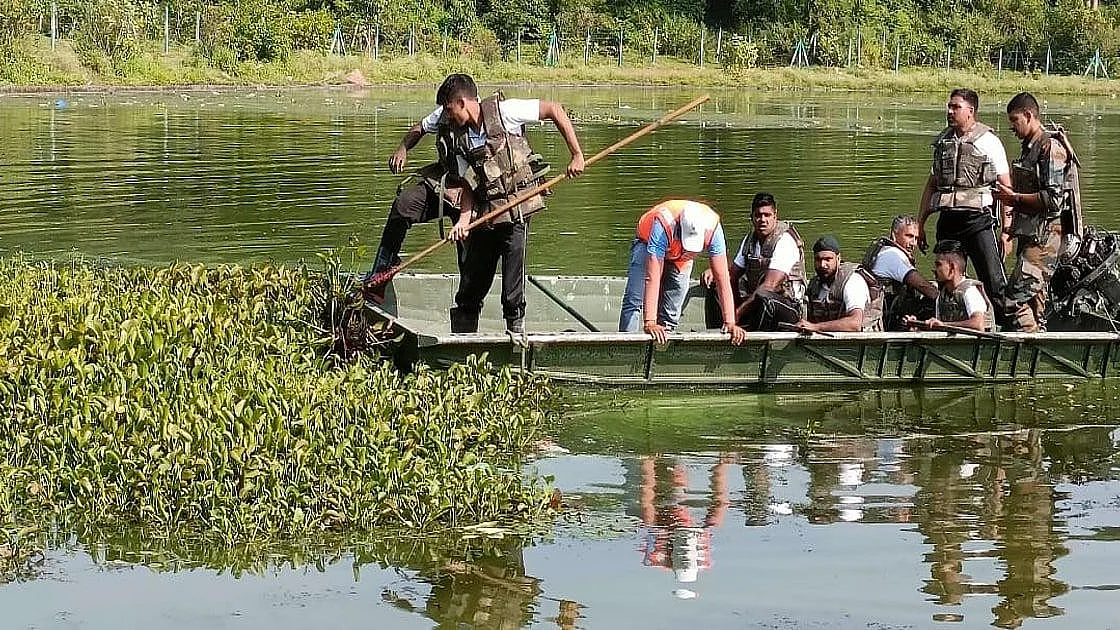
Bhopal (Madhya Pradesh): In an effort to safeguard aquatic life in Upper Lake from pesticide spraying on water chestnut crops, the National Green Tribunal (NGT) has intervened. However, the Bhopal Municipal Corporation (BMC) has stepped up a water hyacinth removal drive, sparking concerns about potential harm to the lake’s ecosystem.
The NGT had taken suo motu notice of pesticide spraying on around 60 hectares of water chestnut cultivation in Upper Lake. The Tribunal also expressed worry over the rapid growth of water hyacinth, falling oxygen levels and fish deaths, appointing a three-member joint committee to investigate and report within six weeks. On Thursday, immediately following the hearing, the BMC’s lake conservation cell launched a major clean-up operation in Upper Lake, removing large quantities of water hyacinth from a 100-meter stretch beneath the solar panels along VIP Road.
The team is also working beneath Raja Bhoj Setu. While the BMC claims that weed enters the lake with rainwater and is being removed as part of its regular conservation efforts, the method of removal has raised questions about whether it is being carried out without proper ecological planning. Aquatic life caught in machinery has become a concern as thick layers of water hyacinth, habitats for several species, are being uprooted, threatening nests and young birds.
Turtles, fish, and frogs may also get entangled in machinery during the operation. Saurabh Popli, an associate professor at School of Planning and Architecture, argues that the shoreline ecosystem should not be disturbed while removing water hyacinth. He stresses the importance of involving ecosystem experts in such operations and warns that the current practice of assigning the work to engineers using heavy machinery could harm aquatic life.
Popli points out that the spread of water hyacinth is not just a surface-level issue; polluted water and sewage entering the lake are the root causes. Until sewage inflow is completely stopped, the weed cannot be permanently controlled. He also points to sewage entering water bodies from unauthorized colonies developed by encroaching upon rivers and drains, advocating for an integrated plan rather than fragmented actions by different departments.
The BMC assures that they are careful during the operation, taking care not to deliberately remove aquatic life, though some may have been taken out inadvertently.
Written by urgent.news from Free Press Journal's reporting — not their text. Machine-written — may contain errors; check the original before relying on it.