Are You Stuck In The Drama Triangle? 3 Toxic Roles That Keep Conflict Going
All of us are battling with our demons. Sometimes fraught with over-blown situations, avoidable turmoil leads to needless DRAMA – the sort which blows up as a result of draining and hyper-stimulation surroundings. It could be your workplace, home, frenzied masses in public places. In 1968, San Francisco psychiatrist Stephen B. Karpman proposed drama triangle is a social model of human…
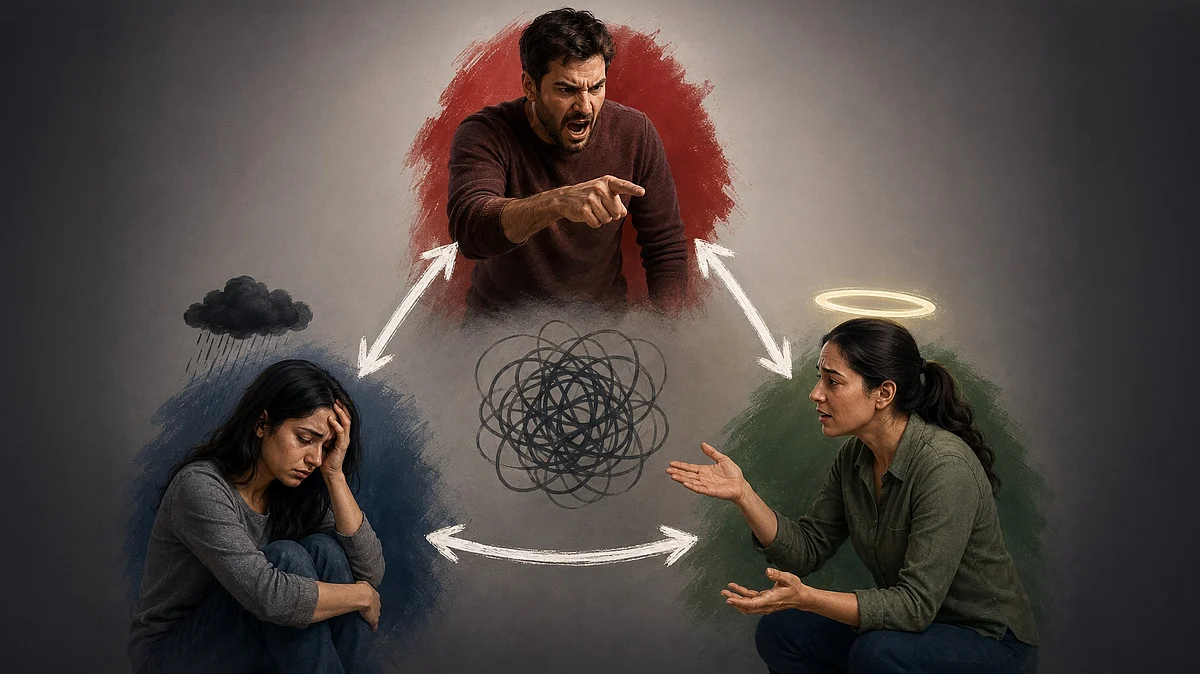
The Drama Triangle, a concept introduced by San Francisco psychiatrist Stephen B. Karpman in 1968, provides insight into destructive human interactions. The model identifies three primary roles: Victim, Persecutor, and Rescuer. These roles often shift during conflict, perpetuating unnecessary drama and hindering resolution. A key indicator of being trapped in the Drama Triangle is the repetition of conflicts, coupled with persistent feelings of helplessness, self-blame, resentment, or feeling unappreciated.
Experts such as Therapist & COO Deepti Chandy and Psychologist/Psychotherapist Dhara Ghuntla highlight the signs and symptoms of these roles, as well as their underlying causes.
Identifying whether you're embodying one of these roles involves observing your typical responses during conflict. If you often feel powerless and reliant on others, you may be operating from the Victim role. Conversely, if you instinctively rescue others or feel compelled to fix problems, you might be in the Rescuer role. Persecutors, on the other hand, tend to react with criticism, blame, control, or anger.
It's important to note that these roles aren't fixed and can shift within a single conflict as each temporarily satisfies an emotional need.
Personality traits also play a significant role in determining which role one tends to adopt. Those who have consistently received attention or validation for their struggles may more readily assume the Victim role. Similarly, individuals who derive purpose or self-worth from helping others often find themselves in the Rescuer position. Meanwhile, those who seek control, validation, or influence through criticism, blame, or anger are more likely to gravitate towards the Persecutor role.
The Drama Triangle is often perpetuated by unconscious choices rather than conscious decisions. Recognizing the roles we are playing and pausing before reacting automatically can help break these patterns. Instead of immediately blaming or rushing to fix problems, focus on expressing needs clearly, taking responsibility for one's part, and setting healthy boundaries. This approach fosters collaboration instead of dependency and promotes genuine problem-solving.
As an alternative to the Drama Triangle, the Empowerment Dynamic (TED) was created by author and leadership consultant David Emerald Womeldorff. TED encourages shifting from Victim to Creator, Persecutor to Challenger, and Rescuer to Coach. This positive alternative promotes confidence, accountability, and healthier relationships by emphasizing solutions, constructive feedback, and supportive guidance.
Written by urgent.news from Free Press Journal's reporting — not their text. Machine-written — may contain errors; check the original before relying on it.