Tilbake til fabrikken?
Ansatte blir bedt om å reise til kontoret for å være produktive, men møter arbeidsmiljøer som ofte…
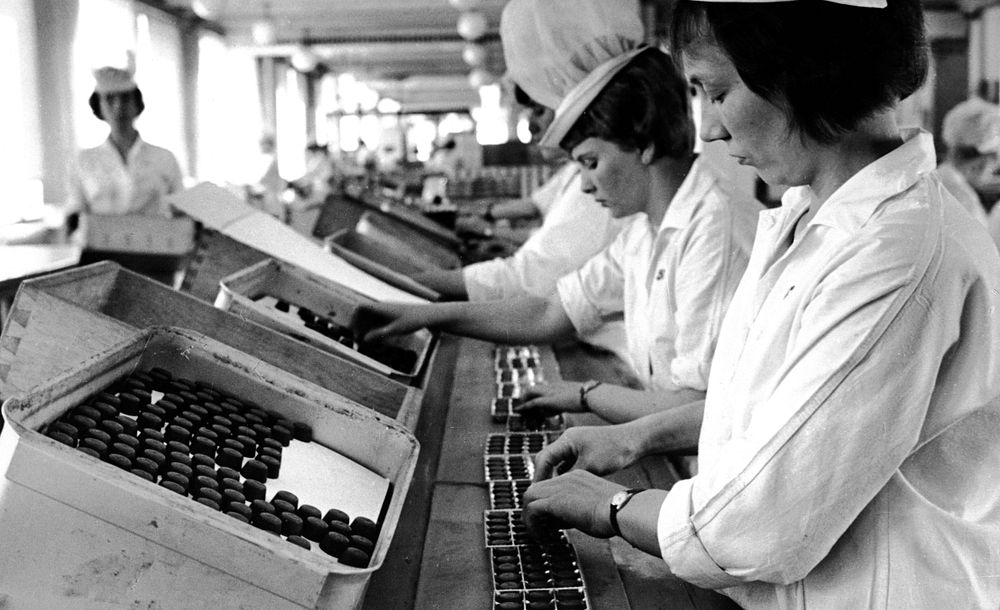
The debate around whether employees should return to the office has been reignited by DNB's push for remote work. Three main points dominate the discussion: productivity increases when people work together in person, innovation occurs during physical meetings, and culture requires employees to be in the same location. This mindset stems from an industrial-era paradigm where value creation happened in one place and work was organized around physical proximity.
The assumption is that in-person presence is essential for productivity, innovation, and culture. However, in today's knowledge work, organizations are organized across geography, domains, and business units. In larger companies like DNB, employees collaborate daily with colleagues at different locations. The question arises: if physical presence seems crucial, why are so many tasks performed remotely?
Research on remote work, hybrid work, and remote collaboration provides limited support for the notion that physical presence is a decisive factor. A comprehensive meta-analysis of remote and hybrid work research found overall positive effects on performance, job satisfaction, and perceived autonomy. Yet, the negative consequences were more dependent on how work was organized and led than on where it was performed.
The conclusion is not that remote work is always beneficial, but that the effects largely depend on leadership, technology, task nature, and collaboration methods. Yet, public discourse is dominated by the belief that the office alone explains results. The costs of increased physical presence are often overlooked. Employees spend time and money on commuting, and lose flexibility.
Offices are often presented as uniformly positive, but many companies have implemented open floor plans and activity-based workspaces. Research shows such setups can introduce noise, interruptions, reduced personal space, and challenges with concentration. The paradox is clear: employees are asked to travel to the office to be productive, but office environments are often poorly suited for focused work and filled with digital meetings.
Flexibility in how remote work is used can also impact a company's ability to attract talent, diversity, and inclusion. New research indicates job postings that allow remote work attract applications from more qualified candidates, more women, and people from minority backgrounds. The ability to work remotely is thus not just about flexibility for existing employees.
Another point is that for people with disabilities, flexibility can be vital for labor participation. Research shows hybrid work can reduce barriers related to commuting, burnout, sensory overload, and the need for individual accommodations. However, remote work should not replace universally designed workspaces and physical accommodations.
Another question is about leadership. Research shows many leaders have limited training in leading remote employees. Hybrid work requires new demands for coordination, communication, trust-building, learning, and culture development. This is demanding, and it's easier to demand physical presence than to develop leadership suitable for modern knowledge work.
The return to the office is often a solution to a leadership problem rather than an organizational problem. Instead of reverting to the factory paradigm, a knowledge-based discussion about remote work should leave behind the factory paradigm. Productivity, innovation, and organizational culture are not automatically created through physical proximity, but through good work processes, effective collaboration methods, trust-based leadership, and work environments that support the actual tasks to be performed.
The question is not how to get employees back to work as it existed in the industrial era, but how to organize work in a knowledge economy where tasks are solved digitally and collaboration occurs across offices and borders. Organizational changes should build on research-based knowledge, not on factory-era notions.
Written by urgent.news from E24 Norway's reporting — not their text. Machine-written — may contain errors; check the original before relying on it.