Temple EOs appointed by HR&CE Dept. cannot interfere with religious, customary and traditional practices: Madras High Court
Justices G.R. Swaminathan and V. Lakshminarayanan also rule that EOs can double up as Fit Persons only under exceptional circumstances and that too for a very brief period
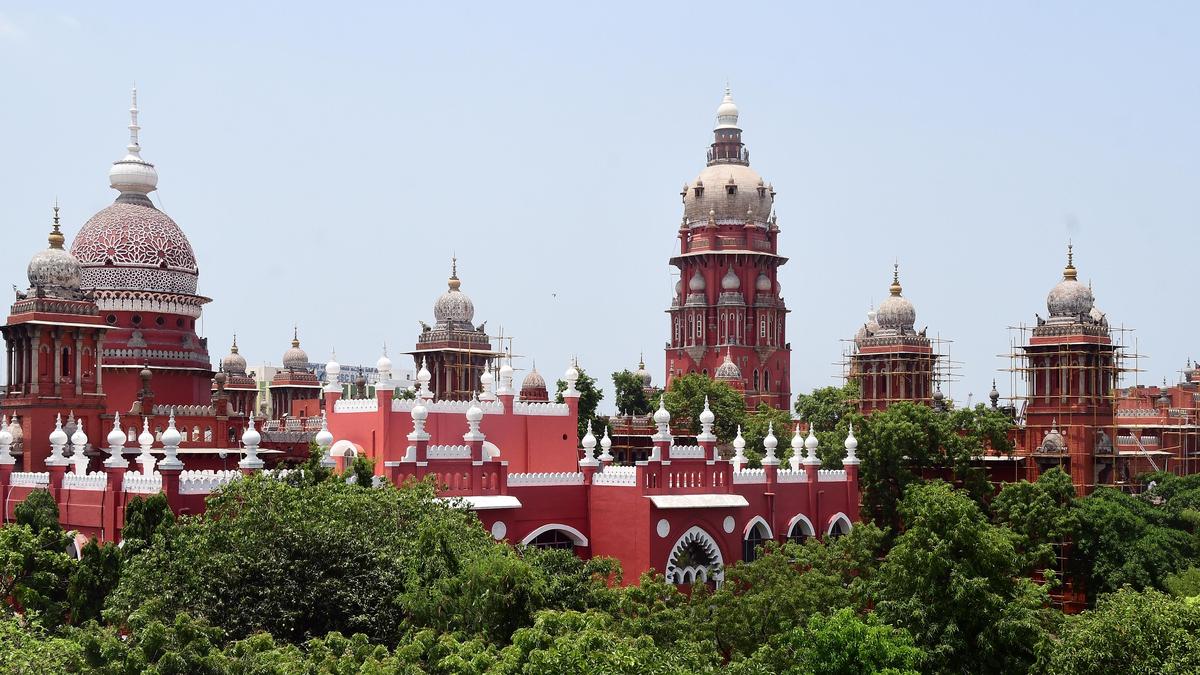
The Madras High Court has ruled that Executive Officers (EOs) appointed by the Hindu Religious and Charitable Endowments (HR&CE) department to manage temples cannot interfere with the religious, customary, and traditional practices of the temples. The EOs are only allowed to focus on maintaining the movable and immovable properties, including temple revenue, the court has stated.
The decision was made in response to a public interest litigation petition filed by temple activist T.R. Ramesh to prevent the HR&CE department from appointing EOs as Fit Persons to manage various temples across the state, including the renowned Parthasarathy Swamy Temple in Triplicane, Chennai.
The court emphasized that the EOs could only serve as Fit Persons on an interim basis or in exceptional circumstances, but not for extended periods. The bench also clarified that a Fit Person could only be appointed to fill a temporary role, not for years at a time. The judges highlighted that the Parthasarathy Swamy Temple, an ancient Vaishnavite temple, is governed by a scheme that mandates the appointment of three trustees, each representing a specific community, and noted that the trustees are entitled to hold office for five years.
The scheme does not allow for the involvement of EOs in religious practices, customary practices, or traditions.
In 1976, a civil suit was filed in the Madras High Court over the temple administration, leading to an interim order in 1982 restraining the HR&CE department from appointing trustees and directing the EO to act as a Fit Person. However, this 1982 interim order ceased to have effect in 1991 when the main case was disposed of, and thus, the temple administration could no longer be run by the EO who had previously served as a Fit Person.
The court also pointed out that the 2015 Conditions for appointment of Executive Officers Rule mandates EOs to function alongside the trustees, which implies that a single person should not perform both roles.
Furthermore, the court emphasized that the use of the word 'only' in Section 45 of the HR&CE Act, 1959 strictly prohibits EOs from interfering in religious aspects, as their duty is limited to administering the properties of the religious institution. The bench underscored that any aspect even marginally related to religion is outside the purview of the EO's responsibilities.
They concluded by reiterating that the religious activities, customary practices, and traditions of the temple must be managed by individuals well-versed in those customs and traditions, as the EO cannot and must not interfere with religious aspects.
Written by urgent.news from The Hindu's reporting — not their text. Machine-written — may contain errors; check the original before relying on it.