Political stability no guarantee of reforms, says expert
Tricia Yeoh says stable governments may feel less compelled to reform, while Asrul Hadi says coalition politics can encourage negotiation and consensus.
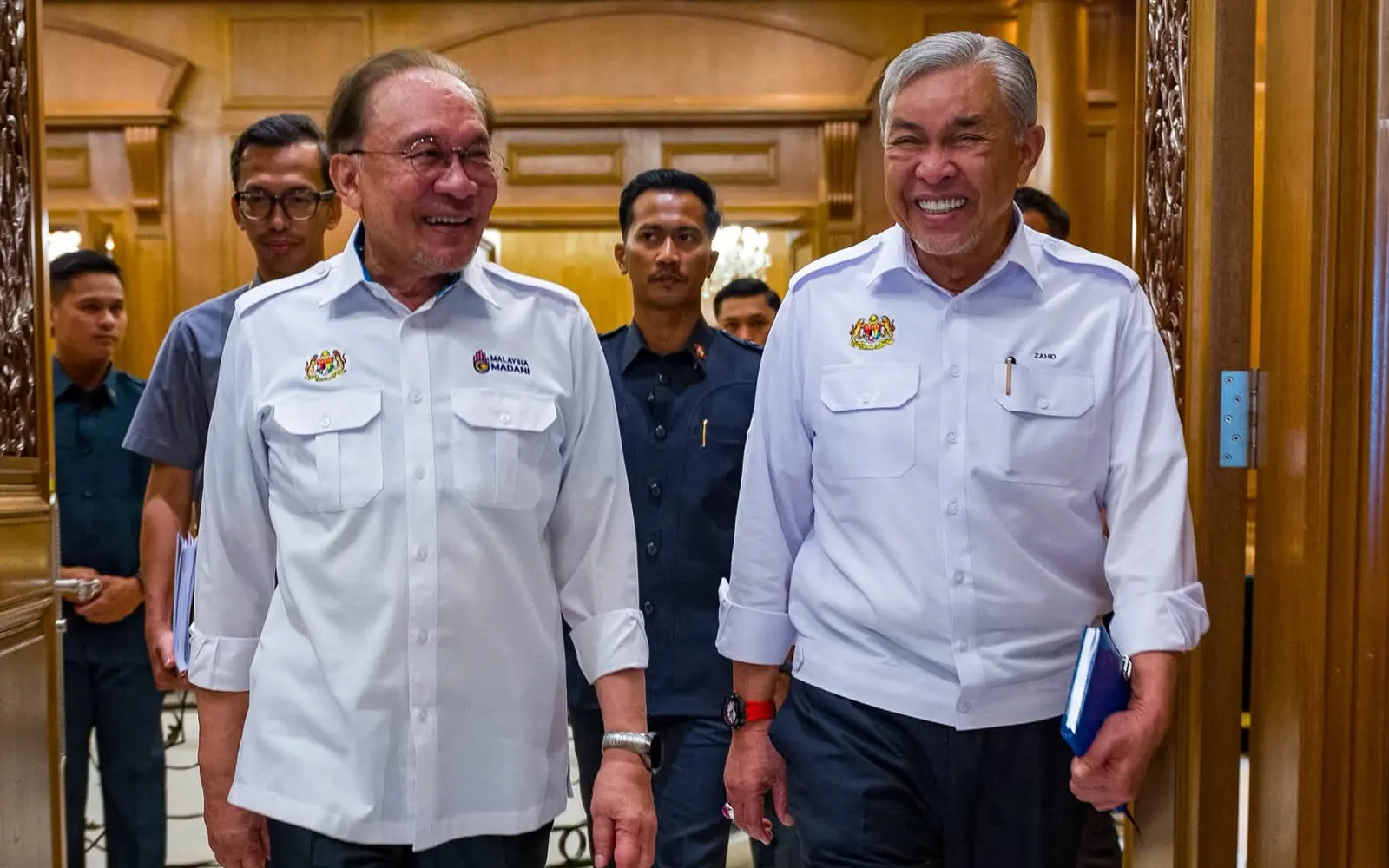
Even though the Barisan Nasional (BN) and Pakatan Harapan (PH) have governed together for nearly an entire term, granting political stability and predictability, an expert warns such a situation does not ensure substantive institutional reform. Tricia Yeoh, an associate professor at the University of Nottingham Malaysia, argues that political pressure and instability can sometimes compel governments to implement reforms they would otherwise disregard.
She highlights the case of Ismail Sabri Yaakob's administration, which had a weak parliamentary majority and inked a memorandum of understanding (MoU) with PH in 2021 while it was the opposition. According to the MoU, the government pledged not to dissolve Parliament before July 31, 2022, while PH agreed to support the 2022 budget and supply bills, refrain from backing motions amounting to a vote of no confidence, and signed off on constitutional amendments that bar MPs from switching parties and redefine Sabah and Sarawak as part of Borneo states.
Despite pursuing economic and subsidy reforms, the BN-PH-led unity government has yet to accomplish critical institutional reforms, including a two-term limit for the prime minister, separating the powers of the attorney-general and public prosecutor, and the Freedom of Information Bill. These pending reforms have become a political concern for the Democratic Action Party (DAP), which initially contemplated leaving the unity government before ultimately deciding to stay.
Asrul Hadi, a political analyst, points out that the stability brought about by the BN-PH arrangement is beneficial, especially after years of political instability and government changes. The strength of the model lies not only in maintaining government unity but also in providing policy predictability and investor confidence, which are crucial for long-term economic growth.
The BN-PH arrangement also fosters greater checks and balances, as no single component can dominate the government, unlike the past BN regime. However, Hadi notes that decision-making becomes more complex due to the presence of diverse political weights, constituencies, and interests, necessitating more negotiation and consensus.
Both BN and PH spent decades as adversaries before partnering after the 2022 general election, where neither side managed to secure enough seats to govern independently. Despite their ideological differences, the two blocs have successfully governed together for a full term. According to Yeoh, the advantage of the BN-PH coalition is not merely its ideological diversity but that such diversity can compel the coalition to create a more inclusive national agenda.
However, a BN-PN (BN and PAS-led Perikatan Nasional) coalition might find it easier to appeal to their electorate, as it represents Malay unity more straightforwardly. This coalition might struggle to articulate a national vision that equitably represents all ethnic communities. Regardless of the coalition in power, Yeoh emphasizes that upholding the spirit of the Federal Constitution and representing the interests of Malaysians irrespective of race or religion remains essential.
Written by urgent.news from Free Malaysia Today's reporting — not their text. Machine-written — may contain errors; check the original before relying on it.
Also reported by 1 other outlet
- Political stability no guarantee of reforms, says expert freemalaysiatoday.com