Urgent.News

What's breaking now, across thousands of outlets.

World

MRVC Speeds Up Work On New EMU Carsheds At Bhivpuri And Vangaon

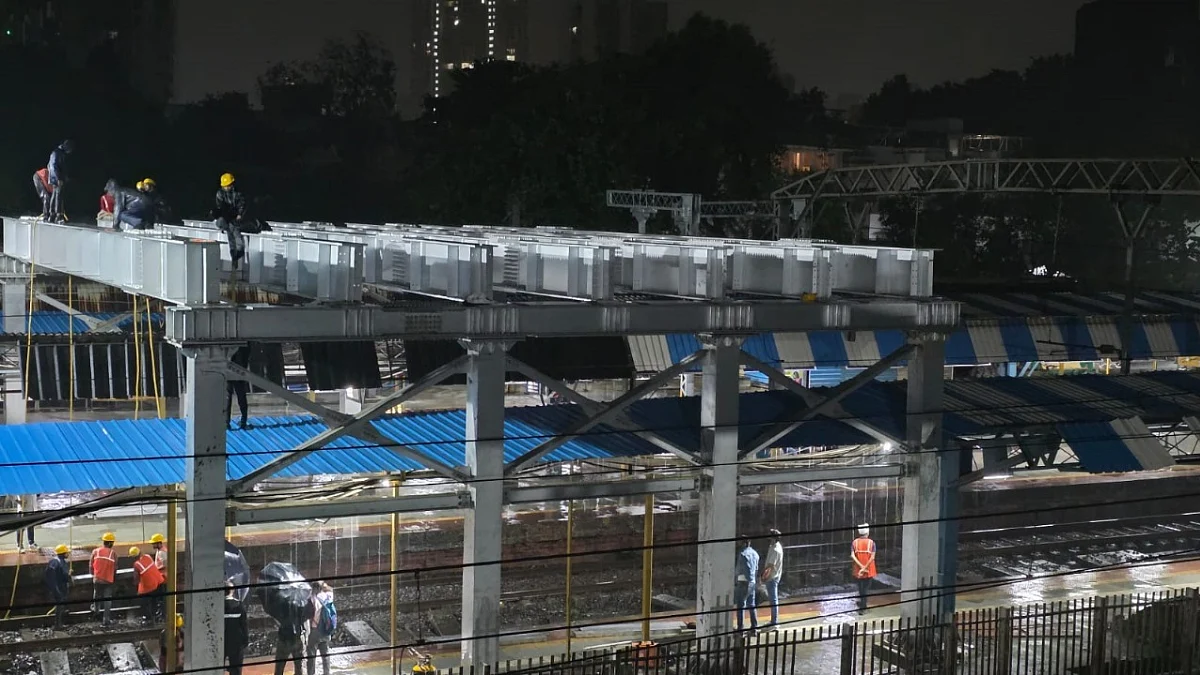
The Mumbai Railway Vikas Corporation Ltd (MRVC) has stepped up work on two new EMU carsheds at Bhivpuri and Vangaon, part of efforts to expand maintenance infrastructure for Mumbai’s suburban railway network under MUTP-IIIA. While land for the proposed Bhivpuri facility has been fully acquired and major earthwork completed, the Vangaon project has moved ahead with forest clearance and land…
MRVC Speeds Up Work On New EMU Carsheds At Bhivpuri And Vangaon

Mumbai Railway Vikas Corporation Ltd (MRVC) has accelerated efforts to build two new EMU carsheds at Bhivpuri and Vangaon, aiming to bolster maintenance infrastructure for the city's suburban railway network. Land for the Bhivpuri facility has been fully acquired and earthwork is underway, while the Vangaon project is progressing through forest clearance and land acquisition.

The Bhivpuri carshed demands 45.24 hectares, encompassing 42.28 hectares of private property and 2.96 hectares of government land. MRVC awarded contracts for land development, bridge extensions, boundary walls, drainage, and road works in August 2025. Nearly 7.16 lakh cubic meters of earthwork have been completed, and surveys including drone and DGPS investigations have concluded.

Retaining wall work is now in progress. Approvals for the bridge General Arrangement Drawings (GADs) and Engineering Scale Plan (ESP) are pending. The Vangaon carshed requires approximately 43.68 hectares, with 3.64 hectares of private land already acquired and compensation paid to landowners. The remainder is forest land, and Stage-I forest clearance was granted in February 2026, with Stage-II clearance ongoing.

The two facilities are part of MRVC's broader plan to enhance EMU maintenance capacity, aligning with the anticipated growth of Mumbai's suburban railway system.

Written by urgent.news from Free Press Journal's reporting — not their text. Machine-written — may contain errors; check the original before relying on it.
Read the original at freepressjournal.in →

More in World

2 bodies recovered and about 12 missing after migrant boat capsized off Tunisian coast

TUNIS, Tunisia (AP) — A boat carrying migrants capsized off the coast of southern Tunisia , killing at least two people and leaving 12 missing, Tunisia’s national guard said Saturday.

  • Two bodies recovered, 12 missing after migrant boat capsized off Tunisia.
  • Survivors rescued from life jacket by commercial ship on Saturday.
  • Migrant departures from Tunisia decreased after 2023 EU-Tunisia agreement.

A Closer Look: The Women's Toilet Line Problem, Reasons, Government Response, and International Standards The issue of long lines at women's toilets has been a topic of discussion. This problem arises when there are not enough toilet facilities for women, resulting in long wait times. One of the main reasons for this issue is the disparity in the number of toilets available for men and women. Historically, men's toilets have been prioritized, with more facilities provided for them. In contrast, women's toilets have often been neglected, leading to a shortage of facilities. The Japanese government has taken steps to address this issue. In 2018, the Ministry of Land, Infrastructure, Transport, and Tourism (MLIT) established guidelines for the installation of toilets in public facilities. The guidelines recommend that the number of women's toilets be increased, especially in areas with high foot traffic. The MLIT has also encouraged local governments and private businesses to take steps to improve toilet facilities. Internationally, there are standards for toilet facilities. The International Organization for Standardization (ISO) provides guidelines for toilet facilities, including the ratio of toilets to users. The ISO recommends that there be at least one toilet for every 50 users. However, Japan has not yet adopted these international standards. The issue of long lines at women's toilets is a complex problem that requires a multifaceted approach. It is essential to increase the number of women's toilets, improve existing facilities, and promote awareness about the issue. By working together, we can create a more equitable and comfortable environment for everyone.

More from Saturday 22 August →