‘It was a tsunami’: Floods leave death trail in India’s Assam
Debiram Panika, a 37-year-old daily wage labourer from northeastern India’s Assam state, would speak to his wife and two daughters on video calls every day from Dimapur, a town in neighbouring Nagaland state where he worked. But when his phone rang at about 11am on July 19, there was panic in the voice of his […]
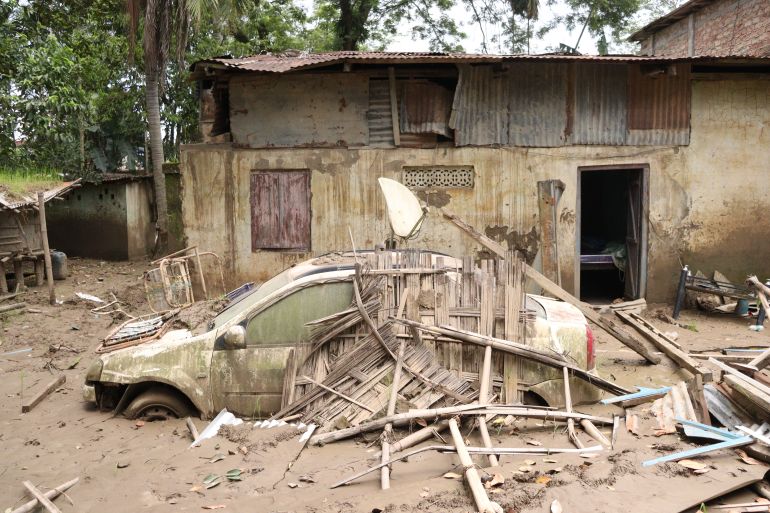
A devastating flood swept through northeastern India's Assam state, leaving a trail of death and destruction. Debiram Panika, a daily wage laborer from Assam, recounted the terrifying call from his wife, Dipika, who told him they were going to die before the call was cut off. The last moments of their lives were claimed by the rising waters of the Dikhow River in Sivasagar district.
The intense monsoon rains, coupled with landslides from the Naga Hills, resulted in the inundation of the region and neighboring Naga Hills, causing widespread devastation. Over 100 people lost their lives, and more than 2,700 villages were destroyed, displacing 700,000 people. The state government reported that 1.2 million people were impacted, their lives disrupted.
Many riverine villages in Sivasagar suffered significant damage, with trees and homes crushed under the torrents of water. Kukil Das, a local vlogger, described the flood as an apocalyptic event, with trees up to 40 meters tall crashing into homes like waves of a tsunami. The flood forced residents to take refuge on rooftops as the river waters engulfed their homes.
Despite their efforts to rescue people, Kukil and his friend lost count of the lives they saved, eventually giving up due to lack of food and water. In Simaluguri village, Reihana Ahmed and Ratul Swarna, both in their thirties, perished while trying to save each other from the floodwaters. Their tragic loss was mourned by Reihana's husband, Aminul Haque, who praised their selflessness.
The elderly residents of Prajabasti village, Asor Ali, expressed disbelief at the severity of the flood, emphasizing that it surpassed the damage caused by the 1950 earthquake. The roots of the disaster lay in human activities, with rampant stone and sand mining, deforestation, and coal extraction contributing to the disaster. The Naga Hills rivers, tributaries of the Brahmaputra, were heavily affected by deforestation, with Nagaland losing 14% of its tree cover between 2002 and 2025.
The widespread destruction and loss of life served as a stark reminder of the human-induced consequences of environmental degradation.
Written by urgent.news from The Island Sri Lanka's reporting — not their text. Machine-written — may contain errors; check the original before relying on it.
This story
This is one outlet's version. Read the fullest account.