How Pacific nations walk a tightrope between Western security and Chinese trade
On paper, Western countries are rushing to sign defence pacts in the South Pacific, ensuring their influence in a region long neglected as a geopolitical backwater. But on the water, the island nations are playing a very different game. Instead of taking sides, local leaders are leveraging the geopolitical tug of war between China and the West, winning security guarantees from the latter while…
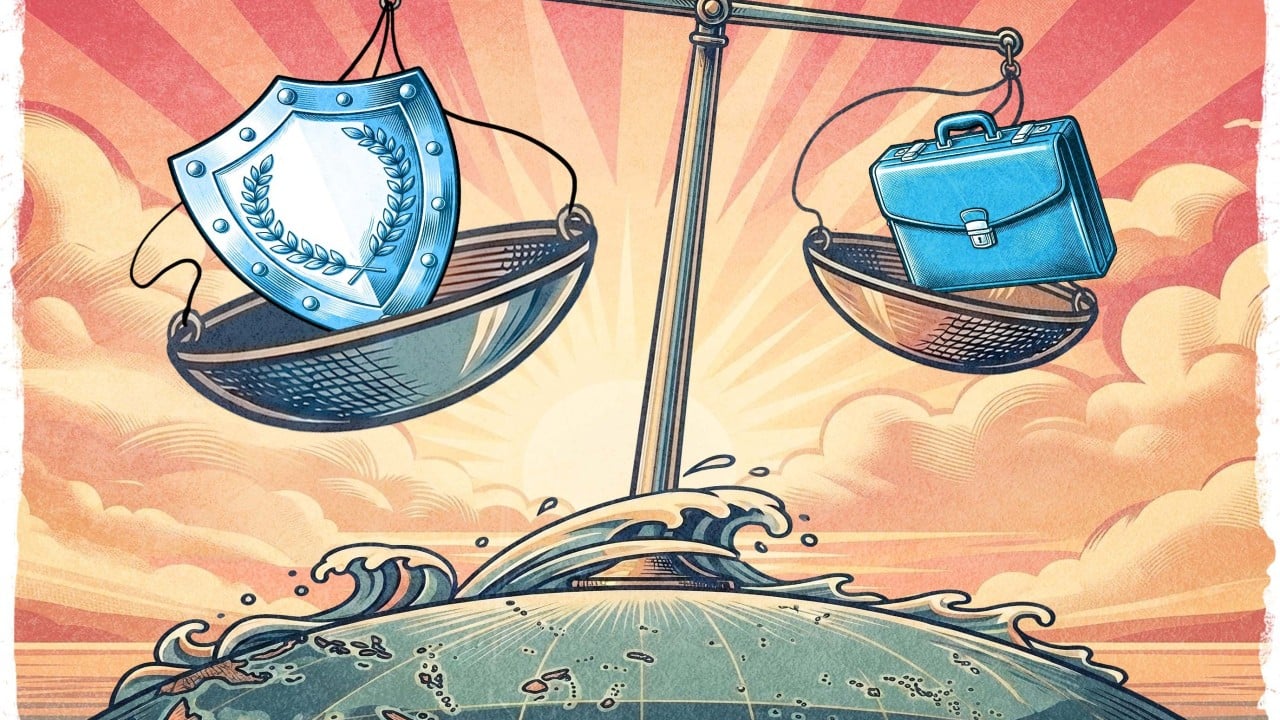
Pacific nations find themselves in a precarious position, balancing their relationships with both Western powers and China. While Western countries are forging defence pacts in the region, island nations are skillfully navigating the geopolitical landscape to secure security guarantees from the West while China expands its economic influence.
In June, Vanuatu signed a security pact with Australia, followed closely by Fiji's first mutual defence treaty with Canberra in early July. Despite these developments, Beijing has responded by warning against any third-party involvement in regional affairs. These actions highlight Australia's efforts to emerge as the Pacific's preferred security partner and to diminish China's influence.
For Pacific island nations, these pacts are a strategic balancing act. As Graeme Smith, deputy director at the Coral Bell School of Asia-Pacific Affairs at Australian National University, points out, nearly all Pacific countries rely on China as their primary trading partner. However, the vast presence of US military facilities in the South Pacific leaves Pacific nations with no choice but to maintain a delicate equilibrium between the two powers.
The United States has a permanent military presence in the South Pacific dating back to the end of the 19th century, with American Samoa being annexed and naval bases established in the region. During World War II, the Allies operated airbases and naval airfields across the South Pacific, with Australia and New Zealand stepping up as Western allies in the post-war era.
While Australia has emerged as the preferred security partner for Pacific nations, local leaders prioritize avoiding becoming a stage for great-power competition. Thus, these nations continue to engage with China for trade and development, as shown by Papua New Guinea's decision to close Taiwan's representative office in response to its first defence alliance treaty with Australia.
The balancing act of these Pacific nations was exemplified when a People's Liberation Army submarine recently test-launched a long-range ballistic missile near the exclusive economic zones of Tuvalu and Kiribati. Australia accused China of destabilizing the region, while the US criticized China for providing insufficient notice of the launch. Solomon Islands Prime Minister Matthew Wale expressed solidarity with Australia and emphasized that China's actions were not conducive to regional stability.
China's influence in the region is undeniable, with the country viewed as a close partner by many Pacific nations. However, these countries remain cognizant of China's red lines, particularly regarding Taiwan, and avoid actions that could provoke Beijing. As Xu Shaomin, deputy director of the Centre for Oceanian Studies at the Sun Yat-sen University in Guangzhou, notes, Pacific nations are well aware of these boundaries and are navigating the region's complex geopolitical landscape with caution.
Written by urgent.news from South China Morning Post's reporting — not their text. Machine-written — may contain errors; check the original before relying on it.
This story
This is one outlet's version. Read the fullest account.