How Pacific nations walk a tightrope between Western security and Chinese trade
On paper, Western countries are rushing to sign defence pacts in the South Pacific, ensuring their influence in a region long neglected as a geopolitical backwater. But on the water, the island nations are playing a very different game. Instead of taking sides, local leaders are leveraging the geopolitical tug of war between China and the West, winning security guarantees from the latter while…
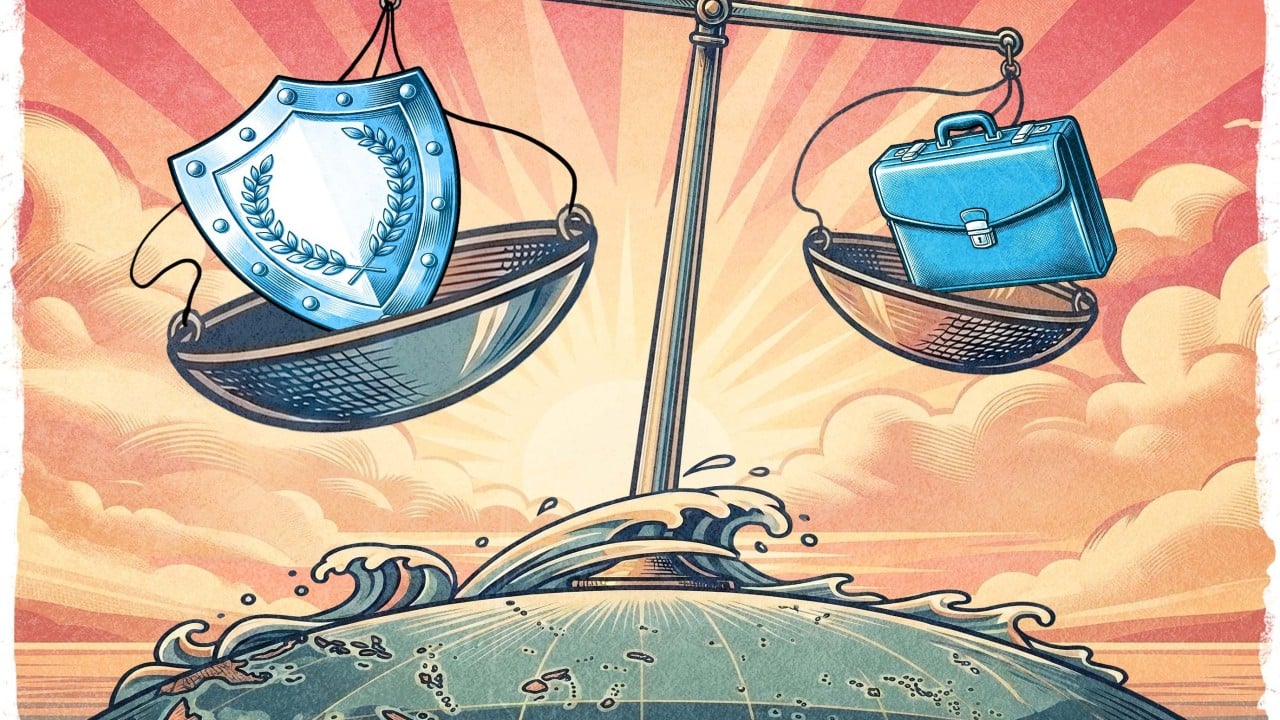
In the South Pacific, Western powers are signing defense pacts to secure their influence in the region, while island nations are taking a different approach. Rather than choosing sides, local leaders are using the power struggle between China and the West to their advantage, earning security guarantees from the West while China strengthens its economic ties.
In June, Vanuatu signed a security pact with Australia, followed by Fiji's first mutual defense treaty with Australia the following week. China has responded to these moves, stating that cooperation should not be aimed at any third party or used to engage in geopolitical games. These actions highlight Australia's goal of becoming the Pacific's top security partner and limiting China's influence, according to Connor Graham, a researcher at the Lowy Institute.
For Pacific island nations, these defense agreements are a calculated risk, balancing major powers as a core survival strategy. The US has had a permanent military presence in the South Pacific since the late 19th century, with bases in American Samoa, Papua New Guinea, Fiji, and the Solomon Islands. During WWII, the Allies used Pacific airbases and naval facilities.
After the war, the US shifted its focus northward, leaving Australia and New Zealand to maintain Western interests. Local leaders aim to avoid becoming a "theatre for great-power competition" and have sought to balance relationships with both the US and China. For example, Papua New Guinea recently closed Taiwan's representative office in response to a new Australia defense pact, while Vanuatu negotiated with China while maintaining talks with Australia.
Nauru also recently signed a $1 billion investment deal with a Chinese state-linked company without consulting Australia. The US criticized China for this missile test, but Pacific leaders remain cautious, aware of China's sensitive areas like Taiwan and the need to maintain good relations with the region's major power.
Written by urgent.news from Reuters Business via SCMP's reporting — not their text. Machine-written — may contain errors; check the original before relying on it.