Has Philippines’ Marcos missed his chance to stop the Dutertes?
Less than two years before the Philippines chooses its next president, Ferdinand Marcos Jnr still has no candidate to carry his banner. Sara Duterte-Carpio, his estranged vice-president and fiercest political rival, has already declared her intention to run and remains the early front runner, despite an impeachment trial that could bar her from politics. Marcos said on August 14 that he would…
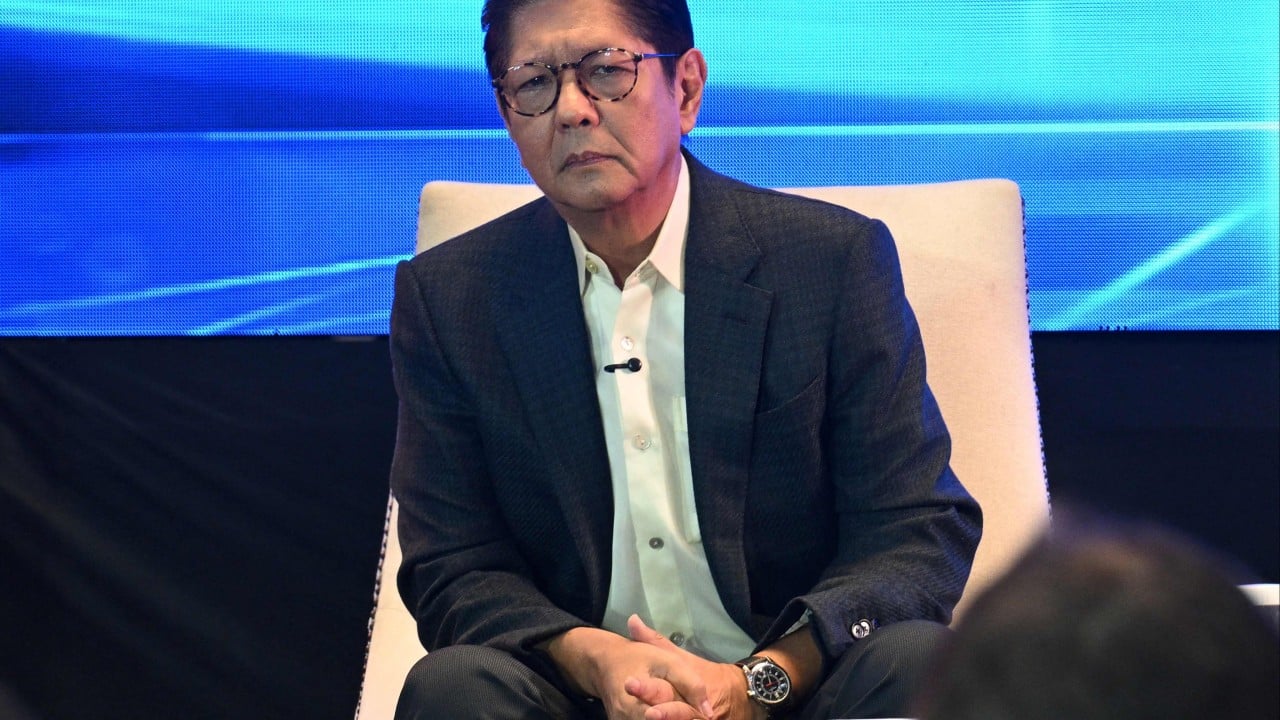
As the Philippines prepares to elect its next president, Ferdinand Marcos Jr. finds himself in a quandary. His estranged vice-president and most formidable political foe, Sara Duterte-Carpio, has announced her intention to run for the 2028 presidency, positioning herself as the frontrunner despite an ongoing impeachment trial that could disqualify her from holding office.
Marcos recently stated that he would "certainly endorse a candidate" in 2028, but he remains uncertain about who that individual might be. It is highly unlikely that he would support Duterte-Carpio, who is the daughter of the late President Rodrigo Duterte.
The choice of a successor for Marcos will not only determine who occupies the Malacanang presidential palace after his single, constitutionally limited term, but also whether the country will revert to Duterte-style strongman governance and adopt a more China-friendly foreign policy. Marcos' potential allies have appeared weakened, with Rodrigo Duterte currently facing trial at the International Criminal Court for alleged crimes against humanity, and several key family members having been arrested on charges of plunder.
At home, Marcos' administration has been actively working against Duterte-Carpio, who faces impeachment proceedings for corruption and betrayal of public trust, should the charges be proven true, rendering her ineligible for future elections.
Despite these adversities, Duterte-Carpio is undeterred and gaining popularity. A recent poll by WR Numero Uno revealed that her approval rating surged to 55%, up from 33% in March, while Marcos' support has dropped to 36%. Additional surveys conducted by Pulse Asia Research Organisation, OCTA Research, WR Numero Research, and Momentum Research also indicate that Duterte-Carpio is leading the pack in the early 2028 presidential race.
This has sparked a debate among analysts regarding whether Marcos moved too late to prevent the Dutertes from regrouping and regaining their political momentum ahead of the next election. Ronnie Holmes, president of Pulse Asia and a professor of political science and development studies at De La Salle University in Manila, described the situation as the "central political puzzle" of Philippine politics, suggesting that Marcos' decision to accommodate rather than confront may have inadvertently allowed the Duterte camp to regroup and strengthen its political base.
The feud between Marcos and Duterte-Carpio is further complicated by the historical and emotional ties they share. Both came to power in 2022, uniting two powerful political dynasties with deep-rooted emotional claims on Philippine politics. Marcos represented the late dictator's legacy, while Duterte-Carpio inherited the political machine built by her father in Davao City and later nationally.
Their alliance crumbled into a bitter feud, with Marcos' administration employing the Senate impeachment trial as its primary weapon. This trial seeks to prove allegations of corruption, unexplained wealth, and betrayal of public trust, including a recent charge of plotting to assassinate Marcos, his wife, and his cousin. Duterte-Carpio denies any wrongdoing and claims that the cases against her are politically motivated.
While Marcos has wounded the Dutertes, he has yet to neutralize them, leading to a stalemate that has fueled their supporters' accusations that he is "weak." Political science professor Jean Franco from the University of the Philippines noted that Marcos' strategy has resulted in "hits and misses," supporting this perception. The popularity of the Duterte brand, which is perceived as anti-elite and decisive, has proven more resilient than the legal challenges against the family.
Analysts attribute this strength to the charisma projected by the former president, a brand that resonates with many in Luzon and Mindanao, who together account for roughly a third of the electorate. Franco emphasized that the Dutertes have tapped into the "imperialist Manila discourse" while also reviving the ethos of a strongman leader, which remains appealing to many Filipinos.
Written by urgent.news from South China Morning Post's reporting — not their text. Machine-written — may contain errors; check the original before relying on it.