Does tapping on a soda can really stop it from exploding?
Many people tap their soda cans to prevent them from fizzing over, but does this technique actually work?
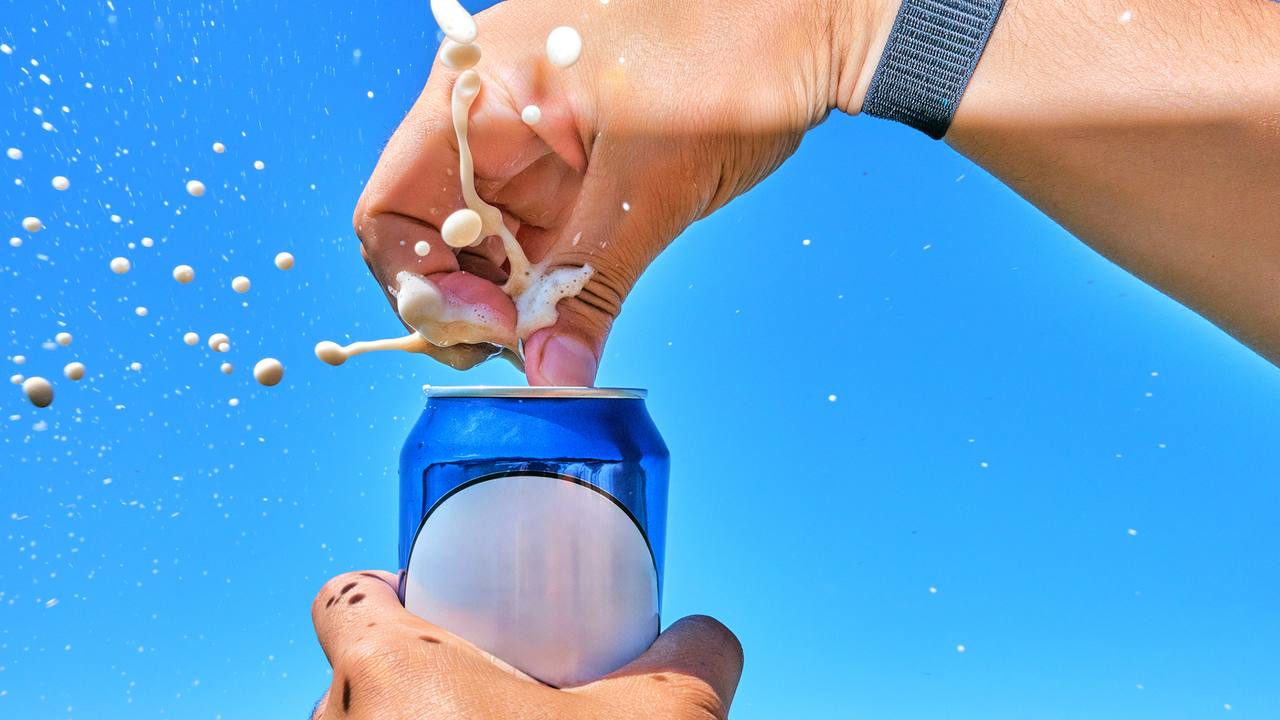
Soda cans are often shaken or tapped before opening in order to prevent them from exploding, but does this technique actually work? The answer lies in the physics behind carbonated drinks. Carbon dioxide is injected into the liquid at high pressure and low temperature, forming bubbles through supersaturation. Shaking or tapping can generate pressure waves inside the liquid, leading to the formation of tiny bubbles.
However, if these bubbles are exposed to air while the can is open, they cause a sudden pressure drop, resulting in more bubble production and spillover. Tapping a can can remove any existing bubbles or dust particles clinging to the can's walls, reducing the rate of bubble formation when opened. However, tapping too hard or repeatedly can generate more bubbles.
In a study testing beer cans, tapping did not prevent beer loss, suggesting that it is not an effective method. To prevent a soda can from fizzing, letting it sit upright for a few minutes after shaking allows bubbles to dissolve or rise. Keeping the drink cold also helps, as carbon dioxide stays dissolved more easily at lower temperatures. Slowly opening the can can also reduce foam spillover.
Written by urgent.news from Live Science's reporting — not their text. Machine-written — may contain errors; check the original before relying on it.