Beyblade battles drive up sales at Hong Kong malls, but how long will the trend last?
The sharp clatter of spinning metal tops, cheers, sighs of frustration and shouts of “Three, two, one … Go shoot!” echo across a shopping centre in Hong Kong’s New Territories on a weekday. Dish-shaped plastic battle arenas known as “Beystadiums” have been set up not only in Tuen Mun Town Plaza, but also across the mall in different shops, where some players challenge shop staff to collect stamps…
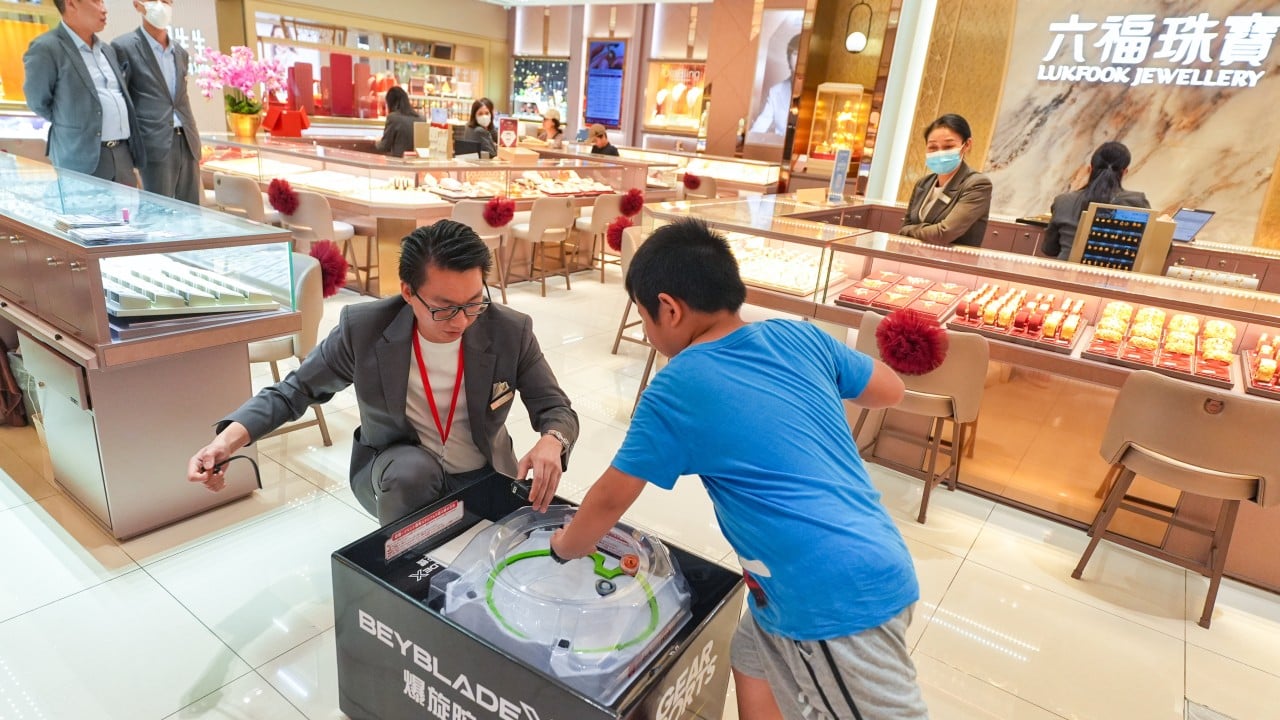
The metal tops known as Beyblades, propelled into popularity by a Japanese anime in the early 2000s, have returned to Hong Kong and other parts of Asia. Children and adults alike flock to public arenas to battle each other and purchase rare parts and models. Local shopping center operators have seized the economic potential of this hobby by converting public spaces into free battle zones to attract more customers and boost sales.
The strategy involves creating a soft-selling atmosphere, where staff and shoppers engage in conversations about the game, drawing people into the stores before making a sales pitch. Sino Group, which owns the Tuen Mun Town Plaza, has even scaled up the concept mall-wide ahead of a major Beyblade tournament in August. This approach has garnered positive results, with a 20 percent increase in holiday foot traffic and a 10 to 15 percent rise in weekday attendance.
Shops within the complex, such as restaurants and toy retailers, have reported increased business as well. Luxurious brands, like Luk Fook Jewellery, have also benefited from installing in-store battle stations, breaking down traditional stereotypes and attracting new customers. Even seasoned adult hobbyists and families with young children have been drawn to the shopping centers, spending significant amounts on food, drinks, and retail items.
While the Beyblade trend has brought short-term benefits to the city's retail sector, economist Professor Terence Chong Tai-leung maintains that it remains a temporary solution rather than a permanent fix for the broader challenges faced by the retail industry.
Written by urgent.news from South China Morning Post's reporting — not their text. Machine-written — may contain errors; check the original before relying on it.
This story
This is one outlet's version. Read the fullest account.