Will other Southeast Asian countries follow Indonesia’s example with joint China drill?
China and Indonesia’s recent joint naval exercise east of Taiwan has prompted speculation that other Southeast Asian countries may follow suit. Last Wednesday’s drill – which one observer said may “lower the political threshold” for neighbouring countries – was followed by a meeting of the two countries’ foreign and defence ministers on Friday, where they discussed further military cooperation…
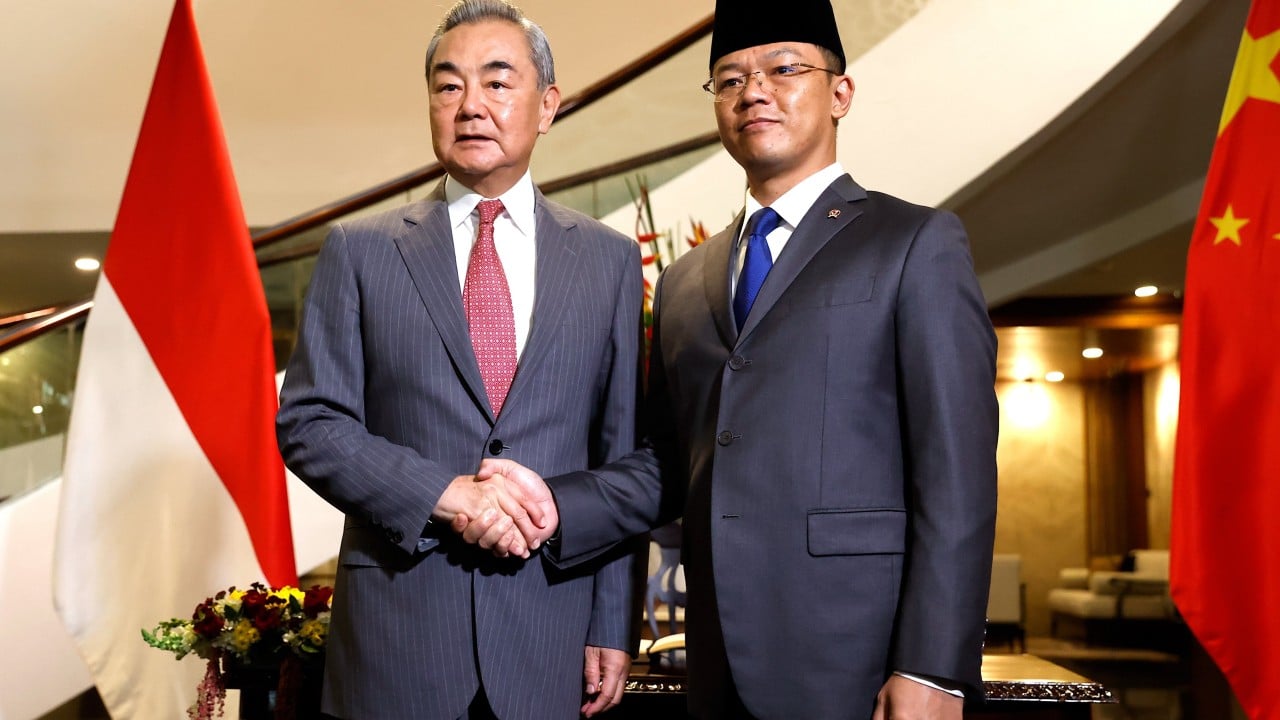
Speculation exists that neighboring Southeast Asian nations might mirror Indonesia's recent joint naval exercise with China, located east of Taiwan. This drill, held last Wednesday, sparked discussions among foreign and defense ministers of China and Indonesia on Friday, focusing on bolstering military cooperation and other matters such as food security.
Wang Yi, the Chinese Foreign Minister, considers Indonesia a priority in China's Southeast Asian foreign policy, emphasizing the need for strengthened strategic communication and coordination. The "2+2 mechanism," initiated in 2023, has served as a template for similar arrangements with Malaysia, Cambodia, and Thailand — all U.S. treaty allies.
During the joint drill, Chinese Foreign Minister Wang Yi and his Indonesian counterpart, Sugiono, addressed the shared opposition to unilateral bullying in the region and the importance of safeguarding international fairness and justice. They also discussed enhancing food, energy, and mineral security, as well as promoting advanced technologies like artificial intelligence. The two defense ministers exchanged views on increasing personnel exchanges and cooperation between their arms industries.
Following the drills, Indonesia's willingness to engage with China in the strategically sensitive area has sparked debate about the potential influence on other Southeast Asian countries. While most nations, including Indonesia, Japan, and the Philippines, do not acknowledge Taiwan as an independent state, Beijing perceives the island as part of China and considers the drills a violation of its sovereignty.
James Char, an assistant professor at the S. Rajaratnam School of International Studies, argues that the exercise holds "signalling value" for Beijing but doubts a sudden shift away from refraining from direct military activity. Harryanto Aryodiguno, an associate professor at President University, suggests that Indonesia's participation could potentially pave the way for other ASEAN countries to explore limited naval cooperation with China, provided they maintain their strategic autonomy.
Written by urgent.news from South China Morning Post's reporting — not their text. Machine-written — may contain errors; check the original before relying on it.