When hundreds of animals die from bird flu, what happens next?
Despite their scale, we know surprisingly little about mass mortality events — from bird flu and other triggers — and their longer-term ecological consequences.
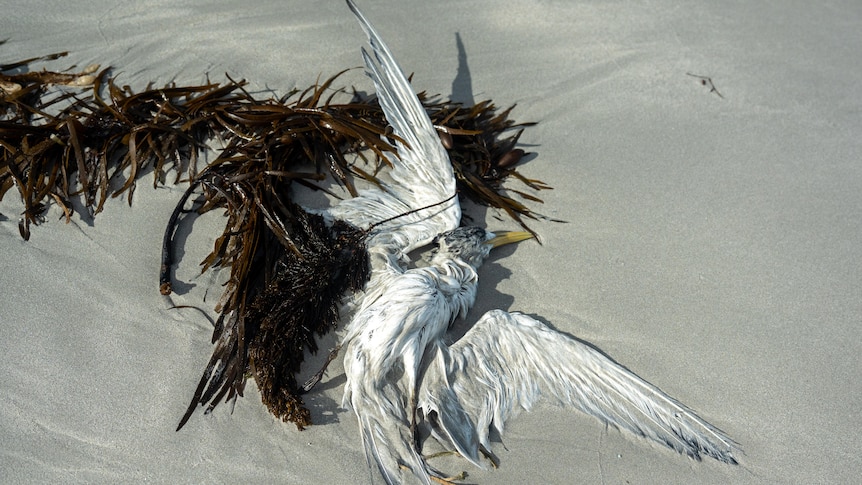
In a span of weeks, Australia has witnessed a transition from its initial mainland H5N1 bird flu detections to hundreds of confirmed cases, alongside several wildlife mass mortality events. The most significant of these occurred off South Australia, where over 1,000 terns met a tragic end. Federal authorities have warned that such events are likely not the last, although it is still too early to predict the future impacts.
Nonetheless, it is evident that mass mortality events pose a growing challenge for ecologists and wildlife managers.
Mass mortality events are sudden episodes characterized by the unusually high death rates of animals within a short period. While disease is a common cause, these events can also be triggered by environmental factors such as heatwaves, drought, fire, floods, harmful algal blooms, starvation, and other extreme conditions. In recent times, there have been instances of mass deaths among pelicans at the Menindee Lakes in New South Wales and the disappearance of cuttlefish from the Upper Spencer Gulf in South Australia.
While mass mortality events primarily remove animals from ecosystems, they also create massive amounts of dead and decaying flesh, known as carrion. This distribution of nutrients serves to attract scavengers and alter species interactions. However, despite their scale, our understanding of these events and their long-term ecological consequences is surprisingly limited. Moreover, due to the unpredictable nature of these events, it is challenging to gather before-death data, which ecologists typically rely on for analysis.
The arrival of H5N1 bird flu in Australia adds another potential driver of mass mortality to the country's ecosystems. By the time an event is detected, it may already be well underway, and events in remote areas may go unnoticed altogether. While much attention understandably focuses on the animals that have died, the ecological effects of a mass mortality event extend beyond the loss of individual lives.
A single carcass provides a relatively small and temporary food resource, while hundreds or thousands of carcasses in close proximity can represent a substantial and concentrated pulse of food into an ecosystem.
The sudden abundance of carrion resulting from mass mortality events can have diverse ecological impacts. Flies and other invertebrates typically find carcasses quickly, followed by birds and mammals. While some scavengers, such as ravens, corvids, raptors, dingoes, and foxes, are well-known, many other animals also contribute to the scavenging process. Research has documented opportunistic scavenging involving a wide range of vertebrates, including brushtail possums.
Efficient scavenger communities play a crucial role in consuming dead animals, helping ecosystems cope with sudden increases in carcasses while returning nutrients and energy to the food web. However, when large amounts of carrion are present, scavenger communities may become overwhelmed, unable to consume all the available resources. In some cases, certain species may dominate access to carcasses, changing opportunities for other scavengers.
Moreover, as carcasses decompose, large quantities of nutrients are released into the soil, which can change soil chemistry and, consequently, vegetation. The effects of these nutrient releases can persist long after the dead animals themselves have decomposed. Therefore, mass mortality events not only remove animals from an ecosystem but can also temporarily restructure how energy and nutrients move through it.
However, when animals die from an infectious disease like H5N1 bird flu, scavenging becomes more complicated. Infected animals can remain a source of infectious material even after death, and the virus can persist in carcasses depending on environmental conditions such as temperature. In one study, red foxes fed infected bird carcasses became infected and shed virus for several days.
This finding is particularly relevant, given the mobile nature of scavengers. A fox feeding on a seabird carcass may not remain confined to the beach where it found it, while raptors and gulls can cover large areas, moving between various habitats.
The potential for scavengers to transport infected carcasses across different habitats raises concerns about the spread of H5N1 bird flu. However, it is important to note that finding a virus in a scavenger does not automatically imply that the animal plays a significant role in spreading the disease further. Exposure, infection, and onward transmission are distinct concepts, and we still have significant gaps in our understanding of each.
Nonetheless, scavenging deserves more attention in Australia's response to the H5N1 bird flu outbreak.
While many scavenger species remain largely unknown in terms of their susceptibility to H5N1 bird flu, their exposure to infected carrion and how they react when they do so. Additionally, we should not assume that scavenging inherently worsens a disease outbreak. In certain circumstances, efficient scavenger communities might even help mitigate the impact of the disease by consuming infected carcasses promptly.
Written by urgent.news from ABC News AU's reporting — not their text. Machine-written — may contain errors; check the original before relying on it.