What to do when there’s too much information, and you don’t know who to trust
Information overload is causing a credibility crisis. True, it’s never been easier to access the right answers to our questions. But at the same time, that answer is harder to find. There are so many experts, politicians, celebrities, and influencers who are entering their opinions into the chat, and separating good information from bad now feels like finding a needle in a haystack. As a reformed…
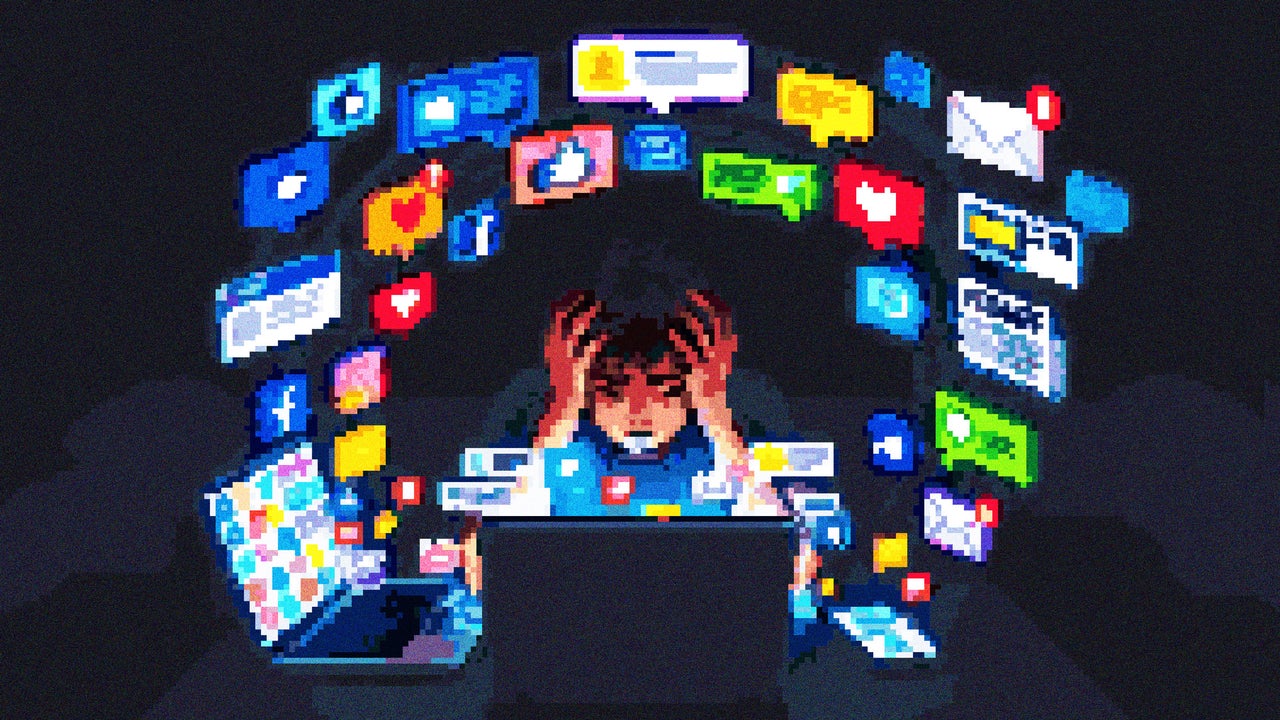
In today's digital age, we're faced with an overwhelming amount of information, making it difficult to discern what's credible and who to trust. While the internet has made it easier than ever to access answers, finding accurate information has become a real challenge. With so many experts, politicians, celebrities, and influencers sharing their opinions, separating good information from bad is akin to finding a needle in a haystack.
As a former social media addict and business psychology professional, I have experienced this challenge firsthand. Over the years, I've witnessed how the same campaigns I helped design can now affect unsuspecting users. The internet has become a breeding ground for monetizing almost anything, with many exploiting this overload to lure people into making purchases.
Adults today spend a significant amount of time on their mobile devices, consuming four hours or more of information daily. This is a stark contrast to the past, when news arrived in finite batches, such as evening bulletins and daily newspapers. When our brains become overloaded, they protect themselves in one of two ways: they either shut down on complex topics or start going passive, deferring to the popular view to avoid the difficulty of thinking through issues. This leads to outsourcing our judgment and increasing our susceptibility to misinformation.
While the volume of information is a starting point, performance does not necessarily equate to proof. Social media often breeds surface credibility, where people try to build trust based on aesthetic polish, confident delivery, and perceived authority. Old signals of trustworthiness, such as professional appearance, institutional affiliation, and peer endorsement, are now extensively manufactured, appearing as proof even though they only mimic it.
Real credibility, on the other hand, is not flashy and can be easily overlooked. Experts with genuine credibility build their expertise through qualifications, peer-reviewed evidence, and demonstrated track records. They are also willing to acknowledge that things are complicated and use nuance, such as saying "the research suggests" instead of "the research proves." This is in contrast to the simple answers we often crave when overwhelmed by information.
However, confidence does not equal competence. It's essential to recognize that the two are different. Another critical factor to consider is our cognitive biases, which play a significant role in how we vet information. Our identity, or how we see ourselves, filters what we choose to believe. We tend to absorb information that aligns with our views and reject information that doesn't, even if it's not as scrutinized.
This phenomenon is especially prevalent in professional settings, where leaders with an identity built around being a visionary are more likely to adopt information that confirms their direction and dismiss dissenting data.
Political identity works similarly, with partisanship shaping how we evaluate factual claims across various domains, including economic data and public health guidance, regardless of the quality of the evidence. The information itself hasn't changed; our identity has filtered the data, leading to tribalism and making it challenging to update our beliefs.
The most dangerous credibility failures occur when we already want to believe something, and surface credibility provides us with the justification we seek. To combat this, we must be aware of our biases and use them to our advantage. Here are some strategies to employ:
1. Pause when something feels immediately right. If a statement feels too strong or certain, it may be your identity doing the evaluating rather than critical thinking.
2. Check the qualifications of the person sharing the information. Credibility does not always transfer across domains, so it's essential to verify the expertise of the source.
3. Build your comfort with complexity. Notice whether someone says "the research suggests" or "the research proves." Humility is a reliable marker of real expertise.
4. Separate the story from the evidence. Great stories can be compelling, but they are not proof. Always question whether the information presented is substantiated by evidence.
5. Check the incentive structure. Ask what the source stands to gain from your belief. If the information seems to align with their interests, it's essential to question its credibility.
6. Notice when information flatters your existing views. An agreement without friction is worth interrogating, as it may be a case of confirmation bias.
7. Seek out credible disconfirmation. Look for high-quality sources that challenge your position, as the best updates often come from those who disagree with you.
The credibility crisis is real, and it's becoming increasingly difficult to sort fact from fiction. While we are susceptible to surface credibility, the question is whether we are willing to slow down, interrogate our own thinking, and build habits that make us harder to fool.
Written by urgent.news from Fast Company's reporting — not their text. Machine-written — may contain errors; check the original before relying on it.