What Europe's shrinking rivers reveal, and why Australia should take notice
The discoveries emerging from Europe's rivers point to challenges that stretch well beyond the continent.
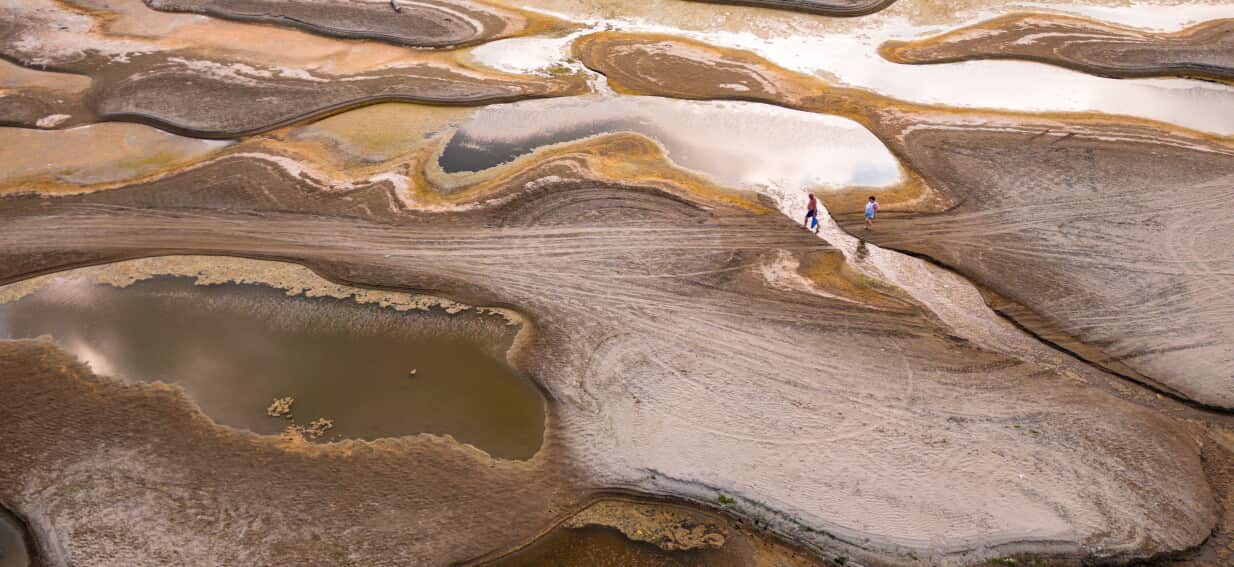
Europe’s rivers are shrinking due to prolonged heatwaves and drought conditions, exposing ancient remains and posing significant risks to aquatic life. In northern Bulgaria, scientists discovered the remains of a woolly mammoth at the Danube River's exposed banks in late July. Serbian fisherman Zoran Lovric reported never-before-seen rusted warships and broken masts from German vessels emerging from the riverbank near the village of Prahovo.
Armin Fojskic, a member of the Zenica Fishermen Association, warned that low water levels could lead to a large number of fish deaths due to oxygen depletion. According to the European Drought Observatory, about half of Europe and the United Kingdom experienced drought in July, contributing to major wildfires across the continent.
Peter Gleick, a hydro-climatologist, emphasized that the current extreme weather events are not part of normal fluctuations but are worsened by human-caused climate change. Gleick stated that greenhouse gas emissions are warming the planet and intensifying extreme events.
The situation in Europe is not isolated, as the western United States' Colorado River, shared by seven U.S. states and Mexico, is also at record low levels. Some of the world's largest reservoirs on the Colorado River are now at record lows, affecting water systems globally. Meanwhile, Australia's Murray-Darling Basin, the country's largest river system, has been in decline for decades.
The basin, spanning NSW, the ACT, and parts of Queensland, South Australia, and Victoria, has shown declining runoff patterns, with certain areas experiencing longer periods of cease to flow. Low water levels have led to mass fish deaths, wetland loss, and algal blooms in the basin.
Bradley Moggridge, a hydro-geologist at the University of Technology Sydney, highlighted that small streams feeding into larger rivers are often overlooked in water management discussions. For Aboriginal and Torres Strait Islander communities, the Murray-Darling Basin, known as Baaka by Barkindji people, holds deep cultural and spiritual significance.
The Barkindji people have observed the river's changes and feel helpless due to the lack of management response. Moggridge stressed that First Nations wisdom about the waterway, which spans thousands of years, must be integrated into river management and protection.
Written by urgent.news from SBS News's reporting — not their text. Machine-written — may contain errors; check the original before relying on it.