The Unlikely Place at the Center of China’s AI Boom
Cheap energy, abundant land, and proximity to Beijing have turned a city in Inner Mongolia into a crucial hub for data centers.
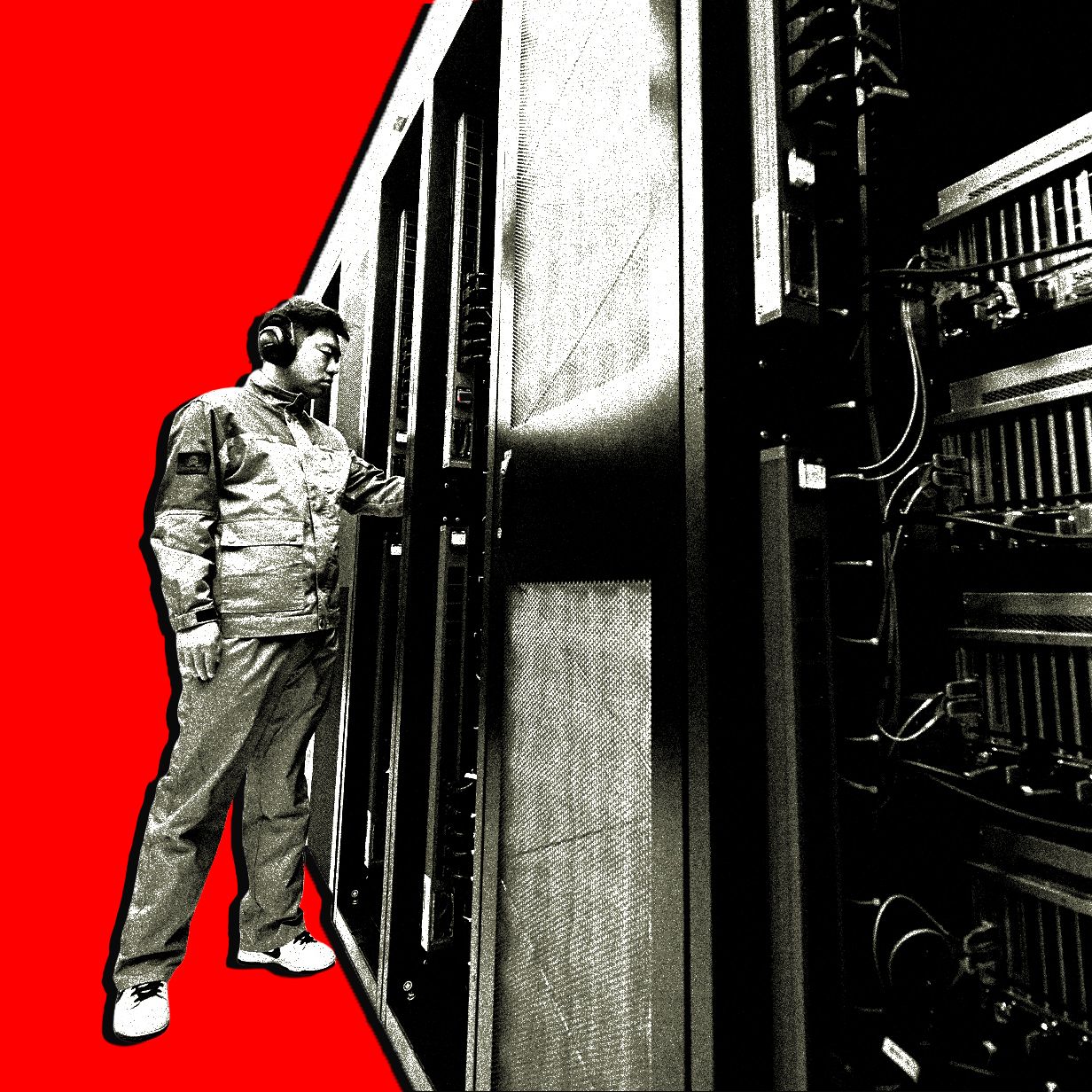
In Ulanqab, a city in Inner Mongolia with approximately 1.5 million inhabitants, around 100 data centers have either been opened or are under construction since 2016. Chinese firms have pledged to develop projects with a combined estimated capacity of 12.5 gigawatts within the city. The majority of these commitments have been announced within the past year, positioning Ulanqab as one of the fastest-growing compute clusters in Asia, according to a Goldman Sachs research note.
This boom in data centers contrasts sharply with OpenAI’s $500 billion Stargate Project, which is expected to achieve just 10 gigawatts of capacity upon completion.
Several factors have attracted Chinese companies to Ulanqab. The city's high elevation on the Inner Mongolian Plateau and its long, cold winters mean that data centers in the area require less energy for cooling. Additionally, Ulanqab's proximity to Beijing enables efficient data transmission with minimal latency. However, the most compelling reason for the surge in data centers is the lower electricity costs in Inner Mongolia compared to other parts of China. This is attributed to the growth of wind and solar energy and an abundant supply of coal.
A significant development in Ulanqab is the increasing involvement of Chinese AI companies in building their own data centers rather than renting compute from cloud providers. Notable companies such as DeepSeek, ByteDance, Alibaba, and Xiaohongshu are investing in massive AI data centers in the region. This shift signifies that Chinese AI companies are now starting to catch up to their American counterparts in terms of investing in physical infrastructure.
Despite the rapid growth, a challenge arises from the city's arid climate, with Ulanqab receiving only around 14 inches of rainfall annually. The local government has been struggling to meet water demand, particularly as the new data centers require additional water for cooling during the winter months. Even with lower water needs during cooler seasons, the environmental impact of the increased infrastructure could be significant.
Inner Mongolia has been a hotspot for data centers for over a decade, with Huawei establishing its first one in Ulanqab in 2016 and Apple following three years later. In 2021, the area was designated as a key hub for a nationwide government project, "Eastern Data, Western Compute," which aims to build data centers in the western regions of China.
Initially, these remote data centers faced high latency when transferring data to the majority of users in the east. However, with the rise of AI, these centers have found a new purpose in model training, where latency is less of an issue due to the lengthy training periods. The connection of Ulanqab to Beijing and other major Chinese cities via dedicated fiber optic cables, installed between 2017 and 2019, has further reduced latency to under five milliseconds, making the region suitable for AI inference.
The Chinese government's interest in building data centers in Inner Mongolia extends beyond commercial demand. The region's proximity to renewable energy sources and its potential to absorb excess capacity aligns with government efforts to increase the use of clean energy. However, despite the region's progress, about 37% of Inner Mongolia's electricity still comes from coal, largely due to the area's historical reliance on coal for its energy production.
While the shift towards renewable energy is underway, it remains unclear how quickly this transition will occur and how extensive it will be. For now, data centers in Ulanqab continue to rely partly on coal, a fact that experts caution against overlooking while viewing the rise of AI data centers and renewable energy as a simple, mutually beneficial partnership.
Written by urgent.news from Wired Business's reporting — not their text. Machine-written — may contain errors; check the original before relying on it.