The AI boom is lifting economies across Asia. But for Southeast Asia, it might just be a ‘short-term blip’
Economists studying the region are worried that AI’s gains won’t be evenly shared across Asia.
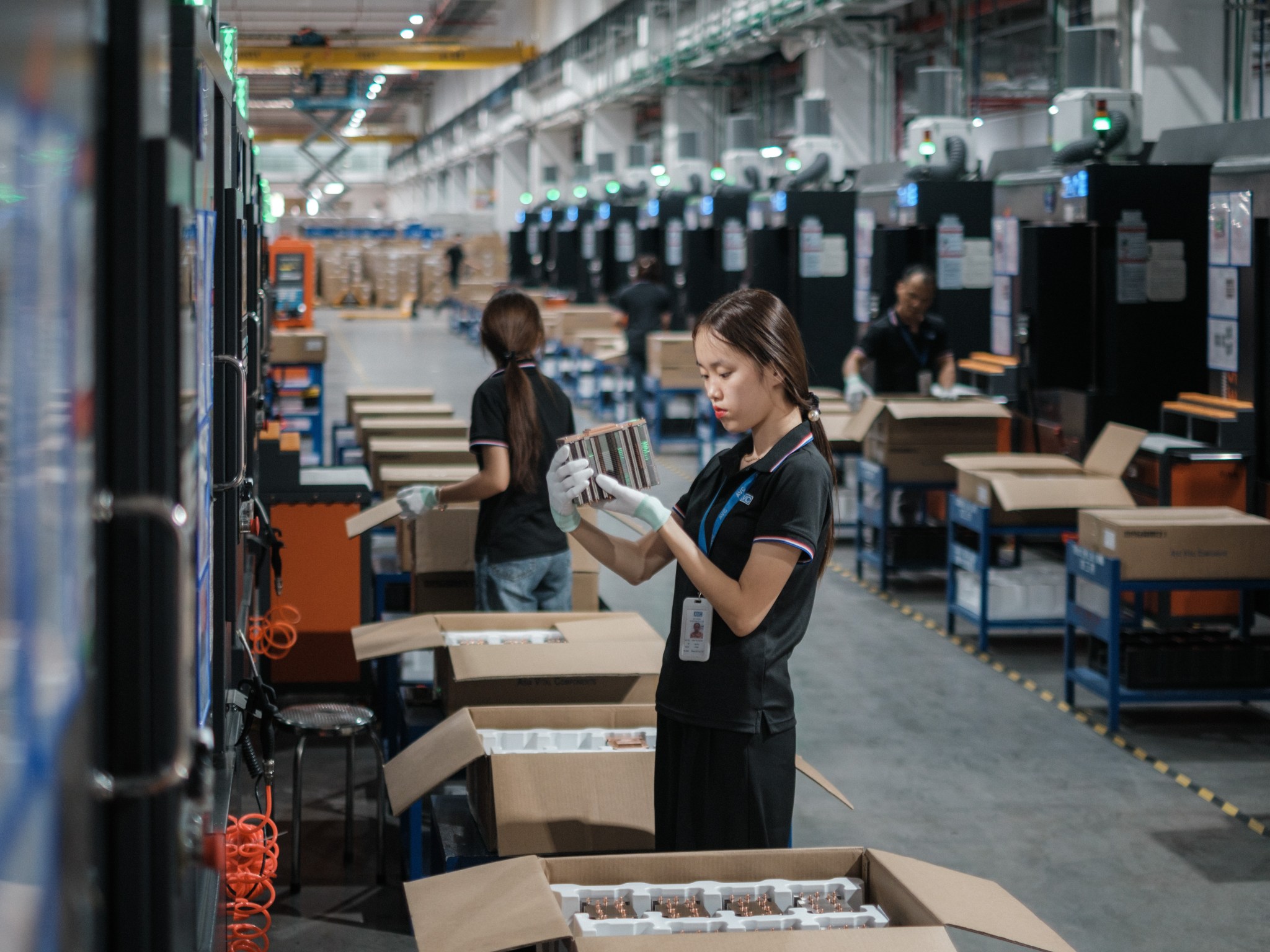
The Asian economy is experiencing a surge in growth, driven by artificial intelligence (AI). Taiwan experienced its first year of double-digit GDP growth since 2010, primarily due to a surge in demand for AI hardware exports. Japan, Malaysia, Singapore, and mainland China reported over 20% growth in exports in July. South Korea, home to chipmaking giants SK Hynix and Samsung, saw exports surge by more than 60%.
Second-quarter GDP growth also surpassed expectations in Singapore, Hong Kong, and Taiwan, driven by electronics exports. Equity markets are also benefiting from the AI boom, with shares in chipmaker ChangXin Memory Technologies and robot manufacturer Unitree surging by more than 450% upon their first days of trading.
However, economists warn that Southeast Asian economies may not fully benefit from this AI boom. Danny Quah, an economist from Singapore's Lee Kuan Yew School of Public Policy, notes that the current economic boom in Southeast Asia is primarily due to the production of supporting semiconductors and the provision of resources for data centers.
These sectors are commodifiable, and no country will sustain a comparative advantage in them. Southeast Asia's AI opportunity lies in its abundance of cheap, low-skilled labor, which could be eroded as the population ages or if skilled workers leave for other regions.
However, structural shortcomings such as limited grid reliability, water shortages, and energy constraints hinder the development of data centers in the region. Moreover, geopolitical tensions between the U.S. and China, with their competing AI initiatives and initiatives like Pax Silica and WAICO, further complicate the region's prospects. Southeast Asia's open and interconnected economic model, built on investments from multiple sources, may be at risk as the region's competitive edge could diminish over time.
Written by urgent.news from Fortune's reporting — not their text. Machine-written — may contain errors; check the original before relying on it.
This story
This is one outlet's version. Read the fullest account.
- Southeast Asia is counting what it automated, it is not counting what came back e27.co
- AI boom, energy shocks see Southeast Asia growth bifurcate freemalaysiatoday.com
- How Southeast Asia and the Gulf Can Shape the Future of AI thediplomat.com
- AI copilot for Southeast Asia ecommerce techinasia.com