Thailand blocks Starlink’s bid for full foreign ownership
Thailand’s Digital Economy and Society Minister Chaichanok Chidchob said on August 20 that he does not support letting Starlink operate in the country under full foreign ownership. He wants Thai partners to hold a majority stake. Chaichanok said the government’s position hasn’t changed. Thai shareholders should hold more than 50%, under a 51:49 structure. That … The story Thailand blocks…
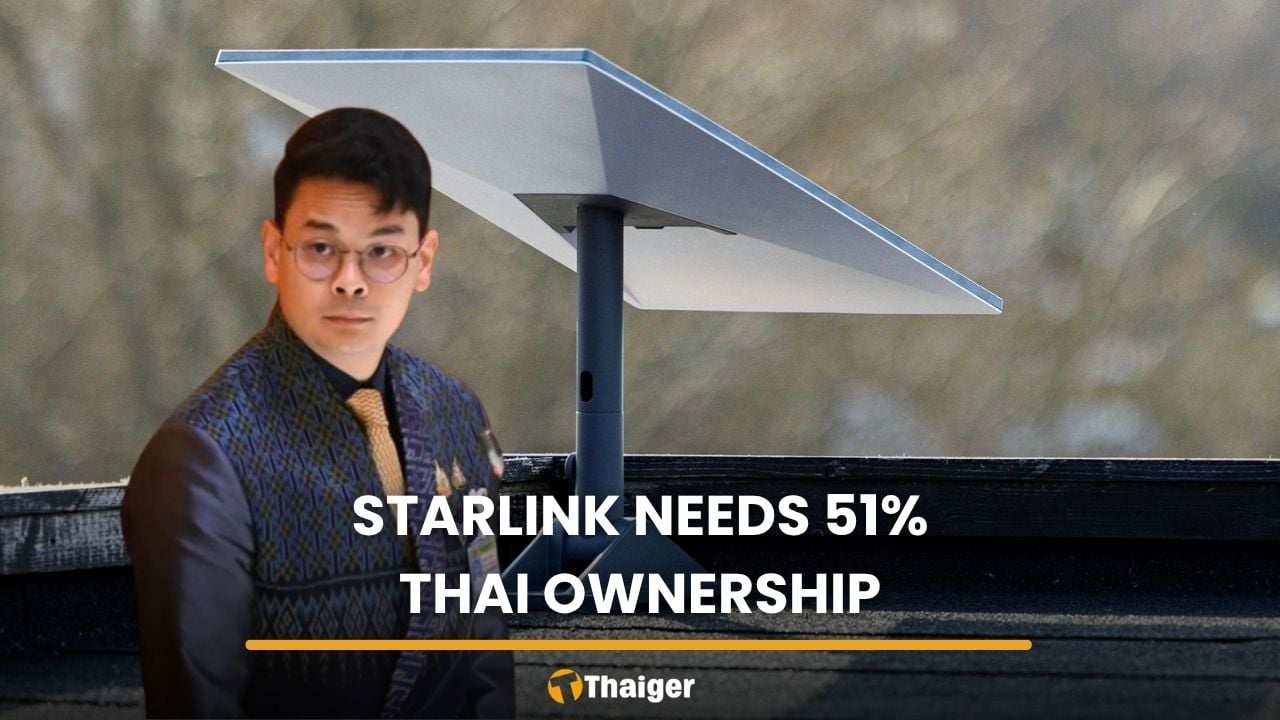
Thailand has refused Starlink's request for full foreign ownership of its satellite internet service. Digital Economy and Society Minister Chaichanok Chidchob stated on August 20 that he does not support allowing Starlink to operate in the country with full foreign ownership. The minister wants Thai partners to hold a majority stake in the partnership. The government's stance on this matter has remained unchanged.
As per Thailand's Foreign Business Act B.E. 2542 (1999), a company registered in Thailand is considered foreign if more than half of its capital is owned by non-Thais. This classification could potentially hinder Starlink's entry into the Thai market. Chaichanok suggested that a different arrangement could work, such as Starlink transferring technology and partnering with a Thai entity to run the business.
He stated that while he is open to considering a 100% foreign ownership if Starlink is willing to transfer technology with a Thai partner, he cannot approve full foreign ownership due to concerns about Thailand's future opportunities in the market, data, pricing, quality and production capacity.
The issue of full foreign ownership raises concerns about data security and could limit future opportunities for Thai telecom and satellite businesses. At the first National Space Policy Committee meeting of the year, held on August 17, officials discussed landing rights for foreign satellite operators and a draft Space Business Act. The proposed direction still favors Thai companies holding a majority stake.
Chaichanok clarified that the government's aim is not to compete with global satellite providers through a state-owned National Telecom (NT). Instead, the government seeks to establish its own infrastructure for emergencies or in case external providers cease service. The interest in Starlink's entry into Thailand has been reignited following its commercial launch in Vietnam on August 13.
Despite Starlink's lack of a commercial presence in Thailand, online questions persist regarding the reasons behind the delay in its entry. The shareholding structure continues to be a contentious issue.
Written by urgent.news from The Thaiger's reporting — not their text. Machine-written — may contain errors; check the original before relying on it.