Python named Jodie Foster first snake to receive pioneering cancer treatment
Chester zoo resident, 23, ‘back to her usual feisty self’ after electrochemotherapy for tumour in her jaw A 15ft (4.5-metre) python is believed to be the first snake in the world to be given a pioneering, life-saving cancer treatment normally used on humans. The 50kg reticulated python, named Jodie Foster after the Hollywood star, has just turned 23 and lives at Chester zoo. Keepers first became…
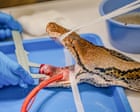
A 15-foot-long python named Jodie Foster, after the Hollywood actress, has become the first snake in history to receive a groundbreaking cancer treatment that is typically reserved for human patients. At the age of 23, Jodie resides at Chester zoo and has shown remarkable resilience following her recent ordeal with a malignant tumour in her jaw. The discovery of her illness came when she began displaying a lack of appetite and spending more time inactive in her habitat.
Jodie underwent surgery to remove the tumour, but it returned, ultimately invading her jawbone. In a race against time, given the severity of the situation, she was subjected to a revolutionary electrochemotherapy procedure, a treatment that is still being explored for its potential use in other animals. Months after the procedure, Jodie is reported to be eating normally and displaying her usual vibrant, energetic demeanor, a testament to the effectiveness of the treatment.
This pioneering procedure was made possible by a collaboration between Chester zoo staff and veterinary specialists from the University of Liverpool. The treatment involved administering the cancer drug bleomycin, combined with controlled electrical pulses, directly to the tumour site. This unique approach temporarily increased the permeability of cancer cells, allowing the drug to be absorbed more effectively.
Veterinary officer Ian Ashpole explained that traditional surgery alone might not have been sufficient to combat the extensive damage caused by the tumour, which made it increasingly difficult for Jodie to eat. Therefore, they sought the expertise of cancer specialists to adapt the electrochemotherapy procedure specifically for a snake.
The success of this treatment is seen as a significant achievement, highlighting the power of interdisciplinary collaboration. The outcome of Jodie's recovery has not only benefited her but also sets a precedent for future veterinary and translational research, with the detailed procedure set to be formally published to share knowledge and insights with the global veterinary community.
Written by urgent.news from Guardian Science's reporting — not their text. Machine-written — may contain errors; check the original before relying on it.