Newsfile to discuss nationwide blackouts, GoldBod controversy, galamsey and water quality
This Saturday on Newsfile, we take a hard look at three issues at the heart of Ghana’s economic security, public infrastructure and everyday life: the state of the power sector, GoldBod’s financial and operational performance, and the growing threat galamsey poses to the water we drink.
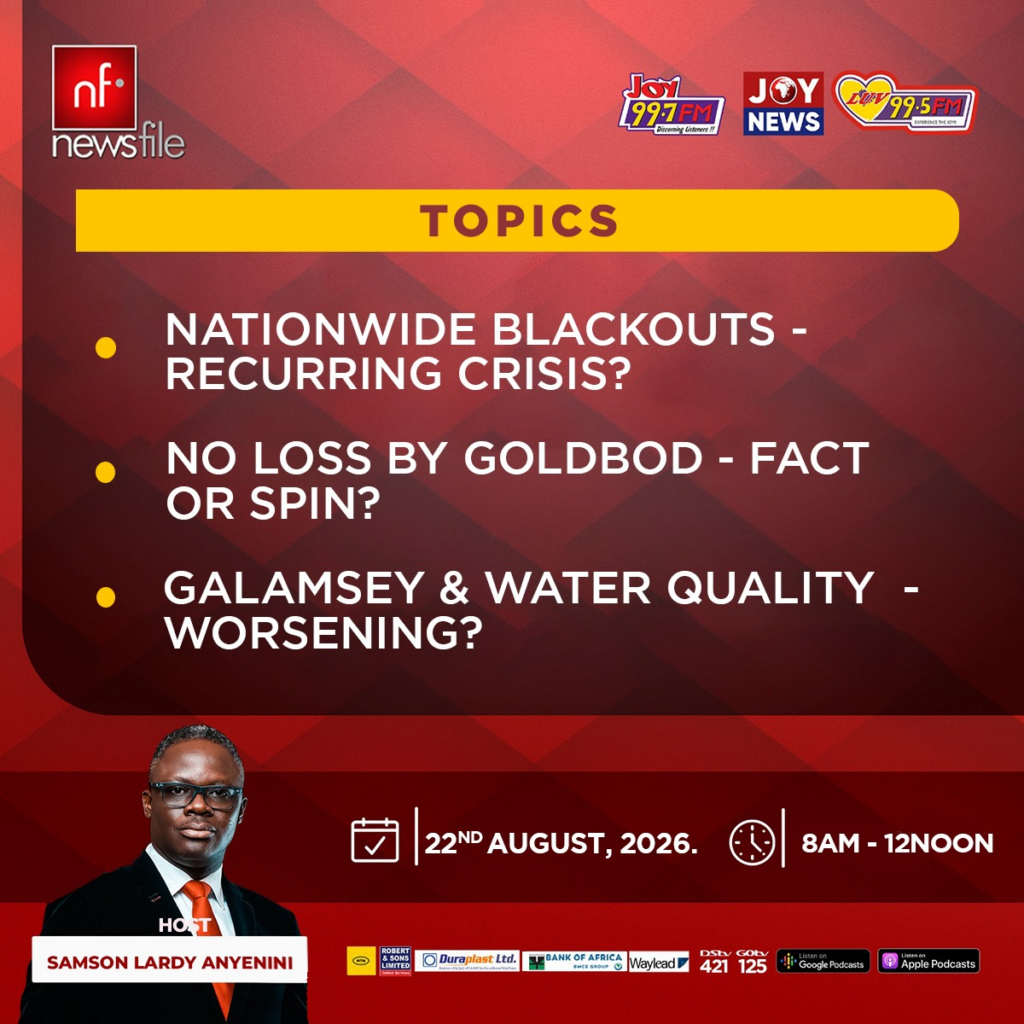
This Saturday, Newsfile will scrutinize three critical issues that have significant implications for Ghana's economic stability and public infrastructure: the state of the power sector, GoldBod's financial and operational performance, and the escalating threat of galamsey on water quality. Recently, another nationwide power outage has reignited debates about the resilience of Ghana's electricity supply system.
GRIDCo's recent confirmation of a major fault on the Akosombo–Volta transmission line has sparked inquiries into whether this latest disruption is a singular technical issue or a symptom of deeper-rooted weaknesses within the power sector. Key questions include the true state of Ghana's electricity infrastructure—whether the challenges stem from generation, transmission, distribution, or a combination of all three—and what investigations have revealed about the system's vulnerabilities.
Despite repeated system disturbances, government expenditures to maintain the energy sector's operations have not fully addressed the root causes of these outages. Investigations into GoldBod's 2025 audited accounts have revealed a substantial surplus, suggesting strong financial performance. However, concerns have emerged regarding the broader gold-for-reserves programme, where the IMF has reported significant losses attributed to the Bank of Ghana's domestic gold purchase operations.
The discrepancy between GoldBod's reported profitability and the losses incurred by the gold-for-reserves policy raises questions about the accurate attribution of figures and the distribution of these losses. Ultimately, Ghana's gold-for-reserves strategy must be evaluated for its contributions to foreign-exchange stability and reserve accumulation, considering the costs involved.
Furthermore, while Ghana debates the value of its gold resources, another resource under increasing pressure is water quality. Unregulated illegal mining persists, contaminating rivers and raising turbidity levels, which strains water treatment facilities and endangers key water sources in the country. Ghana Water Limited claims it can treat polluted raw water to provide potable water, but there are significant doubts about the purity of the water entering treatment plants and the availability of transparent, independently verified water-quality data.
Should the turbidity and pollution levels exceed the capacity of treatment systems, consumers may face uncertainty regarding the safety and quality of their tap water. The impact of galamsey extends beyond turbidity, as the destruction of rivers by illegal mining also endangers the safety and affordability of drinking water. As galamsey continues to devastate Ghana's water sources, the sustainability of providing safe and inexpensive drinking water remains a pressing concern.
The central question that Newsfile seeks to address on Saturday is whether Ghanaians can trust the systems that ensure the reliability of electricity, the protection of the nation's gold wealth, and the safety of their drinking water. Through a comprehensive examination of facts, data analysis, and critical questioning of official explanations, Newsfile aims to provide viewers with a clear understanding of these issues and their potential impact on everyday life in Ghana.
This Saturday at 8 a.m. on JoyNews and MyJoyOnline, join host Samson Lardy Anyenini for an insightful discussion with his panel of experts as they dissect the complexities surrounding these three crucial topics plaguing Ghana's economic security.
Written by urgent.news from MyJoyOnline Ghana's reporting — not their text. Machine-written — may contain errors; check the original before relying on it.