New system could be a safer way to monitor blood pressure in the ICU
A new system can generate blood pressure readings nearly as well as the invasive and risky arterial lines relied on in ICUs and operating rooms.
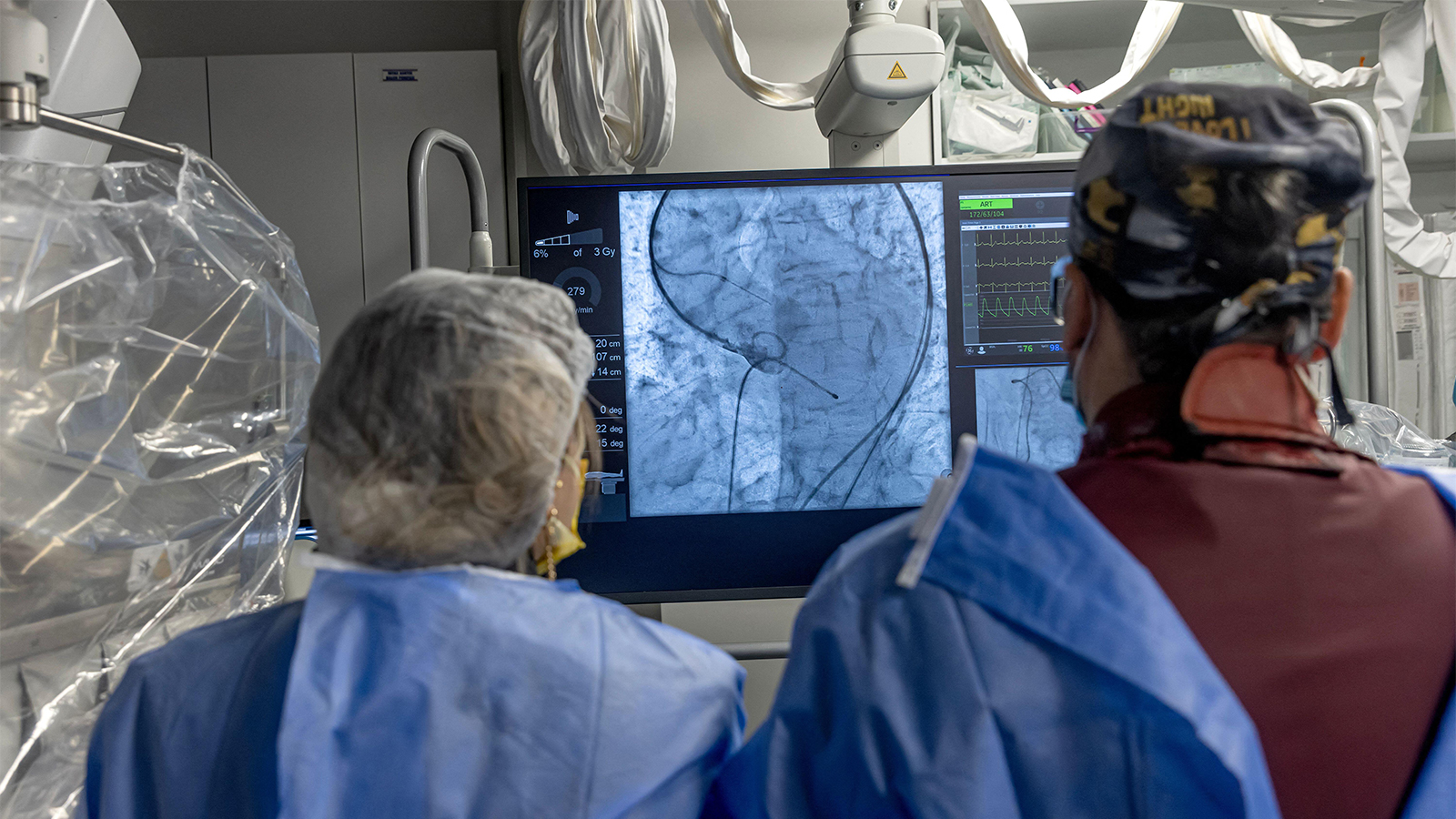
Wearable sensors paired with artificial intelligence can generate blood pressure readings with a level of accuracy comparable to the invasive and dangerous arterial lines used in intensive care units and operating rooms, according to new research. Initial tests involving 28 patients in the Johns Hopkins Hospital ICU showed the system generated waveforms that closely matched those from traditional arterial catheters.
The new technology, called MOSAIC, uses two sensors—a one on the patient's chest and another on a finger—to capture the heart's electrical activity and blood flow, which are then processed by a deep learning model to produce a continuous waveform of blood pressure over time. "We reconstruct waveform data in a way that’s meaningful, accurate, reliable and, most importantly, non-invasive," says senior author Robert Stevens, chief of the Division of Informatics, Integration, and Innovation at Johns Hopkins Medicine.
The researchers hope the MOSAIC system could replace the current standard of care for measuring blood pressure, which involves arterial lines that pose risks such as bleeding, clotting, and infection. The technology could also provide people with hypertension a way to continuously monitor their blood pressure, similar to how wearable glucose monitors are used for diabetes management.
The sensors could be used in regular hospital wards and at home, potentially transforming the way millions of people with hypertension manage their health. The researchers envision the sensors being worn daily by individuals with hypertension to keep tabs on their blood pressure, while also enabling the tracking of blood pressure fluctuations in healthy individuals throughout their daily lives.
Written by urgent.news from Futurity's reporting — not their text. Machine-written — may contain errors; check the original before relying on it.