Mumbai bus drivers bristle at India’s tactics to electrify a century-old fleet
The EV revolution has reached Mumbai’s iconic red public buses, but has come with contracts that push drivers’ incomes and safety into precarity The post Mumbai bus drivers bristle at India’s tactics to electrify a century-old fleet appeared first on Dialogue Earth .
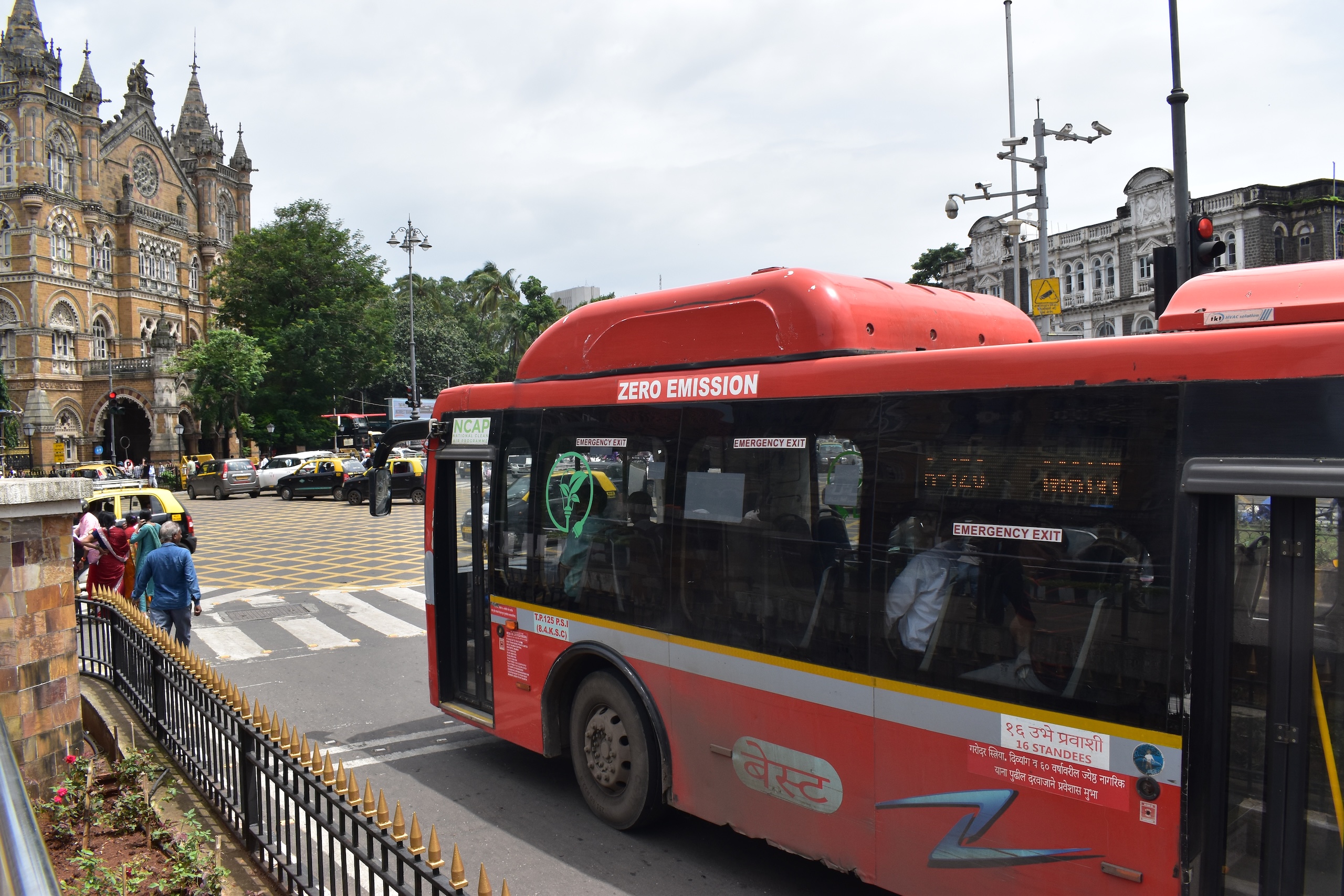
On July 15, 1926, the coastal city of Bombay introduced a novel form of public transportation: a prominent, vibrant red motor bus. A century later, these buses continue to navigate Mumbai's congested roads. From the early morning until the night, their deep, resonant honk cuts through the constant noise of the city. Operated by the Brihanmumbai Electric Supply and Transport (BEST), these buses ferry more than 5.5 million passengers daily, a figure second only to the city's extensive railway network. The iconic red buses have become emblematic of Mumbai, appearing in art and cinema.
Since 2019, Mumbai's BEST buses have transitioned from diesel to compressed natural gas and electricity. As of December 2025, approximately half of the 2,743 BEST buses were electric, making the city one of India's foremost public transport decarbonisation endeavours. BEST aims to achieve 100% electric bus coverage by 2027. The shift to electric buses is costly, leading BEST to engage private operators through various models, including the "wet-lease" system, where private operators acquire and manage the e-buses, with BEST paying a per-kilometre cost known as a "gross cost contract."
This transition has altered the employment dynamics of bus drivers. The wet-lease contract model replaces permanent BEST employees with short-term contractual workers, a change that has pushed many drivers into an uncertain "informal gig-worker category," according to Anumita Roychowdhury, executive director of the Centre for Science and Environment. These workers often lack job security, receiving only minimal benefits, and are exposed to precarious working conditions.
Several BEST Workers' Union representatives have staged protests and strikes demanding permanent employment, higher wages, and improved working conditions. In August 2025, workers under wet-lease contracts began an indefinite hunger strike, which ended after BEST agreed to discuss their demands at the next committee meeting. Suresh Gaikwad, an electric bus driver since 2019, earns INR 19,300 (USD 202) monthly, a 13.5% increase from his starting salary, but without benefits or overtime pay.
He explains that salaries can be deducted during leave or for traffic infractions, leaving him with as little as INR 12,000-13,000 (USD 126-136).
Shashank Rao, the general secretary of the BEST Workers' Union, highlights that a newly hired permanent BEST driver would earn around INR 39,000 (USD 410) monthly, plus benefits. However, BEST has not hired permanently since 2015. Rao argues that driving is an essential function of BEST and should not be contracted out, recommending that pay and service conditions be equivalent for both contract and permanent employees.
Despite not being able to independently verify BEST's hiring practices, Dialogue Earth acknowledged the union's concerns regarding pay parity and worker benefits.
The BEST Workers' Union protested this month, advocating for equal pay for wet-lease workers employed by contractors. Gaikwad emphasizes the poor working conditions faced by drivers, particularly women conductors who lack access to washrooms at depots. He worries about job security and the potential for termination if drivers voice concerns.
Both Gaikwad and Rao stress the need to review and reform the contractual model to incorporate new labor laws, ensuring wage parity, social security, occupational safety, and gender inclusivity across the entire bus sector.
Written by urgent.news from Dialogue Earth's reporting — not their text. Machine-written — may contain errors; check the original before relying on it.
Also reported by 1 other outlet
- BMW eyes bigger EV share for its India fleet economictimes.indiatimes.com