Japan's Nikkei set for worst week in over a month amid Middle East uncertainty
TOKYO: Japan’s Nikkei share average slipped on Friday, putting it on course for its worst week in more than a month, as uncertainty surrounding the Middle East conflict lifted oil prices and fanned inflation fears. The Nikkei eased 0.3% as of the midday recess, setting up a 4% weekly loss, the biggest since the week ended July 17. The broader Topix declined 0.1%, on track for a 3.4% weekly slide.…
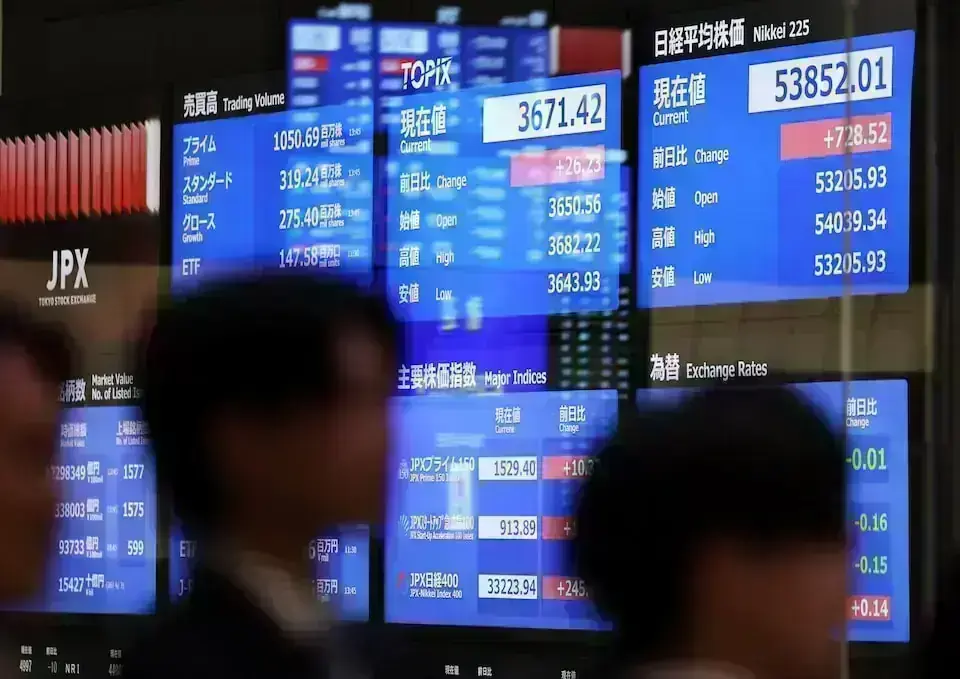
Japan's Nikkei share average saw a significant drop on Friday, setting the stage for its worst weekly performance in over a month. The decline was fueled by uncertainty surrounding the Middle East conflict, which drove up oil prices and heightened inflation concerns. The Nikkei fell by 0.3% during the midday recess, with a projected 4% weekly loss, marking the steepest weekly decline since the week ending on July 17.
The broader Topix also declined by 0.1%, on track for a 3.4% weekly slide. U.S. Treasury Secretary Scott Bessent announced on Thursday that the United States would impose "the toughest sanctions in history" on Iran, intensifying economic pressure in hopes of ending the nearly six-month-long war. Crude oil prices surged by around $2 overnight.
Inflation concerns contributed to a rise in Japanese bond yields, with the 10-year government note's yield increasing by 3 basis points to 2.875% on Friday. Strategist Maki Sawada of Nomura Securities noted that "profit taking is likely heading into the weekend with oil prices and bond yields elevated amid the uncertain situation in the Middle East."
Major components such as Fast Retailing, which operates the Uniqlo chain, saw heavy losses, sliding by 4% and contributing significantly to the Nikkei's decline. SoftBank Group, an AI-focused startup investor, also experienced a 1.3% drop. The Nikkei's performance was relatively balanced, with 119 of its 225 components falling, 103 rising, and three trading flat.
Shipping emerged as the top performer among the 33 industry groups on the Tokyo Stock Exchange, climbing by 2.8%. This performance was driven by expectations of higher freight rates, although the critical Strait of Hormuz shipping route remained effectively closed.
Written by urgent.news from Business Recorder's reporting — not their text. Machine-written — may contain errors; check the original before relying on it.