Iran president says time to end war while Tehran is in position of strength
Iranian President Masoud Pezeshkian said on Friday it was time to end the months-long Middle East war with the US because Tehran appeared to be in a stronger position than Washington. Talks between the long-time foes remain on hold, and the war started by the US and Israel in February has been locked in a stalemate. Tehran is keeping the key Strait of Hormuz partially shut, and Washington is…
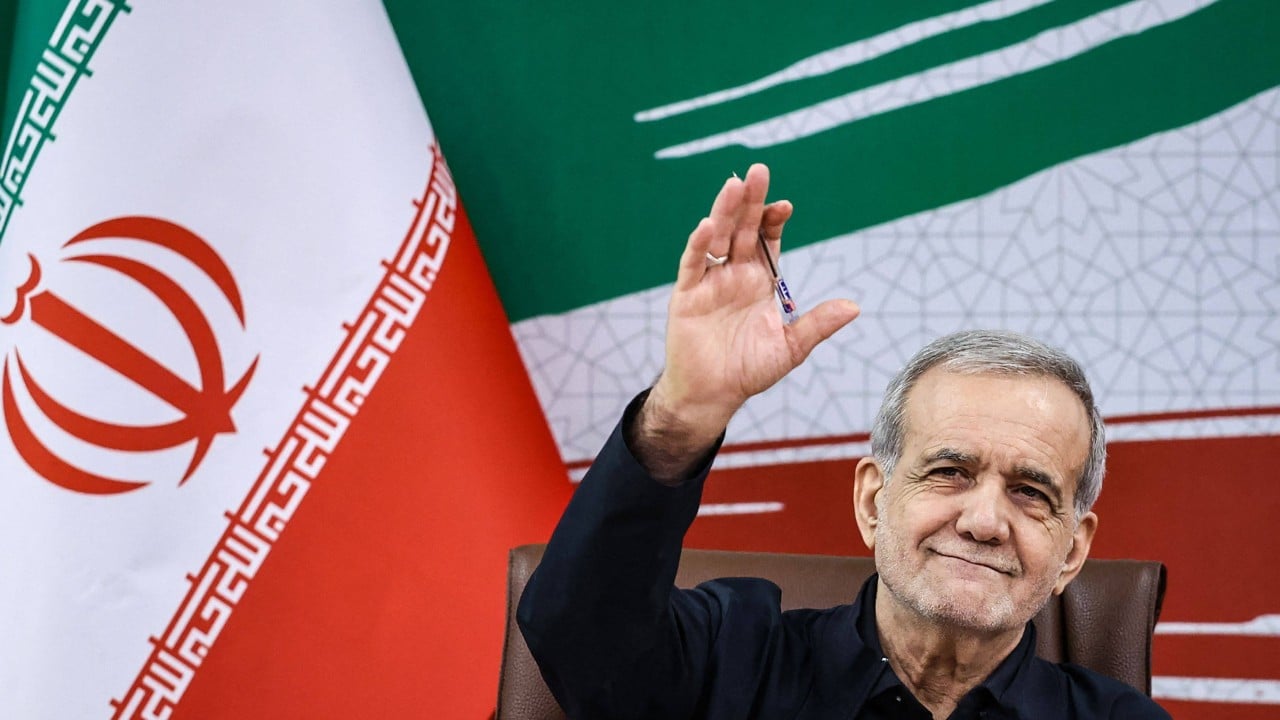
Iranian President Masoud Pezeshkian declared on Friday that it was time to end the ongoing Middle East war with the United States, claiming Tehran was now in a stronger position than Washington. The conflict initiated by the US and Israel in February remains stalled, with Iran blocking part of the crucial Strait of Hormuz and the US persisting with its naval counter-blockade.
"We should bring the war to an end now as we are in a position of power and dignity," Pezeshkian stated during a meeting with doctors. He further defended a memorandum of understanding concluded with the US in June, asserting that it did not represent Iran's defeat. "They cannot find even a single clause in this agreement that indicates capitulation.
All the commitments concern the other side," he argued. Pezeshkian's comments followed Supreme Leader Mojtaba Khamenei's approval of the deal, despite having differing views. Hardline lawmakers in Iran's parliament have criticized the government for the deal, accusing it of ceding concessions to the US, primarily regarding the reopening of Hormuz.
Reports from US media suggest that the American navy has been facilitating secret tankers' passage through the southern part of the strait, allowing between five and 10 million barrels of oil to be exported daily. Iran's assertion of being in the stronger position stems from a US announcement to intensify sanctions, which Iran's foreign ministry denounced as "economic terrorism."
US Treasury Secretary Scott Bessent vowed on Thursday that Washington would "collapse" the Iranian regime through its sanctions campaign. This highlights the shifting US strategy, transitioning from military to economic pressure as the unpopular war enters its sixth month. China also criticized the American plan, urging all parties to resolve the issue through political and diplomatic means.
The US is expected to provide further details of the economic sanctions during a press conference on Monday. Other senior Iranian officials dismissed the US plan, with Foreign Minister Abbas Araghchi calling it a "diversion from America's own crisis." Hezbollah, an Iranian-backed group in Lebanon, dismissed the sanctions, vowing to continue its "path of resistance" against Israel.
This comes as the US supports direct talks between Israel and Lebanon, technically in a decades-long state of war, to resolve the recent hostilities sparked by Hezbollah's rocket attacks in support of its Iranian ally.
Written by urgent.news from South China Morning Post's reporting — not their text. Machine-written — may contain errors; check the original before relying on it.
This story
This is one outlet's version. Read the fullest account.