How Chile telescope accidentally captured a missing link in astronomy
An unfinished observatory in Chile has captured dense gas clouds from a dying star. These expelled clouds are now blending back into the Milky Way galaxy. This breakthrough demonstrates how stellar elements are recycled for future celestial bodies. The observatory, MOTHRA, achieved this during calibration tests in November 2025. The findings offer critical new insights into stellar mass loss…
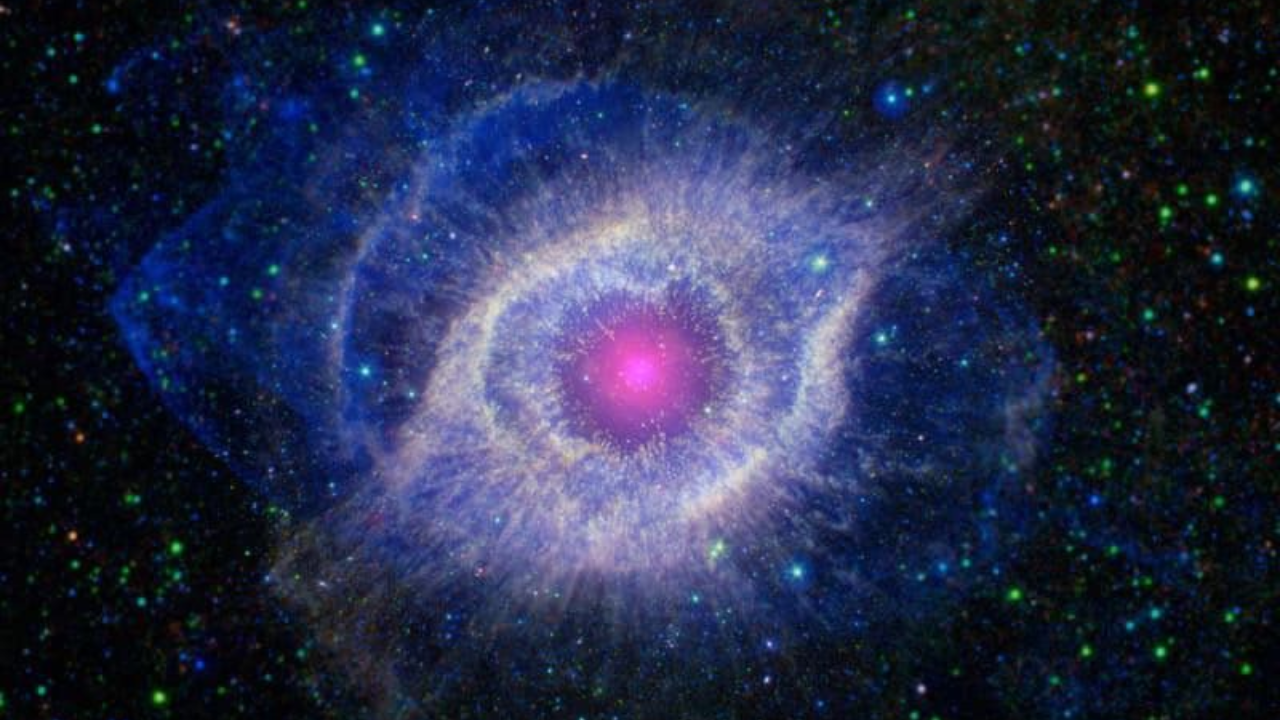
In a surprising turn of events, an incomplete telescope built in Chile has made a significant discovery that sheds light on a longstanding mystery in astrophysics. The custom-built observatory, known as MOTHRA (Modular Optical Telephoto Hyperspectral Robotic Array), has unexpectedly captured evidence of how dying stars recycle essential elements like carbon and oxygen back into the Milky Way galaxy.
This breakthrough, detailed in a study published in Nature, demonstrates the process by which these foundational building blocks are dispersed and incorporated into future stellar nurseries, planetary bodies, and even life itself.
The milestone occurred accidentally during calibration tests in November 2025. Researchers were assembling a composite optical instrument designed to link hundreds of commercial camera lenses into a unified array. With less than 200 out of 1,140 lenses installed, they aligned the array toward the Helix Nebula, a vast, bright ring of gas located about 650 light-years away from Earth. The nebula is the remnant of a Sun-like star that has expelled its outer layers in its final stages.
While scientists have theorized that stellar envelopes enrich the surrounding interstellar medium, capturing this dispersal in real-time has been a significant challenge. However, MOTHRA's observations revealed 22 faint, dimly lit arcs extending into the outer halo beyond the Helix Nebula's primary bright ring. These arcs are interpreted as bow shocks, which resemble the wake left behind a moving object and are formed as dense pockets of ejected matter collide with the surrounding interstellar medium.
The smaller bow shocks located further from the core appear softer and more fragmented, illustrating how these clouds gradually break down and dissolve into space over approximately 10,000 years. Sun Kwok, an astronomer from the University of British Columbia not involved in the research, praised the findings for providing critical new insights into the interaction between stellar mass loss and interstellar space.
The breakthrough was made possible by MOTHRA, a low-cost observatory built with financial backing from Alex Gerko, the founder and CEO of XTX Markets. The telescope, located at Chile’s El Sauce Observatory, is scheduled for full operational completion by the end of the year. Modeled after its predecessor, the Dragonfly array in New Mexico, MOTHRA's main goal is to trace the faint filaments of the cosmic web that connect distant galaxies, where vast reserves of matter emit extremely faint light signals.
Written by urgent.news from Times of India's reporting — not their text. Machine-written — may contain errors; check the original before relying on it.