Give young people skills and the systems to create jobs
Ghana’s youth are its economic engine. Today, young people make up roughly 38% of Ghana’s population of about 35 million, meaning millions of young Ghanaians are entering, or preparing to enter, an economy that must create opportunities at an extraordinary pace.
Ghana’s youth population, numbering around 13 million, represents a significant economic force for the country. To capitalize on this demographic advantage, the government must create approximately 300,000 new jobs annually, given the existing demand. However, this goal hinges on equipping young Ghanaians with the necessary skills, resources, and opportunities to transform their potential into sustainable livelihoods.
Unfortunately, many young people in Ghana struggle with skills gaps, lack of access to affordable capital, weak market linkages, and other systemic barriers that hinder their ability to convert ideas into viable businesses and jobs. The financial hurdle is particularly daunting, with borrowing costs for bank loans reaching up to 40% annually, and financing from microfinance and community-based institutions being even more expensive.
For aspiring entrepreneurs, possessing an idea alone is often insufficient; they must also possess the technical, digital, financial, and market knowledge required for success. This underscores the critical importance of youth skills development. Skills go beyond merely placing young people in jobs; they empower individuals to create jobs, solve problems, adapt to market changes, and build enduring enterprises.
The story of Ayishetu Adam, a 30-year-old woman with albinism, exemplifies the necessity of practical skills development. Despite holding a Higher National Diploma in Communication and Media Studies, Ayishetu faced persistent exclusion from the job market and economic hardship. Through a livelihood skills training programme offered by Kosmos Innovation Center in collaboration with AGRA and the Mastercard Foundation, Ayishetu gained hands-on experience in producing soybean-based products.
This training equipped her with the practical skills and resources needed to start her own business, leading to her current daily earnings of GHS300 (approximately USD 26.10), with the potential to earn up to GHS500 (USD 43.50) per day.
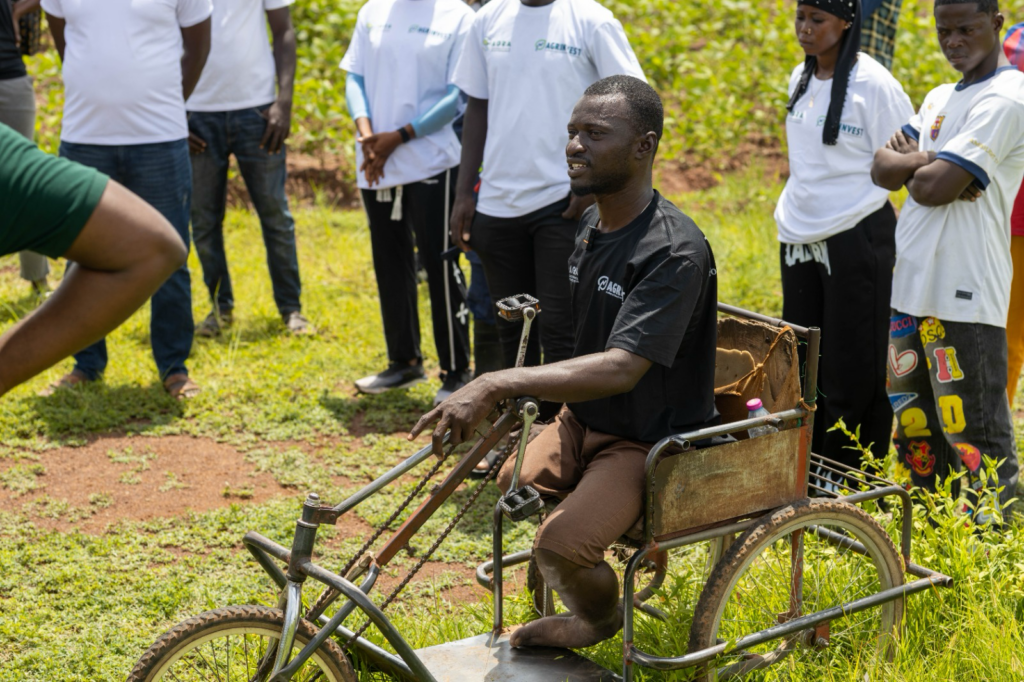
Similarly, Salifu Suale, a 30-year-old individual with a disability, faced structural and physical barriers to mechanizing his soybean production. With support from KITA, Agri Invest, and AGRA, Salifu gained access to private mechanization services, enabling him to utilize his three acres of land to produce about 4 metric tons of soybeans valued at GHS 11,000 (USD 1,000).
This intervention not only helped Salifu avoid crop losses but also improved the quality of his soybeans, facilitated market access, and increased his income stability. His experience demonstrates the transformative power of inclusive skills development, benefiting young people with disabilities and underserved communities. The broader lesson is clear: to fully harness Africa’s youth dividend, development partners, governments, educational institutions, and the private sector must prioritize inclusive skills development, ensuring that all young people, regardless of their background or abilities, have access to the skills and resources needed to create value and achieve economic independence.
Written by urgent.news from MyJoyOnline Ghana's reporting — not their text. Machine-written — may contain errors; check the original before relying on it.