Filler: Who Answers When Your Website Doesn't Cover the Topic ?
Buyers now evaluate vendors inside AI conversations. I traced every citation across two assistants and found who answered when the vendor disappeared.
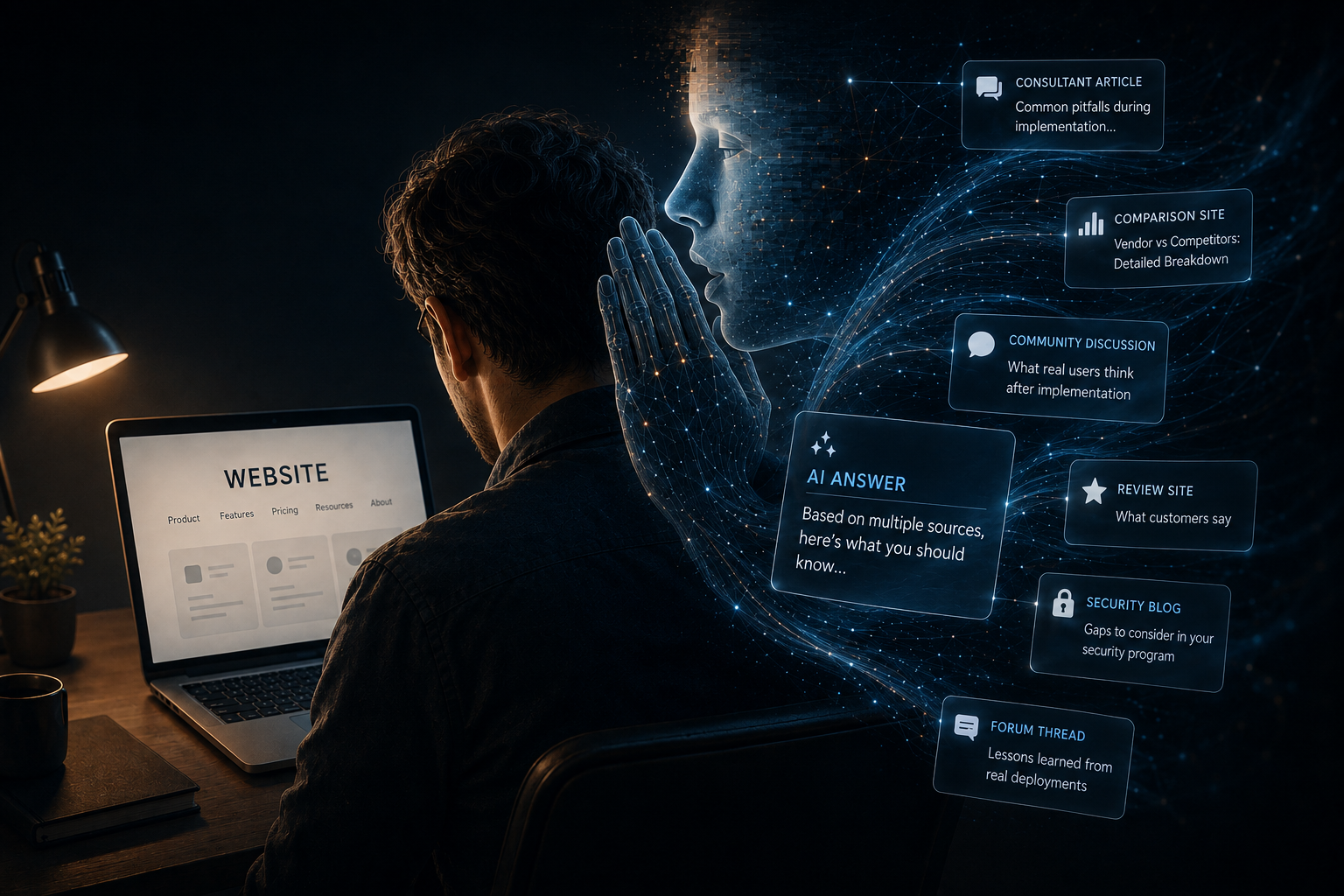
When a website does not cover a topic, buyers turn to artificial intelligence and conversational search for answers. A Forrester survey of 18,000 business buyers in 2025 found that 94% used AI in the buying process, with generative AI or conversational search named as the most meaningful source. Buyers paste the website URL into an AI assistant and ask questions directly, receiving answers that span implementation, pricing, and areas where customers may leave.
The assistant reads the site once and then answers subsequent queries, providing a neutral perspective that eliminates sales pressure and biased viewpoints. However, when the website lacks sufficient coverage on a particular topic, the AI assistant bridges the gap by pulling information from various sources such as competitor comparison pages, consultancy posts, review aggregators, and its own training data.
This "filler" content maintains a consistent tone and structure similar to the answers derived from the website itself. The assistant does not report a gap in information, as doing so would result in a failed task and loss of buyer trust. Instead, it provides answers sourced from external materials, ensuring continuity in the conversation.
The effectiveness of a website's coverage is measured by the distance between what it answers and what a buyer asks, rather than the sheer number of pages. A site with a narrow focus may have thin coverage, while comprehensive articles published elsewhere can fill those gaps. In a test conducted on August 2, 2026, nine questions were asked to two AI assistants about the vendor Vanta, using the same wording and order.
The source of answers varied depending on the topic, with the majority of answers being sourced from Vanta in Tier A questions, none from Vanta in Tier B contested questions, and seven sources from a consultancy in Tier C questions. This demonstrates that when a website covers a topic, the AI assistant retrieves information directly from the site, while for topics not covered, the assistant turns to external sources, presenting a unified and neutral response.
Written by urgent.news from HackerNoon's reporting — not their text. Machine-written — may contain errors; check the original before relying on it.