Urgent.News

What's breaking now, across thousands of outlets.

Editions

Science

El Niño set to be 'strongest in living memory', says Met Office

Scientists say the growing El Niño weather pattern is an "unprecedented event" and means 2027 is likely to be the world's hottest year on record.
El Niño set to be 'strongest in living memory', says Met Office

The Met Office has warned that the El Niño event currently developing over the Pacific Ocean could be the strongest in living memory, potentially making 2027 the hottest year on record. This powerful natural climate phenomenon raises global temperatures and increases the likelihood of extreme weather, enhancing the effects of human-induced climate change.

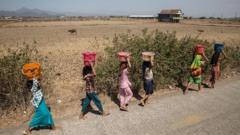
Early indications suggest El Niño may already be influencing global weather patterns, with below-average monsoon rains in India and suppressed hurricane activity in the Atlantic Ocean. The Met Office's head of long-range forecasting, Prof Adam Scaife, notes that he has never observed an El Niño signal this intense in their forecasts.

El Niño is a naturally occurring weather pattern occurring every two to seven years, lasting around a year. It occurs when trade winds weaken or reverse, allowing warm water to spread eastwards, releasing heat into the atmosphere and altering rainfall patterns. Current measurements show sea surface temperatures in a key Pacific area are well over 2C above average, with forecasts suggesting they could exceed 3C, possibly reaching 4C.

This would be unprecedented in records dating back to 1950 and likely the strongest event since the 19th century. The Met Office predicts that the warmer-than-average ocean depths, potentially reaching 8C above normal at 100m depth, could further intensify the El Niño. Some other climate groups have projected even stronger El Niño events.

The effects of El Niño are widespread, with potential impacts on weather patterns globally, including a wet, stormy autumn for the UK. While El Niño is not expected to be a major driver of recent record-breaking heatwaves, it could lead to wet and stormy conditions during autumn and early winter in north-west Europe, potentially including the UK.

Written by urgent.news from BBC Science's reporting — not their text. Machine-written — may contain errors; check the original before relying on it.

This story

This is one outlet's version. Read the fullest account.
Read the original at bbc.co.uk →

More in Science

More from Friday 21 August →