Dissected: How scammers built a fake Zoom call from real videos of PM Wong and other Singapore leaders
Analysis of full footage shared exclusively with CNA found that the scammers used obscure or dated YouTube videos of high-profile figures, alongside other deceptive techniques, to make their fabricated virtual event convincing.
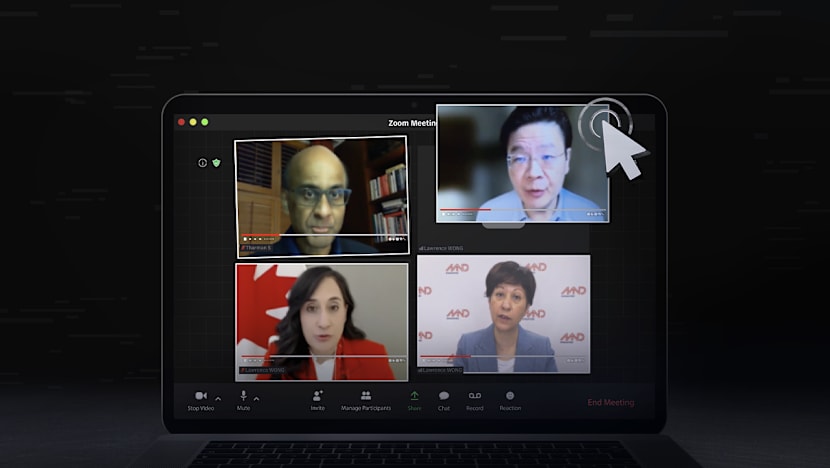
In April 2022, Singapore's then-Finance Minister Lawrence Wong participated in a press conference via video link from the United States, discussing the easing of COVID-19 safety measures. Four years later, scammers employed footage from this call to deceive a victim into believing that Wong, now Singapore's Prime Minister, was part of a group of leaders seeking financial help to stabilize trade flows through the Strait of Hormuz.
The victim transferred at least S$4.9 million to the scammers, according to the Singapore Police Force (SPF). The investigation by CNA exposed several techniques used by the scammers, including the use of real but obscure videos from high-profile figures, as well as the manipulation of audio and graphic overlays to create a convincing virtual event.
Nine real individuals or institutions were depicted as participants in the scam call, including Singapore's Second Minister for Finance and National Development, Indranee Rajah. Wong's footage was taken from a March 2023 interview with radio station Money FM 89.3, where he discussed housing and urban planning initiatives. The audio from this interview was replaced with synthetic speech, while the video remained largely unedited.
The scammers also used footage of President Tharman Shanmugaratnam from a virtual panel hosted by the Centre for Economic Policy Research in November 2020, and a clip of Wong's COVID-19 announcement from his March 2022 press conference. While the video of Wong's COVID-19 announcement had around 30,000 views, the clips of Indranee and Tharman had fewer than 350 views each, making it less likely for victims to have seen them.
To avoid detection, the scammers removed watermarks from the original footage and replaced them with a "Live Zoom Recording" graphic. The audio tracks were also replaced with synthetic speech, which sometimes made the lip movements appear out of sync with the speech. One portion of the fake Zoom call could not be traced to any source videos, suggesting possible AI-generated manipulation.
Written by urgent.news from Channel News Asia's reporting — not their text. Machine-written — may contain errors; check the original before relying on it.