Canada, U.S. race to reach a trade deal before midnight tariff deadline
Canadian officials, led by Canada-U.S. Trade Minister Dominic LeBlanc and chief negotiator Janice Charette, have been in Washington, D.C. trying to finalize a trade deal.
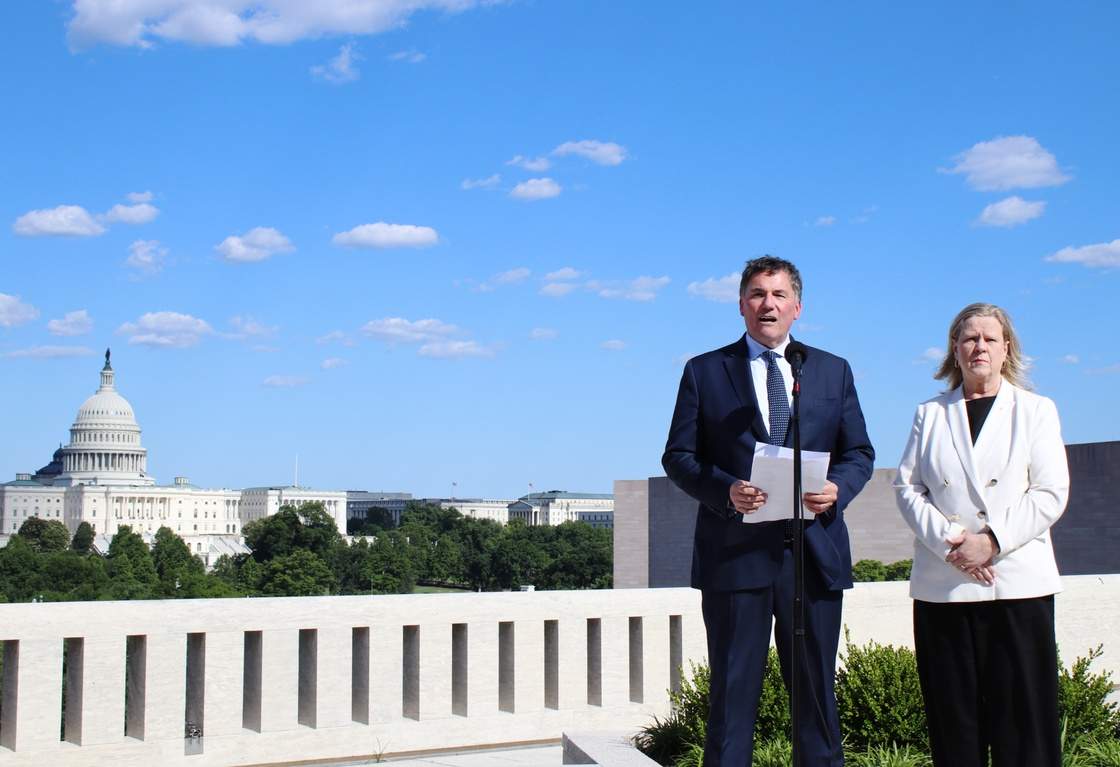
U.S. President Donald Trump indicated on Friday that negotiations with Canada on an initial trade deal were progressing well, as Canadian and U.S. negotiators worked to finalize the terms prior to an upcoming tariff deadline. Canada's Trade Minister Dominic LeBlanc and Chief Negotiator Janice Charette met with U.S. Trade Representative Jamie Greer in Washington, alongside a delegation of Canadian trade officials, to finalize an agreement before tariffs on billions of dollars worth of goods take effect at midnight on Saturday.
Trump, speaking to reporters before leaving for South Carolina, did not confirm if he would extend the deadline but stated, "The deal with Canada is moving along, and we should be able to have a deal with Canada."
Canadian negotiators, led by LeBlanc and Charette, were working on the finer points of the deal with Greer. Mark Wiseman, Canada's Ambassador to the United States, and Marc-Andre Blanchard, Prime Minister Mark Carney's chief of staff, attended meetings for a second day in a row. Canadian premiers were asked to support the deal by allowing U.S. alcohol back onto their shelves, a move that had been a source of tension between the two countries.
Prime Minister Mark Carney requested this during a virtual meeting with Canadian premiers on Wednesday.
LeBlanc announced that both sides were "very close" to a final deal after a three-hour meeting with Greer on Thursday afternoon. U.S. officials suggested that the tariff relief could be reduced to 25% for steel and aluminum and 15% for auto tariffs. Canadian sources reported discussions about tariff relief for Canada's softwood lumber industry.
Conservative Leader Pierre Poilievre cautioned that any sectoral tariffs on steel, aluminum, automobiles, and lumber would be "unacceptable" and could lead to the de-industrialization of Canada's economy.
Manitoba Premier Wab Kinew expressed skepticism about a good-faith trade deal with Trump, stating, "The prime minister very clearly asked us to put the booze back. He very clearly wants this. He’s like, you know, just blame me, put this on me." Kinew added that he was not announcing a return of U.S. alcohol to Manitoba's shelves and would reserve the right to take it back off again if necessary.
Nova Scotia Premier Tim Houston said he was willing to work through the process of reinstating U.S. alcohol, pending a final deal. British Columbia Premier David Eby called for a "Team Canada" approach, while Saskatchewan Premier Scott Moe expressed optimism about the deal.
Written by urgent.news from Global News's reporting — not their text. Machine-written — may contain errors; check the original before relying on it.