Can Brain Proteins Spread by Blood Transfusions? Early Research Prompts Closer Look.
(MedPage Today) -- Blood transfusions could possibly transmit harmful brain proteins like amyloid-beta, a review suggested, and additional research and safety measures may be warranted. "The risks of transfusion-related transmission of amyloid...
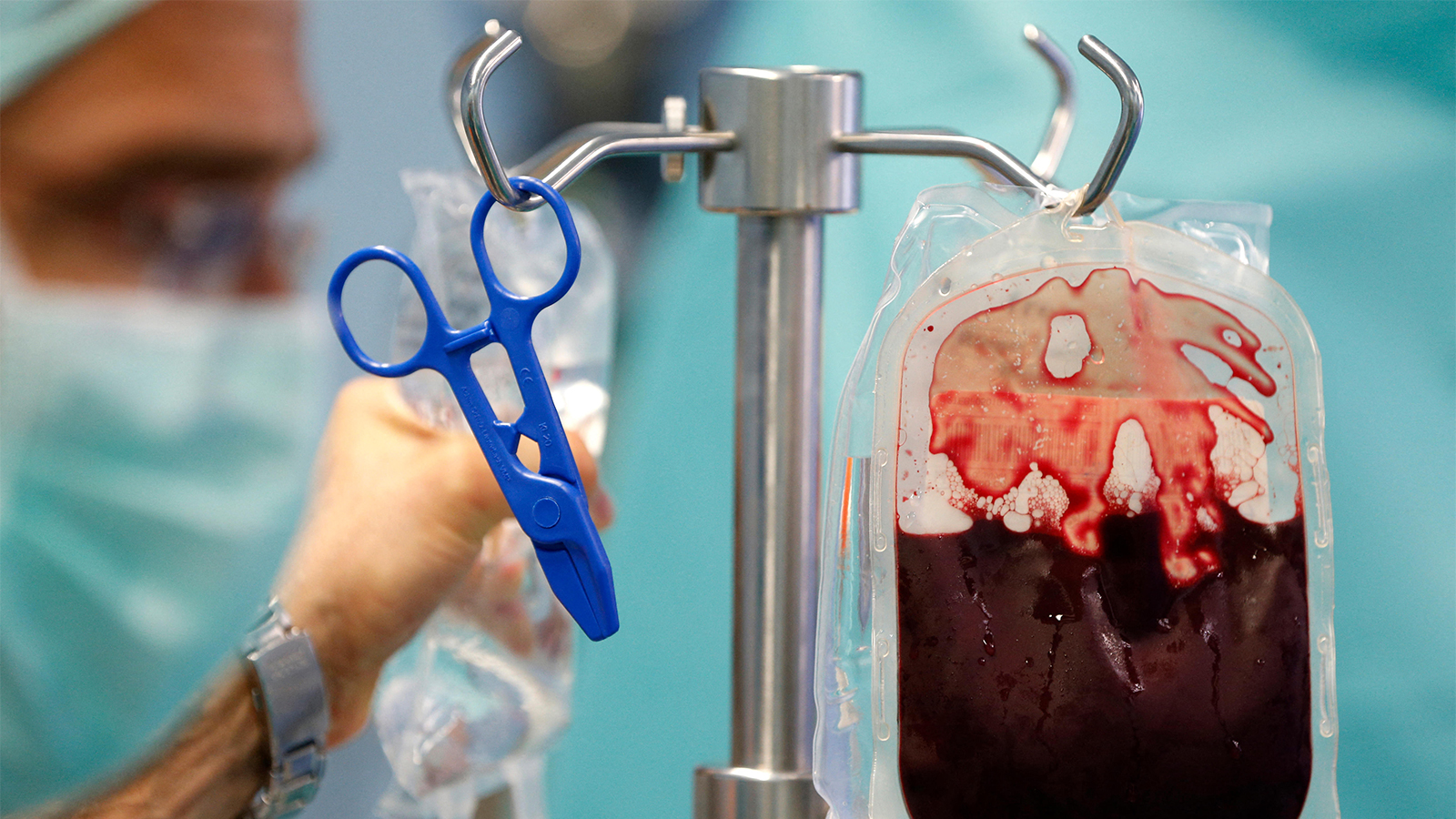
A review suggests that infectious brain proteins, like amyloid-beta, may be transmitted through blood transfusions, prompting calls for further research and safety measures. John Collinge, MD, of University College London and colleagues wrote about this in The Lancet, noting that the risks of transfusion-related transmission of amyloid-beta pathology are currently unknown and will require time to clarify.
The article emerged from an international workshop discussing whether amyloid-beta pathology might be transmissible via blood transfusions, sparked by a large Scandinavian study suggesting a link between such transfusions and intracerebral hemorrhage (ICH), which could be linked to cerebral amyloid angiopathy (CAA).
The Swedish-Danish epidemiological study, involving over 1 million patients, found that recipients of red blood cell transfusions from donors who later experienced multiple ICHs had a significantly higher risk of having ICH themselves. While the study has limitations, such as not being able to fully confirm CAA, the findings suggest that a factor linked to ICH risk could be transmissible between donors and recipients, most likely through amyloid-beta seeds.
These seeded protein misfolding and aggregation processes are relevant to several neurodegenerative diseases, including prion-related fatal neurodegenerative conditions. In 2015, Collinge reported human-to-human transmission of amyloid-beta pathology in patients who died from iatrogenic Creutzfeldt-Jakob disease after receiving cadaveric human growth hormone.
Similar reports emerged regarding early-onset cerebral amyloid angiopathy following childhood medical procedures using cadaveric dura mater. A 2024 case series by Collinge and colleagues indicated that children treated with potentially contaminated cadaver-derived pituitary growth hormone developed brain changes consistent with early-onset Alzheimer's disease.
Collectively, these early studies suggest that amyloid transmission through transfused blood and blood products is a concern that merits attention. Collinge and colleagues argue that acknowledging this knowledge gap is crucial, as further research is essential to inform future discussions and decisions. Susan Kohlhaas, PhD, of Alzheimer's Research U.K., emphasized the need for specific research to determine whether transfusion-related transmission of amyloid-beta is occurring, who might be at greatest risk, and if precautions are necessary.
While the evidence for transmission through blood transfusions is not yet compelling, the authors stress that more research is crucial to address this important public health question.
Written by urgent.news from MedPage Today's reporting — not their text. Machine-written — may contain errors; check the original before relying on it.