What Are the Implications of the Mecca Pact for India?
New Delhi needs a new roadmap for navigating relations in the Gulf and increasing its security profile.
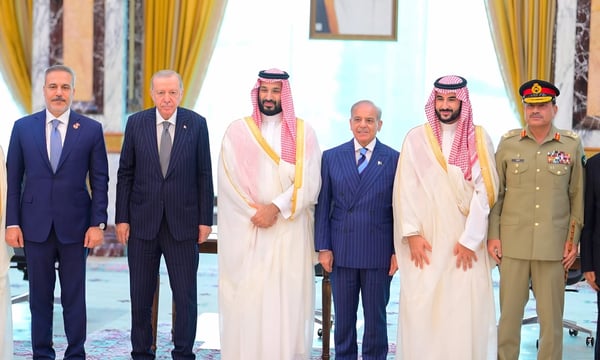
The Mecca Joint Defence Agreement, signed by Saudi Arabia, Pakistan, and Turkiye, has raised concerns in India's strategic circles. Dubbed an "Islamic NATO," the pact has been viewed by some as a strategic move by Pakistan, India's adversary. The agreement, which forms a collective deterrence mechanism involving a GCC member, a NATO member, and an Islamic nuclear power, has the potential to significantly bolster military capabilities.
However, its practical implications remain unclear. Despite its seemingly abstract nature, the pact could signal a shift in the Gulf's security architecture, potentially impacting India's economic and security interests. With approximately 8.8 million Indian nationals residing in the region and the GCC being India's largest trading partner, the pact could have far-reaching consequences.
New Delhi's approach to the Gulf, which has been primarily anchored to its strategic ties with the UAE and Israel, may need to be reevaluated in light of this development. The Mecca pact highlights the need for India to explore security and defense partnerships with more Gulf countries, enhancing its military reach in the region.
As the geopolitical landscape evolves, India must adapt its policies to ensure its energy security, trade, and connectivity ambitions.
Written by urgent.news from The Diplomat's reporting — not their text. Machine-written — may contain errors; check the original before relying on it.