The Mecca Pact: A new quest for strategic autonomy
For now, the pact’s principal strength may lie in its political message and deterrent effect.
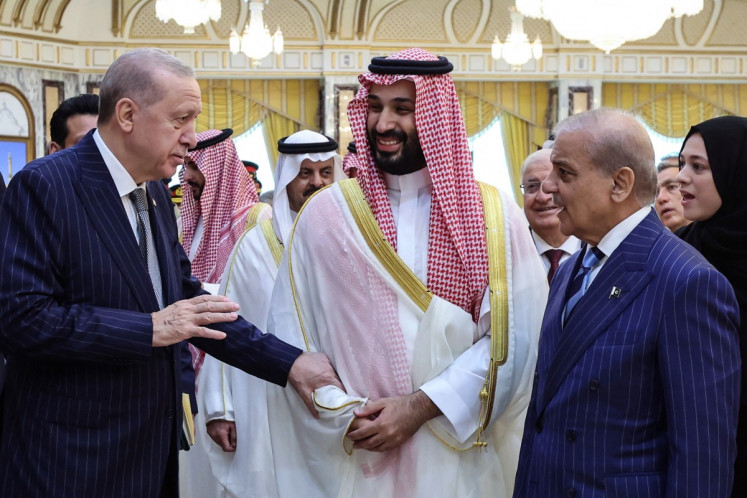
On August 7, Saudi Crown Prince Mohammed bin Salman, Turkish President Recep Tayyip Erdoğan, and Pakistani Prime Minister Shehbaz Sharif signed the Mecca Joint Defence Agreement in Saudi Arabia's holy city of Mecca. This pact signifies a significant development in Middle East security politics, as the conflict between the United States and Israel against Iran has evolved into a broader regional dispute. Pakistan views the agreement as a means to bolster "collective deterrence" against all forms of aggression.
Despite the pact's potential deterrent value, specifics regarding its command structure, troop deployment procedures, and military obligations remain undisclosed. Consequently, the pact's primary strength may rest in its political message and deterrent effect.
The pact unites three nations with diverse strategic positions: Saudi Arabia, a dominant Gulf power and guardian of Islam's two holiest cities; Turkey, a NATO member boasting substantial military capabilities; and Pakistan, a Muslim-majority nation and nuclear-armed state. This unique composition confers considerable geopolitical influence upon the agreement.
For Saudi Arabia, the pact serves a dual purpose: enhancing defenses against Iran while diminishing strategic reliance on the United States without severing ties with Washington. Historically, Saudi security has been heavily dependent on the US military umbrella. However, the Iran war has demonstrated that US bases and defenses may not always suffice to prevent attacks on Gulf states. By incorporating Turkey and Pakistan, Riyadh gains supplementary security options and increased leverage with Washington.
The pact bolsters Ankara's status as a key power in the Muslim world. Turkey possesses a sizable military, an expanding defense industry, and significant regional influence. Beyond merely executing Western strategies in the Middle East, Turkey aims to aid in shaping the region's security architecture.
Pakistan's interests differ from those of Saudi Arabia and Turkey. With long-standing defense ties to Saudi Arabia and a shared border with Iran, Islamabad has little inclination to become entangled in an open-ended war. The pact can augment Pakistan's strategic value and fortify its relationship with Riyadh without necessarily compelling it to engage in every regional conflict. Thus, the pact can be interpreted in two ways: as an attempt to exert pressure on Iran and as an endeavor to counter US influence.
In essence, Iran has extended its influence across various states and armed proxy groups, from Iraq, Syria, and Lebanon to Yemen. Through this network, Tehran has managed to pressure Israel, US military bases, maritime routes, and Gulf Arab states, often without engaging in conventional warfare.
Written by urgent.news from The Jakarta Post Academia's reporting — not their text. Machine-written — may contain errors; check the original before relying on it.
This story
This is one outlet's version. Read the fullest account.
- The Mecca Pact: A new quest for strategic autonomy thejakartapost.com