The Mecca Pact: A new quest for strategic autonomy
For now, the pact’s principal strength may lie in its political message and deterrent effect.
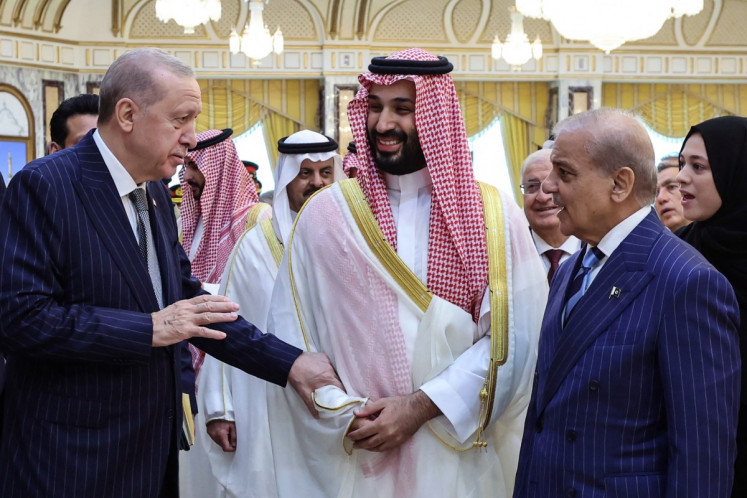
The signing of the Mecca Joint Defence Agreement by Saudi Crown Prince Mohammed bin Salman, Turkish President Recep Tayyip Erdoğan and Pakistani Prime Minister Shehbaz Sharif in Mecca on August 7, signals a significant development in Middle Eastern security politics. The agreement, brokered amid the expansion of the US-Israeli conflict against Iran into a wider regional war, aims to bolster "collective deterrence" against various forms of aggression.
However, specific details regarding the pact's command structure, troop deployment methodologies and military commitments remain undisclosed. Consequently, the pact's main strength might currently be attributed to its political undertones and deterrent impact.
Pakistan's reference to "collective deterrence" echoes NATO's Article 5, yet the agreement cannot be directly compared to the transatlantic alliance. The pact unites three nations with diverse strategic perspectives: Saudi Arabia, a dominant Gulf state and guardian of Islam's two holiest cities; Turkey, a NATO member with considerable military prowess; and Pakistan, a Muslim-majority nation and nuclear-armed state. This blend grants the accord considerable geopolitical influence.
For Saudi Arabia, the pact serves a twofold purpose: reinforcing defenses against Iran while diminishing strategic reliance on the United States without severing ties with Washington. Saudi security has traditionally hinged on the US military umbrella, but the Iran war has demonstrated that US bases and defense systems are not entirely invulnerable to attacks on Gulf territories. By incorporating Turkey and Pakistan, Riyadh gains supplementary security alternatives and enhanced leverage with Washington.
Turkey benefits from the pact by enhancing Ankara's standing as a major power in the Muslim world. Possessing a formidable military, a burgeoning defense industry and extensive regional sway, Turkey seeks not just to execute Western strategy in the Middle East, but also to contribute to the region's security framework. Pakistan, on the other hand, has distinct objectives.
It shares historical defense connections with Saudi Arabia but also borders Iran. Islamabad has no desire to be entangled in an ongoing war. The pact can amplify Pakistan's strategic significance and strengthen its bond with Riyadh without the obligation to engage in every regional dispute.
Thus, the pact can be interpreted in two ways: as a means to pressure Iran and as a strategy to counterbalance US influence. Firstly, Iran has expanded its regional sway through a web of states and armed proxy groups spanning from Iraq, Syria and Lebanon to Yemen. Through this network, Tehran has managed to exert pressure on Israel, US military bases, maritime routes and Gulf Arab states without always resorting to conventional warfare.
Written by urgent.news from The Jakarta Post's reporting — not their text. Machine-written — may contain errors; check the original before relying on it.
Also reported by 1 other outlet
- The Mecca Pact: A new quest for strategic autonomy thejakartapost.com