'Right to race' laws aim to protect racetracks from noise complaints
Across the country, small, local racetracks are under threat from noise and nuisance lawsuits from nearby property owners. That's prompting some state legislatures to protect what supporters call the "right to race." Digital reporter Tim McPhillips traveled to a track in Virginia to learn more.
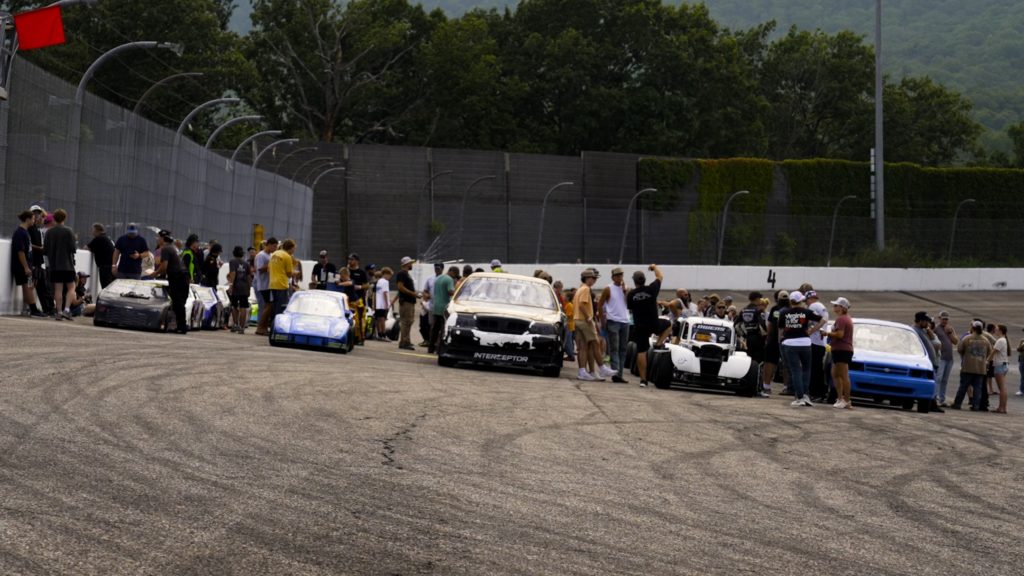
Across the United States, small local racetracks are facing threats from noise and nuisance lawsuits filed by nearby property owners. This has prompted some state legislatures to safeguard what supporters refer to as the "right to race." Digital reporter Tim McPhillips visited a track in Virginia to gain insight into the issue.
Geoff Bennett explained that part of Washington D.C. is being converted into a racetrack for an upcoming IndyCar race around the National Mall. However, smaller local racetracks are at the heart of a different debate, prompting some state legislatures to protect what supporters call the "right to race."
Tim McPhillips spoke with Tim McPhillips, a digital reporter who traveled to Shenandoah Speedway in Virginia to learn more about the issue. McPhillips described the track as a scenic location nestled in the Blue Ridge Mountains, behind a cornfield. Chris Lilly, the promoter of Shenandoah Speedway, highlighted the track's unique setting and its importance to the local community.
Joshua Vadeboncoeur, a researcher at Gardner-Webb University, explained that the decline of motorsports facilities over the past 25 years has been significant, with the number of such venues dropping by nearly a quarter. This loss can be particularly impactful for smaller towns and rural areas that have already lost other social institutions.
One major issue contributing to the decline of racetracks is the rise in noise complaints and nuisance lawsuits. These legal actions, while not always justified, can result in heavy financial burdens for speedways that are already operating on thin margins.
Several states, including Iowa, Kansas, North Carolina, and South Carolina, have implemented "right-to-race" laws to protect existing tracks from such complaints. Similar legislation has been introduced in 12 other states. However, Virginia lacks a right-to-race law, leaving local tracks like Shenandoah Speedway vulnerable to future threats.
The speedway, like other community tracks nationwide, serves as an economic driver for the town, providing jobs and attracting tourists. Chris Lilly emphasized the importance of the track to the local businesses and the town's lower-income district.
For young drivers, racing is more than just a hobby; it is a pathway to potential careers in the industry. Kenny Snow, a driver, and his son Kenan and friend Travis shared their passion for racing, describing it as the foundation of motorsports. Zach Sprouse expressed his aspiration to work in NASCAR, highlighting the personal and professional significance of racing.
However, the loss of a single track can have far-reaching consequences for the community, as the social and cultural bonds forged at the track cannot easily be transferred to another location. Joshua Vadeboncoeur noted that the economic loss from a track closing can be significant in particular for towns that have already experienced the loss of other social institutions.
John Allen, the general manager of two long-standing speedways in Kansas, attributed the closure of many tracks in the past to the inability to defend against nuisance claims filed by wealthy opponents. Now protected by "right-to-race" laws, Allen expressed optimism about the future of his operations.
While noise and nuisance complaints pose a threat to local racetracks, rising land values also pose a challenge, as tracks may become too valuable to hold onto or struggle to expand. Joshua Vadeboncoeur pointed out that the property value of a racetrack may be higher to a developer than to its regular racing operations.
Back in Virginia, Chris Lilly expressed his desire for Shenandoah Speedway to realize its full potential and contribute to the town's tourism and local economy. The reporter emphasized the importance of preserving these community-driven tracks for future generations.
Written by urgent.news from PBS NewsHour's reporting — not their text. Machine-written — may contain errors; check the original before relying on it.