Japan coral protectors race to save reefs from heat ‘bomb’
With the world's oceans the hottest on record in June, and a major El Nino predicted this year, experts fear that 2026 could be devastating for coral reefs.
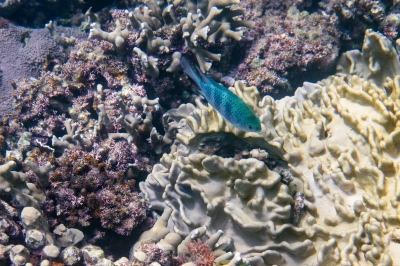
Onna, a coastal village in Okinawa Prefecture, has been at the forefront of efforts to save its famous coral reefs, which were devastated by climate-driven bleaching two years ago. The region, known for its biodiversity, now faces an uncertain future as the world's oceans reach record temperatures and an El Nino event looms. Experts warn that another mass bleaching event is almost inevitable, making the work of local scientists and conservationists a race against time.
Timothy Ravasi, a marine scientist at Okinawa Institute of Science and Technology Graduate University, leads a project using a "heat wave simulator" to study the effects of climate change on coral ecosystems. By manipulating temperature and pH levels in controlled tanks, scientists can simulate future heat waves and observe how fish and other organisms adapt. Ravasi emphasizes the urgent need to understand the impacts of climate change on coral reefs, as their loss would be devastating.
Okinawa's economy relies heavily on tourism, with over 80% of its income generated from tourists attracted to its pristine beaches. However, this dependency on tourism, combined with overfishing and pollution, exacerbates the already significant threats posed by climate change to the coral reefs. Ravasi faces a significant challenge in convincing stakeholders, including government officials and politicians, to prioritize climate action and consider measures such as reducing tourism and urbanization to protect the reefs.
Despite the skepticism surrounding human intervention in nature, local divers and scientists have made significant strides in coral conservation. The Okinawa science institute has been breeding and transplanting corals since 1999, with early efforts met with skepticism but later validated by DNA analysis showing minimal ecological impact.
Another innovative approach involves the creation of an "artificial sea" in the village of Yomitan, where researchers have bred "miracle corals" with increased resilience to warmer waters.
These efforts have faced opposition from traditionalists who believe in the ocean's natural ability to heal itself. However, Koji Kinjo, the creator of the artificial sea, remains steadfast in his belief that these interventions are necessary to ensure the survival of coral reefs. Kinjo's approach involves subjecting corals to stressors during their growth phase to create organisms capable of withstanding the harsh conditions they will face in the future.
As the world's oceans continue to warm, Okinawa's efforts to protect its coral reefs serve as a crucial example of the challenges and innovations in marine conservation. With each passing year, the stakes become higher as the impacts of climate change become increasingly evident. The success or failure of these initiatives will have far-reaching implications not only for Okinawa but for the global community that relies on healthy coral ecosystems to support its biodiversity and economies.
Written by urgent.news from Japan Times's reporting — not their text. Machine-written — may contain errors; check the original before relying on it.