It Is The Reforms That Matter, Not Committees
Appointment of commissions of inquiry is often an attempt to douse public anger and resentment. More often than not, they are forgotten once the subject ceases to engage public attention. When their reports are finally submitted, they make headlines for a few days before disappearing from public memory. Thereafter, they gather dust in government almirahs, to be occasionally dusted off and…
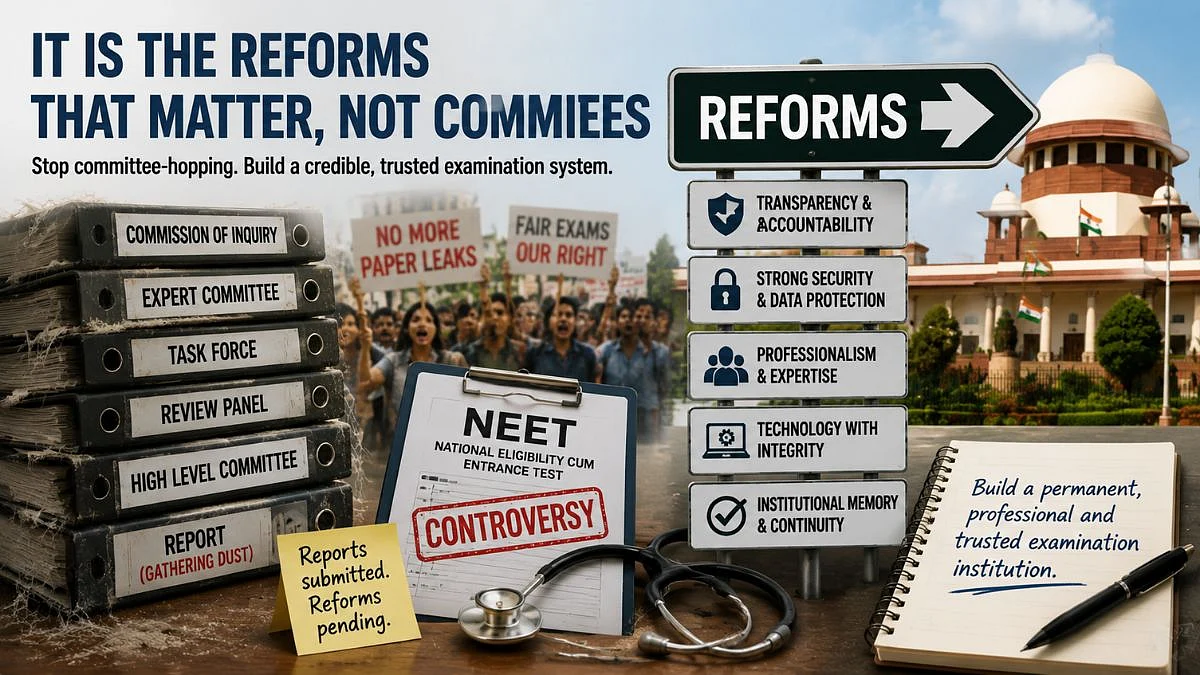
Criticism of India's National Testing Agency (NTA) escalated after the NEET examination was leaked and cancelled. Public outrage, police misconduct, and the Education Minister's resignation dominated headlines. A committee, led by Nandan Nilekani, was formed to recommend reforms. However, doubts arose over the committee's efficacy.
The Supreme Court has now intervened, cautioning against a cycle of committee formation and implementation. It emphasized the need for concrete, long-term reforms and directed the Nilekani team to incorporate previous recommendations. The court highlighted the UPSC as a model for institutional reform. While technological advancements like AI and blockchain hold promise, they cannot replace a strong institutional foundation.
The real test lies in whether the NTA can evolve into a trusted, professional examination body. If another committee is hastily constituted upon the next crisis, it would signify that committees have become a convenient escape route from genuine reform.
Written by urgent.news from Free Press Journal's reporting — not their text. Machine-written — may contain errors; check the original before relying on it.