Indigenous fishers rethink shark hunting & protect species on Colombia’s coast
LA GUAJIRA, Colombia — Feet from the ocean, four sharks and a ray lie dead on the wind-battered sand. Above them stands Wilfrido Arends, 46. The blade of a short knife glints in his hand. Carefully, he bends down to cut a small fin from the underside of one shark — an endangered species known […]
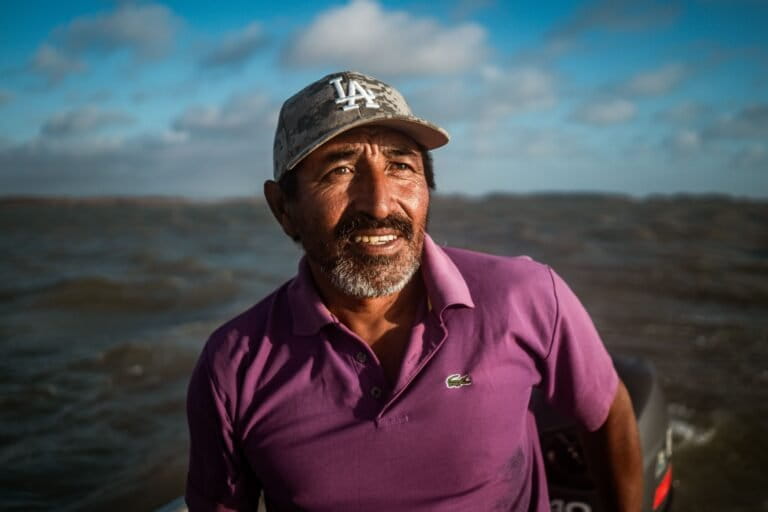
LA GUAJIRA, Colombia — Four sharks and a ray lay lifeless on the sandy shore, their carcasses basking in the wind. Wilfrido Arends, a 46-year-old fisher from Colombia’s Wayuu Indigenous community, stands feet away from the ocean, his short knife glinting in his hand. He meticulously cuts a fin from one shark, an endangered species called blacknose (Carcharhinus acronotus), before handing the sample to a fellow fisher for preservation.
Using a tape measure, Arends records the shark's measurements, ensuring the data is accurately documented. As a spearhead of shark research and conservation in Punta Gallinas, a Wayuu community at the northernmost tip of South America, Arends emphasizes the importance of preserving sharks, noting, "If we wipe out our sharks, I think that further down the line we will miss them."
Collaborating with researchers from Colombia’s shark conservation initiative Proyecto Puyuii, Arends and other Wayuu fishers are diligently documenting shark diversity in the largely unexplored waters of La Guajira. Diego Cardeñosa, a marine biologist from Florida International University and a member of Proyecto Puyuii, highlights the lack of data on these species, stating, "There’s almost no data on anything."
Written by urgent.news from Mongabay's reporting — not their text. Machine-written — may contain errors; check the original before relying on it.
This story
This is one outlet's version. Read the fullest account.
- Amazon: Indigenous peoples catalog species to protect biodiversity agenciabrasil.ebc.com.br