China marches towards re-usable rockets with successful first-stage landing
Red alert for rivals as LandSpace nails it after December disaster
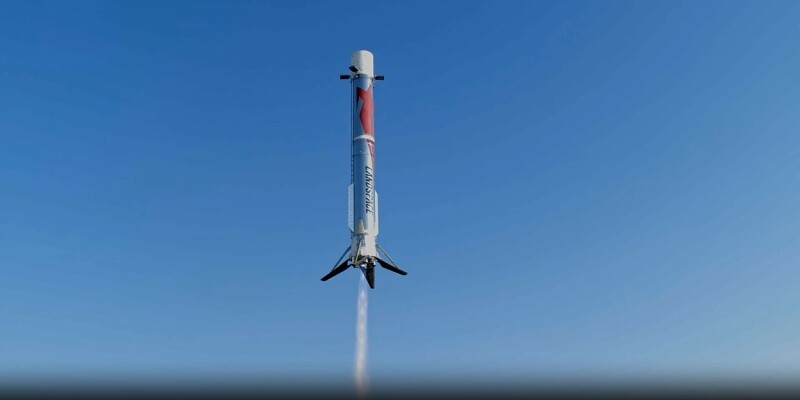
China's private aerospace firm LandSpace has successfully landed a first-stage booster of its new Zhuque-3 rocket on land, marking a significant milestone for the nation's space industry. This achievement makes LandSpace the first company from the Middle Kingdom to accomplish the feat. The Zhuque-3 is capable of lifting 21,300 kilograms to a 450km orbit, making it the most powerful rocket currently operated by a Chinese private enterprise.
The rocket utilizes LandSpace's own TQ-12A engines, which burn liquid oxygen-methane fuel. The company's previous Zhuque-2 rocket became the first liquid oxygen-methane vehicle to reach orbit in 2022. LandSpace has flown the Zhuque-3 eight times since 2022, with six missions resulting in success. Although the Zhuque-3's maiden flight in December failed, the company showed promise when it successfully launched a satellite into orbit and landed the first stage of the rocket yesterday.
The launch occurred at 7:35 AM, with the separation of the first and second stages happening 137 seconds into the flight. The first stage landed precisely at 7:41 AM. LandSpace claims that the rocket executed a high-altitude return attitude adjustment, reentry ignition-powered deceleration, aerodynamic gliding control, landing ignition deceleration, and deployed its landing legs.
The mission's success validates the entire process of the first stage returning to land from high-speed flight. Reusable rockets can significantly reduce the cost of space travel by eliminating the need to construct a new vehicle for every launch. LandSpace's engines and first stages are designed to fly up to 20 times each. However, the company has not yet demonstrated the ability to reuse a rocket more than once or the time required to bring a used vehicle back to the launchpad.
Nonetheless, simply landing the first stage is a remarkable accomplishment, given that only SpaceX and Blue Origin have previously achieved this feat. China's ambitions in space are vast, including plans for extensive broadband satellite constellations, expansion of its space station, and construction of a lunar base. Beijing acknowledges that reusable rockets could play a crucial role in achieving these goals.
State media has hailed LandSpace's success as a "major breakthrough" and reported that China's National Space Agency is researching additional reusable technologies to bolster China's capabilities for launching more payloads, more frequently, at lower costs.
Written by urgent.news from The Register Science's reporting — not their text. Machine-written — may contain errors; check the original before relying on it.