How Gas Filaments and Interfilaments Feed Star Formation in Monoceros R2
Researchers studied gas flows in the Monoceros R2 star forming region to understand how gas is channeled into star forming hubs. By tracing the flow of carbon monoxide, they found that a system of hub-filaments and interfilaments are responsible for feeding gas into star-forming locations. The filaments move most of the gas, but the interfilaments play a role too, especially by feeding more gas…
Stars are critical to the cosmos, forging elements and playing a role in regulating the physics of galaxies. Understanding their origins, specifically star formation, is a major focus of study. One region where star formation is particularly active is Monoceros R2, a hub-filament system located about 2,700 light years from Earth. Researchers at Kyushu University's Institute for Advanced Study, led by Assistant Professor Jihye Hwang, have investigated the gas flows in this system.
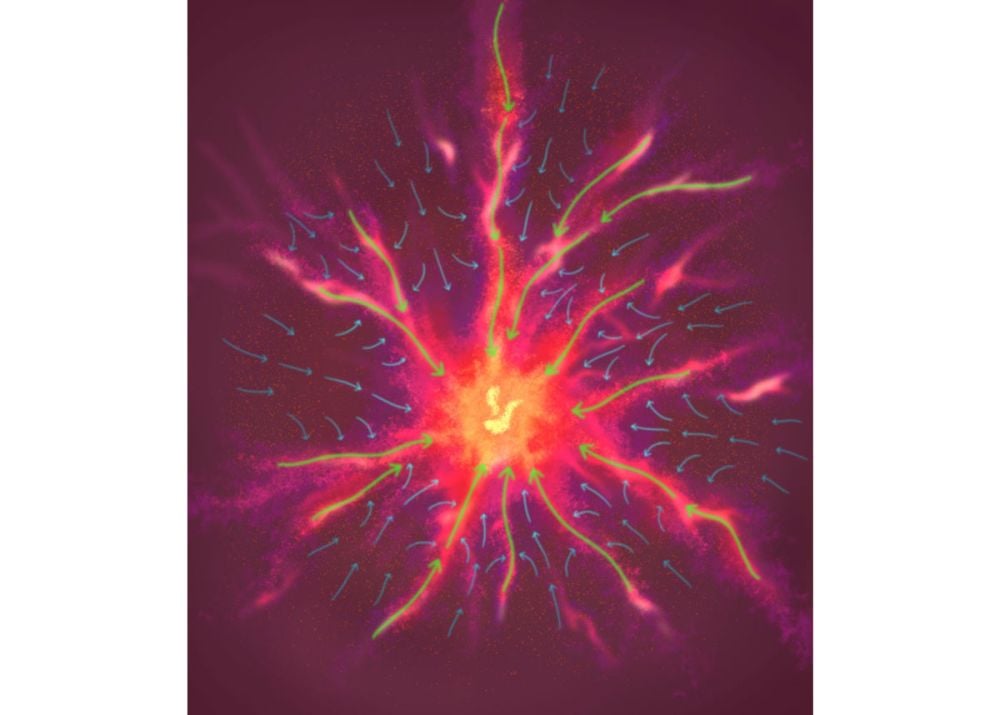
Star formation in HFSs occurs along filaments, which are elongated structures with high aspect ratios, and in hubs, located at the junctions of filaments, where column densities are higher and aspect ratios are lower. The researchers traced the movement of carbon monoxide using the Nobeyama 45 m radiotelescope to understand how gas flows into and around these filaments. They discovered that gas flows along both filaments and interfilaments toward the star formation hubs.
The gas flowing through filaments has a higher density than that in the interfilaments, but it was previously unclear whether interfilament gas, which is less dense, also flows toward the hub, and how mass accretion rates along filaments compare to those within interfilaments. The researchers measured two types of carbon monoxide: 13CO, which traces low-density gas, and C18O, which traces high-density gas.
They found that gas flows along both filaments and interfilaments toward the hubs, with filament gas flowing faster than interfilament gas. Additionally, at least 30% of the gas mass in the interfilaments may flow toward the filaments, replenishing them with new matter. These findings suggest that understanding star formation requires considering the entire gas reservoir, not just that within dense filaments.
Written by urgent.news from Universe Today's reporting — not their text. Machine-written — may contain errors; check the original before relying on it.