How AI could help reduce your time waiting at a red light
While it may be the latest "buzzword", researchers say AI could help improve our understanding of intersections and use that information to reduce delays.
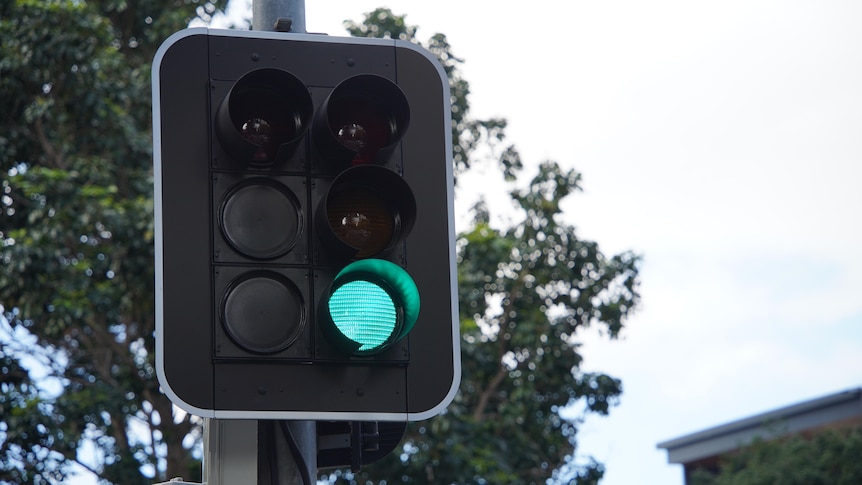
Artificial intelligence (AI) is being explored as a means to reduce the time spent waiting at red lights in Australian cities. Currently, traffic lights follow a phase-based system, which has been in use since the 1950s. However, researchers believe this method may not be optimal for modern traffic patterns.
Queensland University of Technology's Professor Ashish Bhaskar believes AI could enhance our understanding of traffic movement at intersections and utilize that data to minimize delays. In an Australian first, a council in Queensland plans to trial this technology at a single intersection later this year.
The system, developed by Austrian-based company SWARCO, uses cameras to identify objects and AI to analyze the data. This allows the system to have a better understanding of the mix of vehicles, buses, pedestrians, and cyclists at an intersection, enabling more proactive traffic control.
Unlike the traditional phase-based system, this new technology operates on demand, with combinations determined based on traffic demand. The algorithm can be fine-tuned to prioritize different types of traffic, such as pedestrians in city centers or cars in high-traffic areas.
The $170,000 trial at Petrie in Queensland's Moreton Bay will run until early 2029. The success of the trial will be evaluated by comparing the intersection before and after the trial.
Similar AI-based systems have been implemented in Denmark, Europe, and the US. For instance, the SURTRAC system in Pittsburgh reduced average travel time by 25% and decreased idling time by up to 40%.
Transport engineering associate professor Mohsen Ramezani from the University of Sydney supports the move in Moreton Bay but cautions that the real challenge lies in effectively managing traffic at closely spaced intersections in city centers. He believes the biggest area for improvement is in the decision-making algorithm rather than detection systems.
Later this year, a two-year, $15 million trial will begin in Brisbane, extending the AI implementation beyond individual intersections to the entire traffic management system. This comprehensive approach aims to deliver more reliable journeys and keep Brisbane moving as the city continues to grow.
Written by urgent.news from ABC News AU's reporting — not their text. Machine-written — may contain errors; check the original before relying on it.