Here's how America's $40 trillion debt can hit your wallet
The U.S. national debt this week topped $40 trillion, raising fresh concerns about how rising federal borrowing could affect Americans' finances. Why it matters: Americans don't personally owe the national debt, but rising debt could pressure lawmakers to raise taxes, cut spending or change federal benefits. State of play: The gross federal debt hit $40 trillion for the first time on Wednesday.…
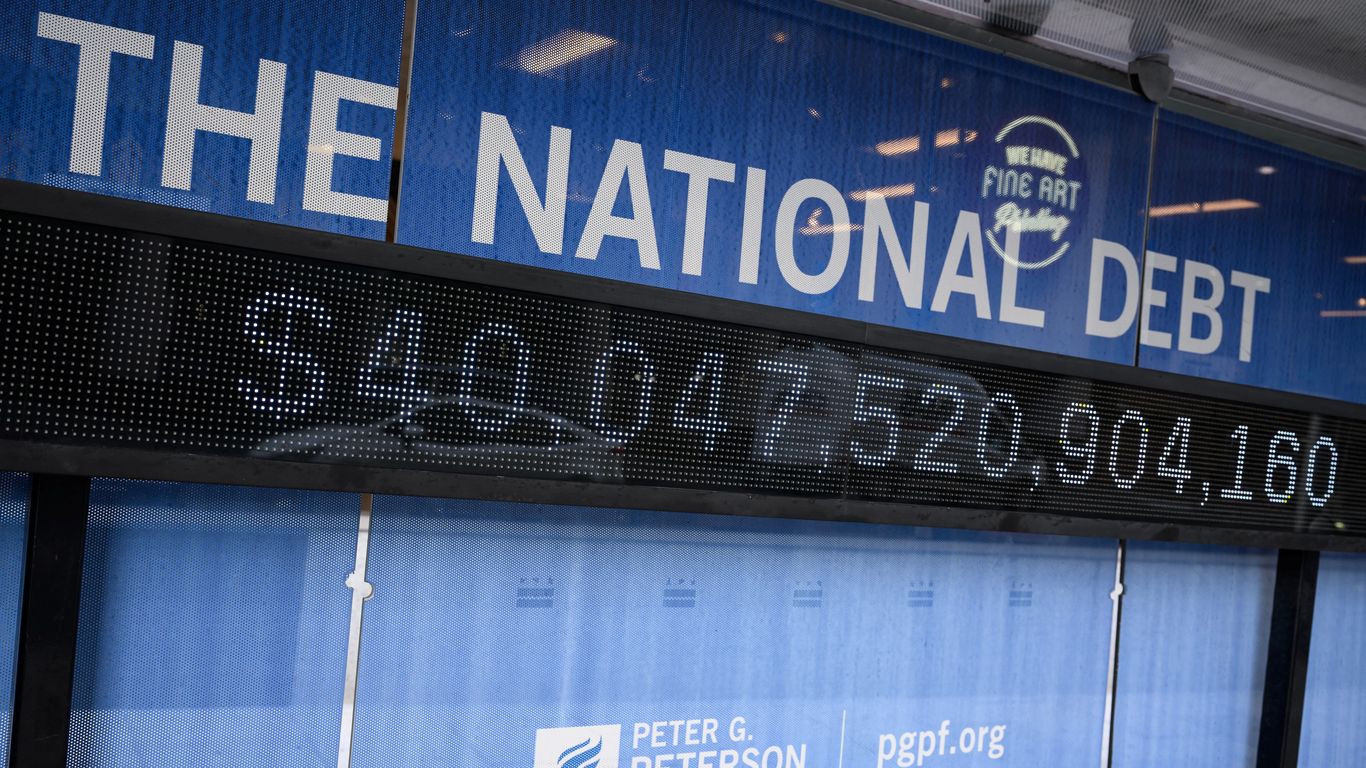
The U.S. national debt crossed the $40 trillion mark, prompting questions about the potential financial implications for everyday Americans. Although individuals do not directly owe the national debt, growing debt may push lawmakers to consider raising taxes, reducing spending, or altering federal benefits. The gross federal debt, which includes debt owed to the government itself, reached $40 trillion for the first time on Wednesday. The majority of this debt, around $32 trillion, is held by the public.
Economists generally concentrate on the $32 trillion portion of the debt when evaluating its impact on the economy. The recent U.S. tax-and-spending law is expected to contribute trillions to federal deficits over the next decade, while the White House has requested tens of billions of dollars in additional funding related to the Iran conflict.
The Conference Board, a nonprofit research organization, warns that a higher national debt could lead to increased borrowing costs. As the debt expands, investors may demand higher yields if they lose confidence in the government's fiscal situation. This could result in higher interest rates, which would increase the expense of mortgages, student loans, and small-business borrowing, according to the report.
Higher government borrowing costs could have ripple effects on various forms of borrowing, including auto loans and bonds used to finance school construction. Inflation risks also arise as mounting debt might compel policymakers to resort to inflationary measures to address fiscal issues. This could pressure inflation and require the Federal Reserve to print more money or monetize the debt, potentially impacting the purchasing power of American consumers.
As the national debt continues to grow, the federal government must allocate more funds to interest payments, potentially leaving less room for funding priorities such as defense, infrastructure, and education. By 2026, the government is projected to spend over $1 trillion on net interest, surpassing any mandatory program other than Social Security or Medicare.
The political landscape in Washington shows little inclination to alter the nation's fiscal direction, leaving the debate over spending and taxes unresolved. However, Americans are beginning to recognize the connection between the national debt and their personal finances, which could influence their voting behavior in the upcoming midterms.
Addressing the federal debt in a sustainable manner will likely necessitate a mix of reduced spending growth and increased revenue.
Written by urgent.news from Axios's reporting — not their text. Machine-written — may contain errors; check the original before relying on it.