Giant whales move into Greenland waters as ice disappears
Melting sea ice from climate change has opened up the region for giant whales to undertake 'feeding frenzies'.
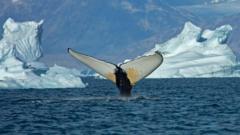
Warming seas along East Greenland are drawing massive whales into previously inaccessible coastal waters, according to a long-term study of the region's marine life. The report, based on decades of research combining aerial surveys, satellite tracking, and indigenous knowledge, describes a dramatic shift in the ocean environment that has transformed the region into a seasonal feeding frenzy for some of the world's largest whales.
Previously confined to ice-covered waters, humpbacks, fin whales, and minke whales are now exploiting ice-free seas in summer to feast on abundant fish and krill, with estimates suggesting over 16,000 of these massive mammals visited the Greenland Sea in 2024 alone. While the increase in whale numbers may seem like a positive development for these creatures, the study's lead author warns that not all Arctic species will benefit from the changing conditions.
Some are already facing habitat loss and displacement as the whales expand their range. The researchers emphasize that while climate change may open up new opportunities for some Arctic wildlife, it also poses significant threats to others, highlighting the complex and often contradictory impacts of global warming on the region's fragile ecosystems.
Written by urgent.news from BBC News's reporting — not their text. Machine-written — may contain errors; check the original before relying on it.
This story
This is one outlet's version. Read the fullest account.