Giant whales move into Greenland waters as ice disappears
Melting sea ice from climate change has opened up the region for giant whales to undertake 'feeding frenzies'.
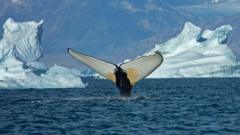
As sea ice in East Greenland continues to vanish, large whales are flocking to the once inaccessible coastal waters. This transformation, revealed by a long-term study, has transformed the region into a hotspot for feeding, featuring humpbacks, minke and fin whales. These massive marine mammals, previously confined by ice, have now capitalized on the changing environment due to climate change.
Researchers have observed a dramatic surge in humpback whale sightings, from a single sighting in 2006 to 150 in 2024. Similarly, fin and minke whales have also made their presence known in the region. The summer of 2024 saw an estimated 4,000 humpbacks, 6,000 fin whales and 6,000 minke whales feeding off East Greenland's coast.
The whales are believed to be feeding on fish that have migrated into the region's warmer waters. While the exact impact on whale populations remains unclear, the study suggests these opportunistic baleen whales may be benefiting from the shifting ecosystem. However, other Arctic species, such as narwhals and belugas, face challenges as their habitats are threatened by the influx of these whales.
The research, published in the journal Frontiers in Marine Science, underscores the significant ecological shift occurring in this Arctic region.
Written by urgent.news from BBC World's reporting — not their text. Machine-written — may contain errors; check the original before relying on it.
This story
This is one outlet's version. Read the fullest account.