Catching An 'Almost Total' Lunar Eclipse on August 28th
So, did you miss the August 12th total solar eclipse? Like lots of humanity, we sat out the celestial drama of this month's solar eclipse, both total and partial. But the good news is, a large swath of the world can still catch the eclipse season spirit, with a deep, nearly total partial lunar eclipse next week. The event is the last eclipse of four (two lunar and two solar) for 2026. This also…
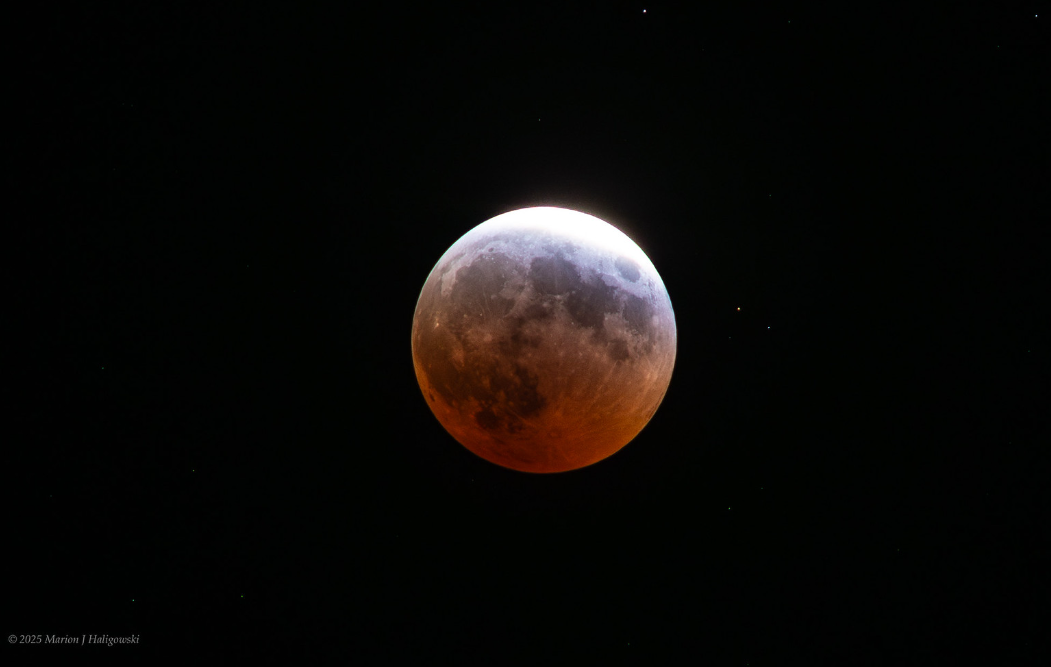
The Americas will be the center of attention for this Thursday night's deep partial lunar eclipse. After missing the total solar eclipse on August 12th, a significant portion of the world can still enjoy the eclipse season. This event is the last eclipse of four for 2026, marking the end of the second eclipse season for the year.
Eclipses happen when the Moon, Earth, and Sun align, known as a syzygy. The Moon's orbit is tilted five degrees compared to the ecliptic plane, and the nodes where they align are where eclipses occur. On August 28th, the Moon will pass through the northern half of Earth's umbral shadow, but won't be fully engulfed in totality. The event occurs six days after the second-closest lunar apogee of the year, making the Moon appear slightly smaller than usual.
The entire eclipse, including penumbral phases, lasts for under 5 hours and 38 minutes, starting at 1:23 Universal Time on August 28th. The partial phase begins just before 2:34 Universal Time and lasts for just over 3 hours and 18 minutes. The maximum partial eclipse will occur at 4:14 Universal Time, with the Moon 93% immersed in Earth's umbral shadow.
The earth's round shape can be observed through the shadow it casts on the Moon, though it's only a partial eclipse this time, viewers may see the lower southern limb of the Moon turn blood red, a hallmark of a total lunar eclipse. This eclipse is notable as the final partial eclipse for lunar saros series 138, which began in 1521 and will run until 2982. The next total lunar eclipse will occur on December 31st, 2028.
Written by urgent.news from Universe Today's reporting — not their text. Machine-written — may contain errors; check the original before relying on it.