Black hole star? Solar-system-size 'dot' from the early universe is our best evidence yet of a brand-new type of cosmic object
The James Webb Space Telescope has identified the most promising candidate yet for a black hole star, lurking 660 million years after the Big Bang. The hypothetical entity, which shines 100 billion times brighter than a typical star, could shed light on the origins of the mysterious "little red dots."
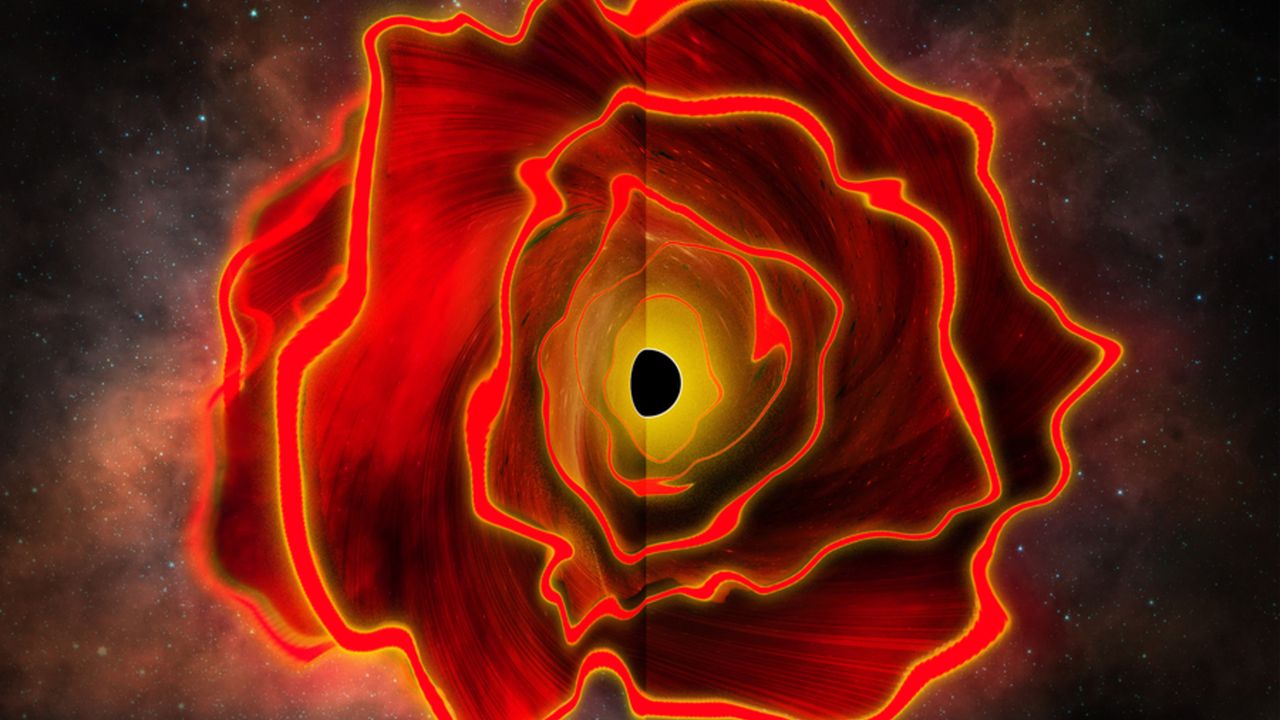
Astronomers have discovered a candidate for a black hole star in the early universe, offering new insights into the origin of little red dots (LRDs). These mysterious, reddish objects, nearly as old as the universe itself, are brighter than stars but dimmer than galaxies. The newly identified dot, approximately the size of our solar system, was spotted in JWST's Miracle or Mirage survey, which examines distant galaxies.
Radiating about 660 million years after the Big Bang, the dot is 100 billion times brighter than a typical star. Astronomers propose that this dot is a black hole star, an enormous, hypothetical gas ball surrounding and heating a giant black hole. MoM-BH*-1, as the object is named, is significantly older and farther away than another black hole star candidate, "the Cliff."
This makes it more significant for understanding the formation of these enigmatic cosmic objects. The dot's red hue and lack of heavy metals indicate it is composed of mostly hydrogen and helium. However, its missing high-energy radiation suggests a dense gas cocoon that could be hiding a supermassive black hole, providing an explanation for LRDs' unusual characteristics.
Written by urgent.news from Live Science's reporting — not their text. Machine-written — may contain errors; check the original before relying on it.