'Caste Abuse Inside Closed Room Not 'Public View' Under SC/ST Act': SC
The Supreme Court has held that a caste-based insult made inside a closed room, without the presence of members of the public, does not by itself meet the “public view” requirement under the SC/ST (Prevention of Atrocities) Act. The ruling came while quashing proceedings against a school manager accused of abusing a complainant with casteist remarks. A bench of Justices Vikram Nath and Sandeep…
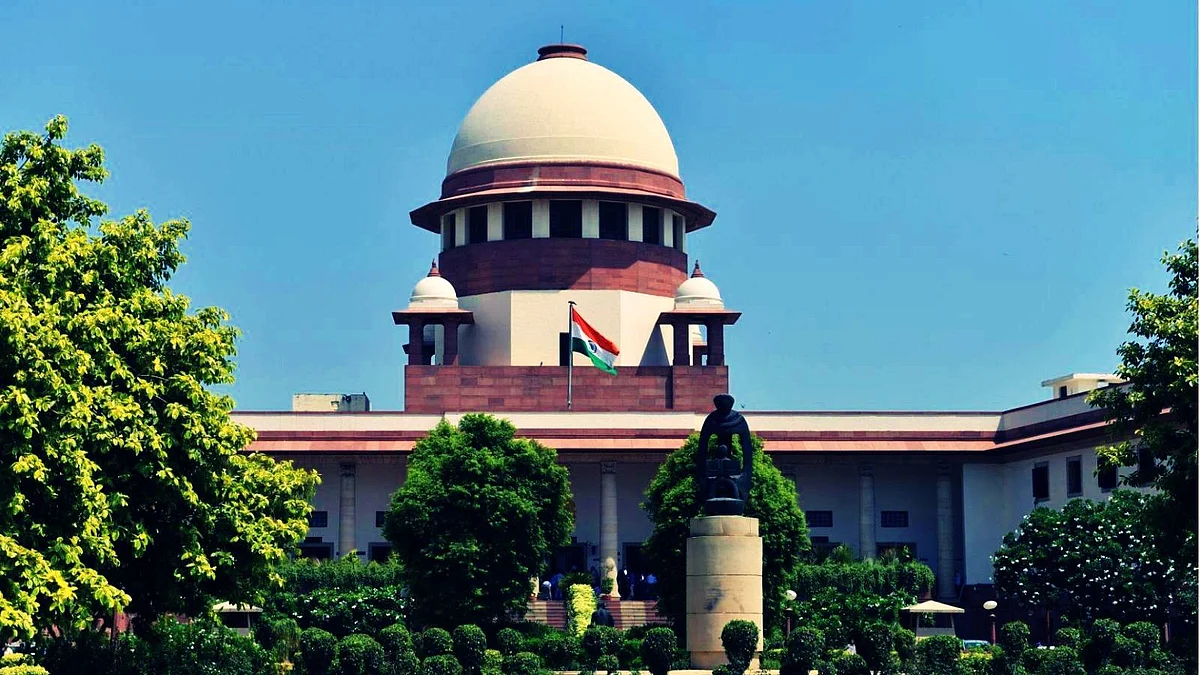
The Supreme Court has ruled that a caste-based insult delivered inside a private room, without any members of the public observing, does not automatically satisfy the "public view" criterion under the SC/ST (Prevention of Atrocities) Act. This decision was made while overturning a lower court's order that had halted proceedings against a school administrator accused of using casteist language against a complainant.
The matter originated from a complaint lodged by a parent, whose two sons attended the institution in question, following an altercation between students. The complainant alleged that the school administrator and other staff members physically assaulted him and verbally abused him using caste-based slurs. Consequently, a police investigation was launched under the SC/ST Act, resulting in the filing of a chargesheet.
In a parallel incident, the administrator's spouse filed a counter-FIR accusing the complainant of verbally assaulting and physically attacking her inside the school office. She maintained that when the administrator intervened, he too was subjected to provocation. A local court subsequently took notice of the chargesheet in the counter-affair.
The school administrator contested the summons presented by the special court, leading it to the Allahabad High Court. However, the high court declined to dismiss the proceedings, stating that personal animosity alone was insufficient to prove the case was baseless and found a prima facie case against the administrator. At the Supreme Court, the administrator's legal team argued that the alleged casteist remarks were exchanged in a private setting.
Witness testimonies, according to the lawyer, did not suggest that any members of the public were present inside the room or had heard the purported remarks.
The Supreme Court, while examining the requirements under Sections 3(1)(r) and 3(1)(s) of the SC/ST Act, which pertain to intentional insults or intimidation and caste-based abuse committed in a public space, reaffirmed that an incident can be considered "public view" if members of the public are physically present and capable of observing or hearing the alleged conduct.
However, the court emphasized that an incident occurring within a confined space, devoid of any public witnesses, cannot be deemed to have occurred in public view by default.
Furthermore, the bench highlighted that the witness statements provided by school staff did not corroborate the claim of casteist abuse. While they confirmed the existence of a dispute and a physical confrontation, none of them attested to witnessing or hearing the alleged caste-based remarks. Based on these grounds, the Supreme Court quashed the proceedings against the school administrator under the provisions of the SC/ST Act.
Nevertheless, the court made it clear that any other charges registered under the Indian Penal Code would proceed as usual.
Written by urgent.news from Free Press Journal's reporting — not their text. Machine-written — may contain errors; check the original before relying on it.