A tiny insect, a deadly enemy: how medicine’s discovery of its impact shaped health and town planning
The understanding that mosquitoes could cause malaria and other diseases did more than solve a biological mystery. It completely changed disease control: drainage of stagnant water, environmental sanitation, mosquito nets, screening of houses and later, insecticides became important public health tools
In the Madras Presidency, the power of municipal authorities to regulate construction on private land was established by the Madras City Municipal Corporation Act of 1919. This legislation was motivated by the desire to promote public health through proper drainage, sewage disposal, and healthier living conditions. The impetus for such regulatory systems across India gained momentum with the first Conference of State Ministers on Town and Country Planning in 1960.
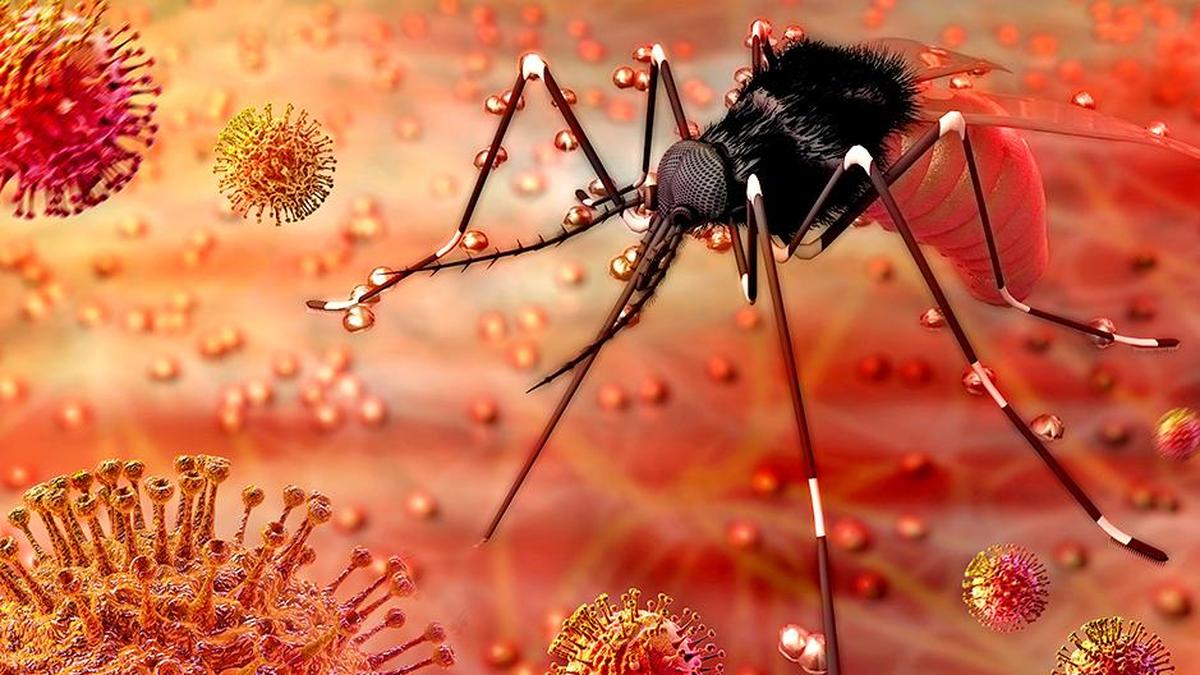
This public health rationale was dramatically reinforced decades earlier by the work of British medical officer Ronald Ross. On August 20, 1897, Ross examined the stomach of a mosquito which had fed on a patient with malaria. Within the insect's stomach wall, small and pigmented bodies were observed, providing crucial evidence that the malaria parasite developed inside the mosquito and not merely passed through it.
This discovery marked the beginning of the scientific visibility of the mosquito's role in the malaria lifecycle.
Up until this point, malaria had been a mysterious disease, primarily associated with unhealthy air and stagnant water. The term 'malaria' itself originated from the Italian mala aria, meaning 'bad air'. However, the presence of stagnant water was only partially accurate, as the water acted as breeding sites for mosquitoes. It was not until 1880 that French physician Alphonse Laveran identified the parasite responsible for malaria in the blood of patients.
The challenge remained: how did the parasite move from one person to another? It could not simply appear in another person's bloodstream. Thus, a mechanism to carry the parasite from one host to another had to exist. This missing link became one of the most significant medical questions of the late nineteenth century.
Patrick Manson, a physician who had studied tropical diseases, had already established that mosquitoes played a role in the lifecycle of filarial parasites. He suspected that mosquitoes might also be involved in malaria transmission. Ross, having studied under Manson in England, became interested in testing this hypothesis. Upon returning to India, Ross conducted a series of experiments, allowing mosquitoes to feed on people with malaria.
He later dissected these insects and observed that the malaria parasite had entered and developed within them.
This series of experiments culminated in Ross's conclusion that mosquitoes were the key transmitters of malaria. For his groundbreaking work, Ross was awarded the Nobel Prize in Physiology or Medicine in 1902. This discovery did more than solve a biological mystery; it completely transformed malaria control. If mosquitoes were responsible for the spread of the disease, then preventing mosquito bites and reducing mosquito populations could effectively prevent the disease.
This led to the implementation of public health measures such as drainage of stagnant water, environmental sanitation, mosquito nets, house screening, and later, insecticides. Disease prevention shifted from targeting an invisible 'bad air' to focusing on the parasite carried by mosquitoes. While the mosquito may seem an unlikely killer, it is indeed considered the world's deadliest animal due to its role in transmitting various diseases.
India had a significant role in the history of malaria, as it was within the country that Ross conducted much of his groundbreaking work. India has also faced the immense health and economic consequences of mosquito-borne diseases for generations. With the progress made in reducing malaria, India has set the ambitious goal of malaria elimination by 2030.
However, the continued presence of other vector-borne diseases such as dengue, chikungunya, and Japanese encephalitis reminds us that eliminating one mosquito-borne infection does not automatically eradicate the larger mosquito problem. Effective mosquito control requires a combination of surveillance, early diagnosis, prompt treatment, vector control, and environmental management.
Written by urgent.news from The Hindu Health's reporting — not their text. Machine-written — may contain errors; check the original before relying on it.