1,400-year-old skeleton found in underground channel in Peru may have belonged to human sacrifice victim
A mysterious burial in an underground water channel may help archaeologists understand a pre-Inca ritual in Peru.
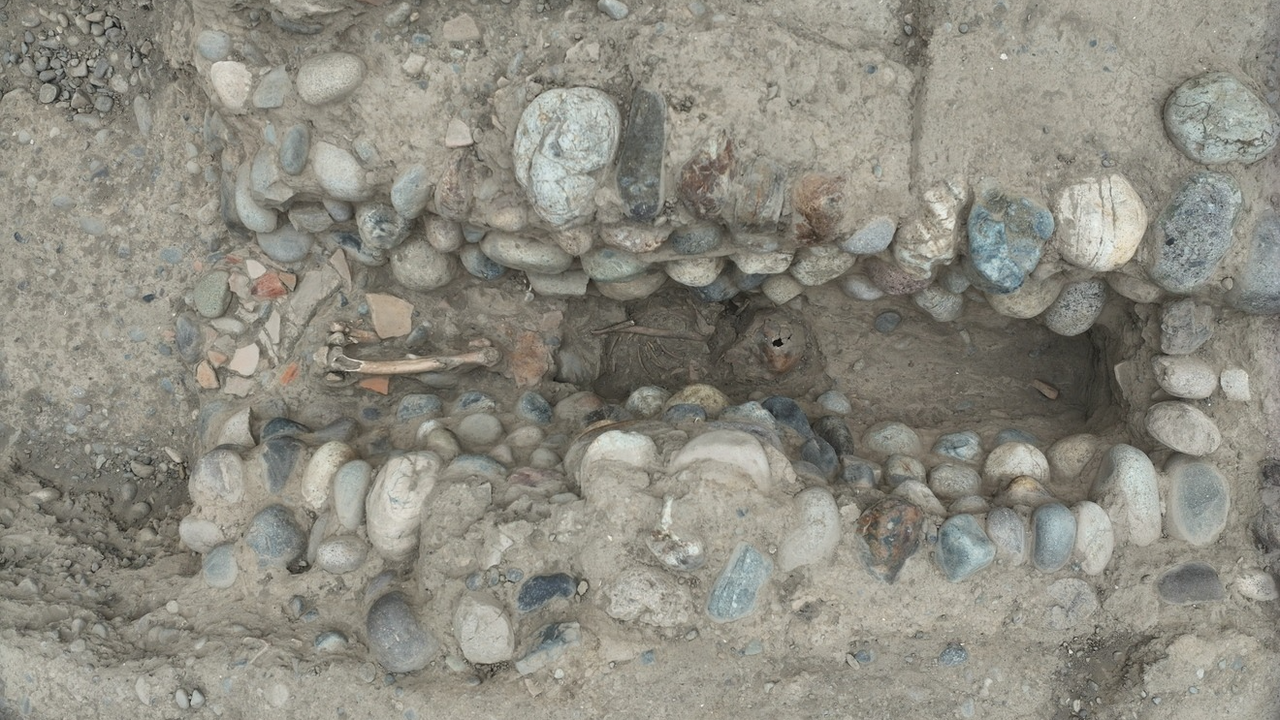
Archaeologists have unearthed a potentially human sacrifice near Lima, Peru, possibly dating back over 1,400 years. The skeleton of an adult male was discovered in an underground water channel close to the Huaca Pucllana pyramid, which is believed to have been an offering connected to a closed ceremonial well. The man was positioned with his skull facing the ocean and the pyramid, suggesting intentional placement.
The settlement at Huaca Pucllana, established around A.D. 400, was inhabited by various pre-Hispanic cultures until around 1440. Known for its large platform pyramid used in three main rituals - destruction of pots, banquets, and human sacrifice - the site has previously uncovered burials of an adult male and female believed to be sacrifices for pyramid construction.
The newly found burial, dated to around A.D. 650, was discovered in a mud-brick pyramid built with river stones, an unusual technique for the Lima people. Further studies will confirm the sex, age, and any signs of sacrifice on the skeleton, potentially revealing more about the closing ceremonies at the ritual well.
Written by urgent.news from Live Science's reporting — not their text. Machine-written — may contain errors; check the original before relying on it.